
Bar Insurance · Louisiana
Bar insurance in Louisiana
One Louisiana permit type is written in terms of a permanent wet bar and a bartender — a fixture and a job, rather than a permission. A license that describes the room is a license an underwriter can read, and it is where a submission here starts.
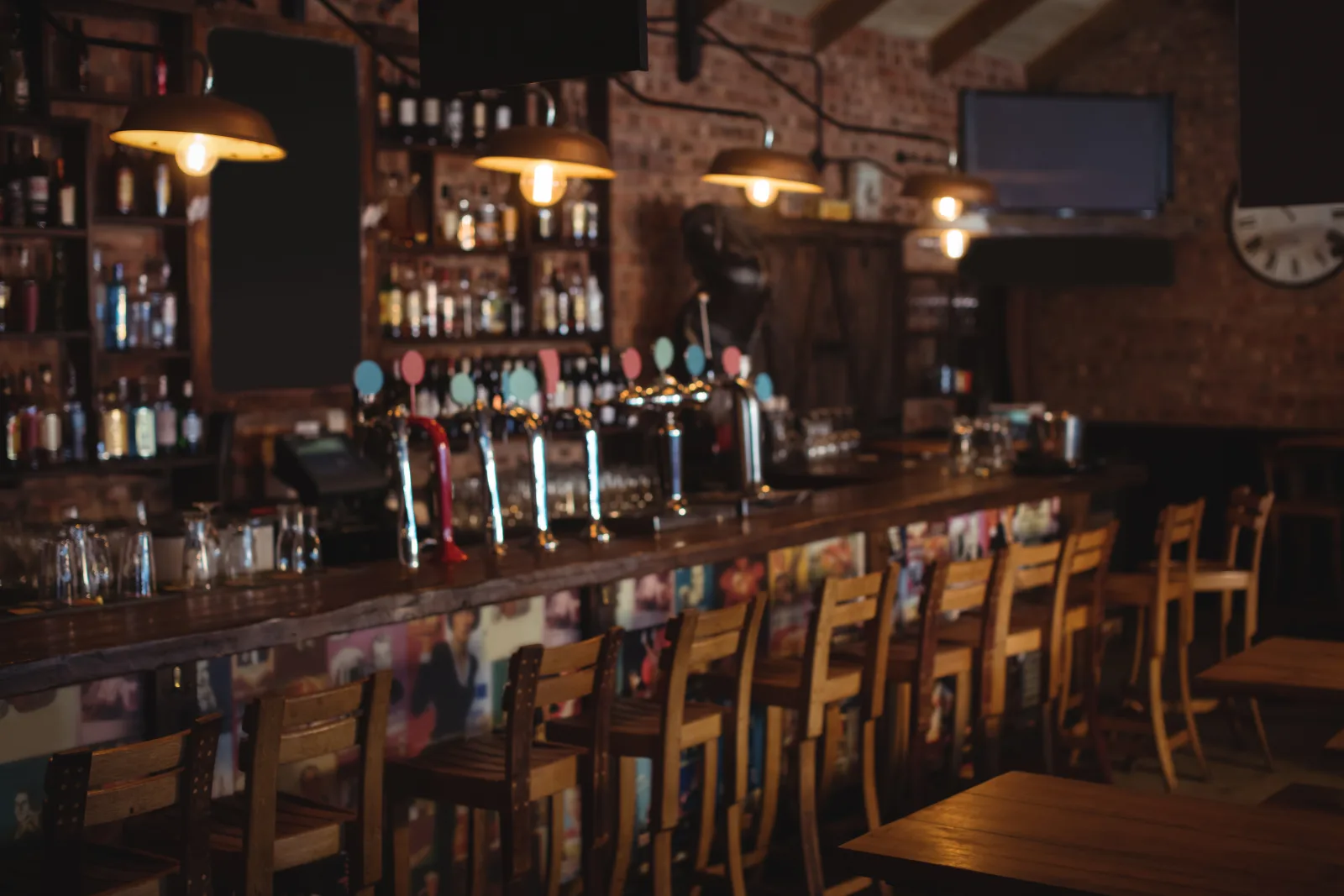

Louisiana writes its Class A permit types in terms of what physically stands in the room, which is an unusual drafting choice and it has practical consequences for a venue that changes its layout. This page reads the permit classes as the statute writes them rather than translating them into the vocabulary other states use.
Why a room that pours buys a policy of its own, and what that policy is answering, is a question about forms rather than about states. The liquor liability page carries it. This page carries Louisiana.
Two Louisiana facts shape a submission more than anything else on the file. Its permits are issued in classes, and one Class A type is described by what physically stands in the licensed room. And its provision on liability for alcohol service opens by naming consumption as the proximate cause, then states its protection by reference to where the injury was suffered rather than to how the customer appeared.
Both of those are about a place. So this page is built on the place — what the permit says must be in it, where it ends, and what the year does to how full it gets. Where the material behind the page stops, the page says so instead of guessing forward.
A permit type written in terms of what stands in the room
Alcohol permitting in Louisiana runs through the Office of Alcohol and Tobacco Control, which sits within the Department of Revenue. Retail permits are issued in classes: Class A for retail liquor, Class B for package houses, Class C for package stores. A room where people drink what you pour them is in the first of those.
Class A is not one credential. It divides into four types — general, restaurant, special, and restaurant-conditional — and which of the four a business holds says more about its shape than its trade name does. A department can draw that same distinction with a different instrument — our California bar page reads the eating-place and public-premises series as a statement about what the business is — and the file has to agree with whichever one you hold.
The general type is the one to read slowly, because it requires a permanent wet bar and a bartender. That is a license describing a fixture and a job. Most credentials of this kind grant a permission and leave the premises to the landlord and the fire officer; this one puts an installation and a person on the payroll inside the qualifying conditions. An underwriter who is told which type you hold has been told something physical about the building and something structural about the staffing, before anybody has filled in a supplemental form.
The restaurant type sits in a different position again: it is held alongside a restaurant permit. Two credentials, granted by reference to two different pictures of the same business. A room that gradually becomes more bar than kitchen, or the reverse, is not merely changing its menu — it is drifting between the descriptions two separate permits were issued against, and that drift is a licensing question long before it is an underwriting one.
The fourth type, restaurant-conditional, is named in the statute. Its conditions are not set out here because they were not read for this page, and a plausible summary of conditions nobody has verified is exactly the kind of sentence an operator acts on. Read the section, which is linked below.
The statute names consumption as the cause, and then says where
Louisiana’s provision on liability arising from the sale, serving or furnishing of alcohol opens by declaring consumption — rather than the sale, the serving or the furnishing — to be the proximate cause of injury inflicted by an intoxicated person. Naming the cause is one way of keeping a seller out of a claim; leaving the seller outside the default and carving two exceptions back in is another, and our Arkansas bar page reads a chapter assembled the second way.
It then goes further, and the wording matters. Notwithstanding any other law to the contrary, no permit holder who sells or serves intoxicating beverages to a person over the age for lawful purchase shall be liable for any injury suffered off the premises, including wrongful death and property damage, because of that person’s intoxication.
Two elements of that sentence carry the weight, and neither of them is the part usually quoted back in a bar. The first is that the protection is expressed for service to a person over the age for lawful purchase. The second is that the injury it speaks to is one suffered off the premises. It is a provision with a person in it and a place in it.
⚠ Here is where this page stops. It carries the provision as it was read and it does not extend it. It does not tell you what the section does about an injury suffered inside the licensed room. It does not tell you what other routes to a claim exist or fail to exist in this state, and it does not tell you what a court has made of any of it. Those answers come from the section itself, from the subsections around it, and from a Louisiana lawyer — not from a page that has read one provision and would like to sound complete.
That restraint is not a hedge for its own sake. Alcohol-service liability is a subject where confident summaries circulate for years after the law underneath them has moved, and an operator who has been told a comfortable version of a rule will staff and train to the comfortable version.
Where your premises end is a term in the sentence, not a housekeeping matter
Once a protection is expressed for injury suffered off the premises, the extent of the premises has stopped being a facilities question. It is part of the legal description of the business, and it deserves to be established while everyone is calm.
For a bar here that is a concrete list rather than an abstraction: the licensed floor, the covered gallery or walkway, a courtyard, a smoking area, the queue that forms on the pavement, and a car park that may sit under an entirely separate lease. Some of those are within the permitted premises and some are not. The answer lives in the permit and in the lease, not in what feels like part of the business on a busy evening.
The same line runs through how people are deployed. Whoever is managing the pavement, the exit and the queue is working somewhere whose legal character is not identical to the floor inside, and whether that person is on your payroll or somebody else’s changes who answers for their conduct. That question lands on the liability file and on the workers compensation classification at once, which is why the contracting arrangement is worth having in writing and worth matching to what actually happens.
Establishing the boundary in advance costs a conversation with your agent and a look at the permit. Establishing it afterwards is done by other people, at their pace, using documents you did not choose.
A year with a shape, and a room at its fullest inside it
The pack describes the New Orleans economy in a phrase worth carrying exactly: dining, bar trade and live entertainment are one business there. Set that beside a permit type defined by a permanent wet bar and a bartender and the underwriting problem appears immediately: two rooms can hold the same credential and be running materially different operations, and the credential will not distinguish them.
The other structural feature of the trading year is a festival season that compresses much of it into a few intense weeks. For a bar that is not a revenue observation, it is an occupancy one. The largest crowds of the year land on a small and knowable set of dates, and they land on a workforce that is at its largest and least experienced at exactly that moment, because that is when extra people were hired. A crowd arriving in waves that nobody behind the bar has met before is described from another angle on our Florida bar page, where the hours a room keeps are treated as the business it is in.
A submission that describes an average week has described a week that carries almost none of the year’s exposure. The useful description names the peak dates, says how the permitted premises are used differently on them — a courtyard opened, a stage brought in, a second service point — and says who is working and under what arrangement. None of that requires a figure, and all of it changes how the file reads.
Where a room adds a stage or a program of performers, the contracts behind that are their own subject and the venue is usually the party the questions come back to. Read them before the week rather than during it.
Two Louisiana texts, sorted along the same line
Set the two halves of this page beside each other and notice what they have in common. The retail permit classes divide by where the drink ends up — Class A for a room where people drink what you pour them, Class B for package houses, Class C for package stores. And the liability provision, having named consumption rather than the sale as the cause, states its protection by reference to where the injury was suffered. Two separate texts, written for different purposes by people doing different jobs, sorting the same trade along the same line.
That is unusual enough to be worth noticing rather than filing away. In most states credentials are sorted by product and liability is settled by conduct, so the two never touch and an operator can hold one in each hand without either informing the other. Here they are asked in the same geometry. Which is why establishing exactly where the permitted premises end — the gallery, the courtyard, the queue on the pavement, the car park on its own lease — is doing more work than a facilities exercise usually does.
It is worth being exact about what that does not settle. This page has carried the provision as it was read and has not extended it: nothing here says what the section does about an injury suffered inside the licensed room, and nothing here says what other routes to a claim exist or fail to exist. Noticing that two texts share an axis is not the same as knowing where either of them stops, and that answer comes from the section and from a Louisiana lawyer.
The ordinary purchases carry on doing ordinary work underneath all of it — property for the building and the plant inside it, and a general liability policy whose relationship to alcohol claims is a question about forms rather than about this state.
Flood and the state’s residual property market are handled on the Louisiana restaurant page. A building takes water the same way whatever is served in it, and there is nothing to be gained from writing that twice.
Major Louisiana bar markets
- New Orleans. Dining, bar trade and live entertainment run as one business here, so the permit type on its own will not tell an underwriter what kind of room they are looking at. Courtyards, galleries and pavement queues also make the extent of the permitted premises an unusually live question, because the trade genuinely happens at the edges of the building as well as inside it.
- Baton Rouge. A capital and campus market, and the statutory protection here is expressed for service to a person over the age for lawful purchase — which puts age verification directly upstream of the provision rather than beside it. Session weeks and term dates move occupancy on a calendar published well in advance, so the peaks here are unusually easy to describe honestly.
- Lafayette. Rooms where live music is a standing part of the offer rather than an occasional booking, which means performer and staging arrangements are a recurring contractual question instead of a seasonal one. Long-held family businesses are common, and a permit issued years ago against a description of the room deserves re-reading against the room as it now trades.
- Shreveport. A northern market whose late trade runs on residents rather than visitors, giving a steadier occupancy pattern and a staff who know the customers. Where the same people are behind the bar for years, the operating knowledge is real and almost entirely undocumented — which is a gap worth closing before a renewal, because none of it is visible on a submission.
- Lake Charles. A south-western market with gaming and heavy industry underneath it, which puts a share of the trade on shift patterns rather than on an ordinary evening curve. Rooms attached to a larger venue often sit inside a premises description drawn for the whole site, and reconciling that description with your own permit is a short exercise nobody schedules.
- Metairie. A dense suburban market beside the New Orleans trade, carrying more neighborhood bars and fewer entertainment-led rooms. Leased ground-floor tenancies with a shared car park are common here, and a car park held under a separate lease is exactly the kind of ground whose relationship to the permitted premises nobody establishes until it matters.
Learn more
Who we insure
Primary sources
- La. R.S. 26:71.1 — the four types of Class A retail liquor permit — the section that subdivides Class A, and the place to read what the general, restaurant, special and conditional types each require
- La. R.S. 26:71 — classes of retail dealer permit — the class structure itself, separating retail liquor from the package house and package store classes
- La. R.S. 9:2800.1 — limitation of liability for sale, serving or furnishing — the provision this page quotes and declines to summarize past its own words; read the subsections yourself before relying on any account of them, including this one
Louisiana bar insurance FAQs
Where does a room serving drinks on the premises fall in the Louisiana permit classes?
Retail permits are issued in classes by the Office of Alcohol and Tobacco Control, which sits within the Department of Revenue: Class A for retail liquor, Class B for package houses, Class C for package stores. A room serving people who drink on the premises falls in Class A — and Class A itself divides into four types, so the class alone is only half of the answer.
What is the difference between the general and restaurant types of Class A?
The general type requires a permanent wet bar and a bartender. The restaurant type is held alongside a restaurant permit, which means two credentials issued against two descriptions of the same business. The practical difference is what each one assumes you are: one assumes a bar exists as a fixture, the other assumes a restaurant exists underneath.
Why does a license type mention a wet bar and a bartender?
Because Louisiana wrote it that way, and it is worth noticing rather than skimming. Most credentials of this kind describe a permission — what may be sold, and to whom. This one reaches into the premises and the payroll and specifies a fixture and a role, which makes the type you hold a statement about the physical room as well as about your rights.
What does the Louisiana statute say about liability for a customer’s intoxication?
It declares consumption, rather than the sale, the serving or the furnishing, to be the proximate cause of injury inflicted by an intoxicated person. It then provides that, notwithstanding any other law to the contrary, no permit holder who sells or serves to a person over the age for lawful purchase shall be liable for any injury suffered off the premises, including wrongful death and property damage, because of that person’s intoxication.
Does that mean we cannot be sued over an injury inside our own bar?
This page does not answer that, and will not pretend to. What was read and carried here is the provision quoted above, which is expressed in terms of injury suffered off the premises. What the section does about an injury suffered inside the licensed room is not stated here, and neither is anything about other routes to a claim. Take that question to the section itself and to a Louisiana lawyer.
What is the restaurant-conditional type?
It is the fourth Class A type named in the permit statute. Its conditions are not described on this page because they were not read for it, and inventing a plausible set would be worse than the gap — it would look exactly like a verified one. The section is linked in the sources below and it is short enough to read directly.
Where do our premises end for this purpose?
In the permit and the lease rather than in intuition. The gallery, the courtyard, the smoking area, the pavement queue and a car park held separately are each either inside the permitted premises or outside them, and the difference matters because the liability provision is expressed by reference to where an injury was suffered. Establish it now; it is a short conversation in advance and a long one afterwards.
How should we describe festival weeks on a submission?
By date, by occupancy, and by who is working. The festival season compresses much of the trading year into a few intense weeks, so the year’s largest crowds arrive on dates you already know, staffed by people who are newest to you. Say how the premises are used differently on those dates — a courtyard opened, a stage brought in, an extra service point — and the file will describe the exposure that actually exists.
Get a Louisiana bar insurance quote
Tell us what you run and where. Or call 317-942-0549.