
Coverage line
Liquor Liability Insurance
The one exposure your general liability policy is written to exclude. If you serve alcohol, this is the coverage that answers for it.
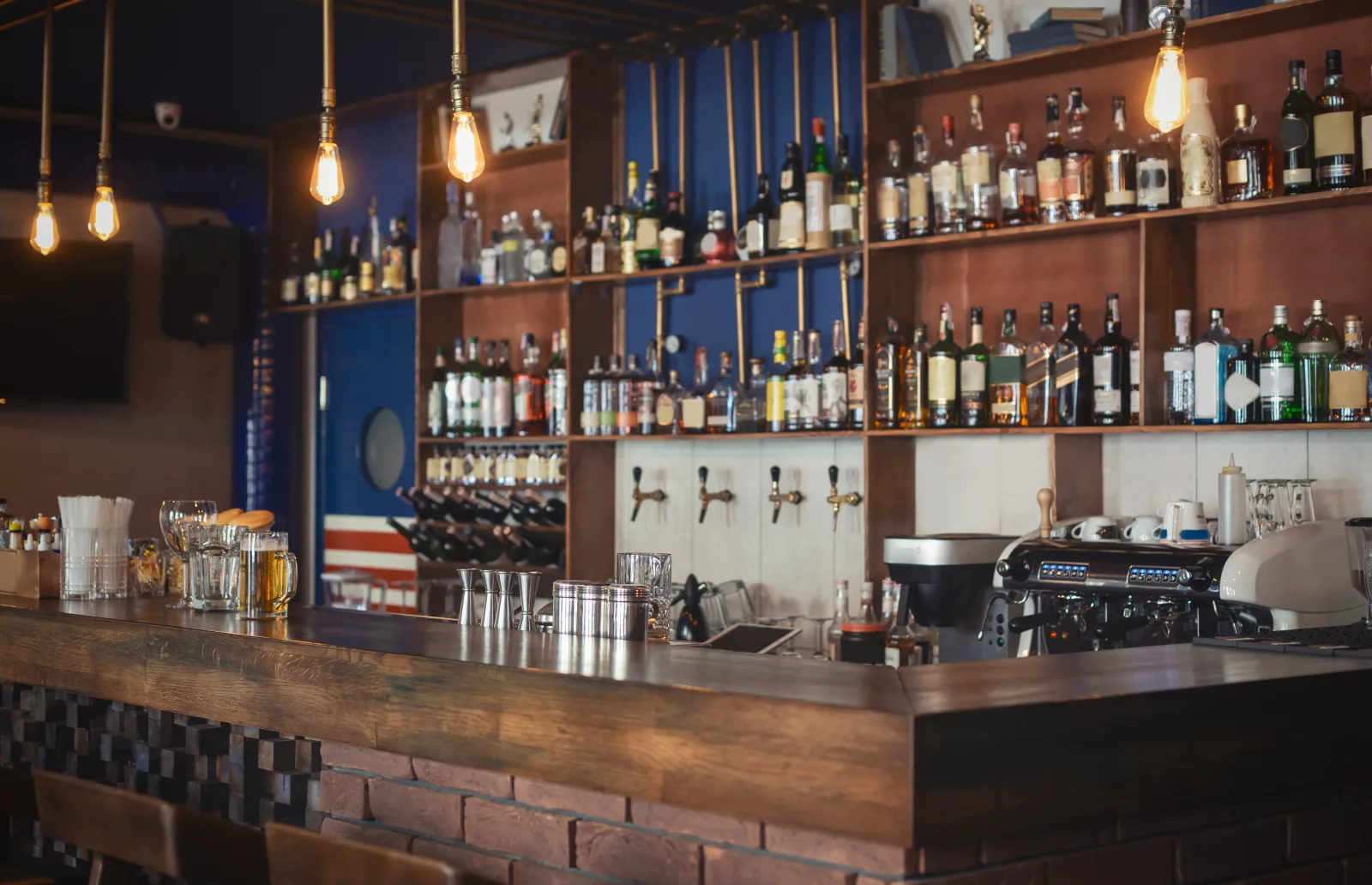

Liquor liability insurance covers claims arising out of serving alcohol — the exposure your general liability policy specifically removes. Standard general liability carries a liquor liability exclusion, so a venue that serves alcohol and buys only general liability is uninsured for the claims most likely to reach it. Liquor liability is the separate purchase that puts that back.
There is one sentence in your general liability policy that decides whether you are insured for the thing most likely to happen at your bar, and almost nobody reads it. It is the liquor liability exclusion, and it does exactly what its name says: it removes claims arising out of serving alcohol from the policy most operators think of as their main liability cover.
That exclusion is not an oversight or a piece of fine print somebody slipped in. It is deliberate, it is standard, and it is the entire reason liquor liability exists as a separate purchase. Understanding what it takes out is the fastest way to understand what this line puts back.
This page is about the mechanism — what the exclusion reaches, how the coverage that answers it is structured, and which clauses decide whether two policies that look identical actually behave the same way when something goes wrong.
What liquor liability covers, and what it does not
Liquor liability answers for injury or damage suffered by a third party that is alleged to arise out of your service of alcohol. The classic shape is a guest who was served at your bar, left, and caused harm — to themselves, to someone else, or to someone else’s property. The claim comes back to you on the theory that the service is part of the chain that led there.
The coverage typically responds to the defense as well as the damages, and on most policies the defense is where the money actually goes. A liquor claim is rarely resolved quickly, because the question of whether a person was visibly intoxicated when they were served is a question about a moment nobody recorded, argued about months later from witness memory and whatever your point-of-sale system happened to capture.
What it does not do is worth stating just as plainly. It is not property coverage: if a guest breaks your furniture, that is a different policy. It is not workers compensation: if the person hurt is your own employee, that claim goes somewhere else entirely. It does not respond to a liquor authority proceeding against your license, which is a regulatory matter rather than a third-party liability claim. And it does not cover you for serving someone underage where the policy excludes illegal service — some wordings carve that out explicitly, and it is worth knowing which yours does before you rely on it.
How the exclusion actually decides who needs this
The exclusion in a general liability policy does not switch on how much alcohol you sell or how strong it is. It switches on whether you are, in the language the policy uses, in the business of manufacturing, distributing, selling, serving or furnishing alcoholic beverages. That is the trigger, and it is a description of your business rather than a measurement of your bar.
The practical consequence surprises people. A restaurant with a short wine list and no bar is generally in the business of serving alcohol just as much as a nightclub is. The volume changes what the coverage costs; it does not change whether the exclusion applies. Operators who assume a small alcohol program leaves them inside their general liability policy have usually mistaken a question about scale for a question about category.
Host liquor liability is not the same thing
Some general liability policies leave a narrow grant intact for a business that furnishes alcohol without being in the business of selling it — the firm that puts on a holiday party, the shop that pours a glass at an evening event. That is host liquor liability, and it exists precisely because those businesses are not caught by the exclusion in the first place.
If you hold a license and sell drinks, host liquor is not your coverage, and a broker who points at it as though it were has not read your operation correctly. This is one of the more expensive misunderstandings in the class, because the grant is real, it is genuinely in the policy, and it looks like the answer right up until the moment it is tested.
The claim categories that actually recur
Four shapes account for most of what an operator sees, and each behaves differently under the policy.
The departed guest
Someone was served, left, and caused harm elsewhere. This is the archetype the line was built for, and the one where dram shop law does most of its work — the question of whether you owe anything at all to a stranger injured by your former customer is answered by your state, not by your policy.
The incident on the premises
A guest who had been drinking is hurt on your floor, or hurts someone else there. These sit awkwardly across the seam: the same night can generate an allegation that sounds like premises liability and an allegation that sounds like over-service, and which policy responds can turn on how the complaint is pleaded rather than on what happened.
The altercation
A fight, an ejection that goes badly, a security intervention. This is the category where assault and battery treatment decides everything, and it is covered in its own section below because it deserves one.
The staff-service claim
An allegation that service continued past the point where a reasonable server would have stopped. What protects you here is rarely the policy wording — it is whether you can show a training program, a refusal policy and some record that both are real. Underwriters ask about this for a reason.
Assault and battery: the clause that decides comparability
If you read one thing in a liquor liability quote beyond the limit, read the assault and battery language. It is the single most common reason two policies with identical headline limits are not comparable, and it is almost never surfaced in a summary.
There are broadly three treatments. A policy may cover assault and battery up to the full policy limit. It may cover it subject to a sublimit — a smaller amount inside the policy that caps this category specifically. Or it may exclude it outright. All three can be written under the same product name, and all three will show you the same number on the declarations page.
This matters more in this trade than in most, because a meaningful share of what goes wrong at a bar late at night is, in legal terms, an assault and battery claim. A policy that excludes the category is not a cheaper version of one that covers it — it is a different policy that happens to cost less, and the difference only becomes visible once something has already happened.
Ask three questions of any quote: is assault and battery covered, is it subject to a sublimit, and does the sublimit apply to defense costs as well as damages. The third question catches the case where the coverage is technically present and practically thin.
Dram shop liability, and why the state line changes the answer
Dram shop liability is the legal basis on which a third party — someone your customer harmed — can bring a claim against you for having served that customer. It is not an insurance concept. It is a liability created by state law, and the insurance exists to respond to it.
Because it is state law, it varies more than almost anything else an operator deals with. Some states impose it by statute, with the conditions written down. Some have arrived at it through their courts instead. Several have neither, and in those states a claim of this kind faces a much harder path. Where liability does exist, states differ on who may bring a claim, on what has to be shown about the customer’s condition at the time of service, and on whether limits apply.
The federal government is largely not in this picture, and that is worth understanding. The federal bureau with authority over alcohol regulates production, importation, wholesale and labeling — not what happens when a bartender pours a drink. On-premise service is regulated by state alcohol authorities, and the constitutional basis for that arrangement is explicit.
The practical upshot for an operator is simple: your exposure on this point is a function of where you pour, and it does not travel with you. An operator opening a second location across a state line has a different risk picture at the new address than at the old one, and the policy that was right for one may not be right for both. The state-by-state detail belongs on our location pages rather than here, because it is genuinely different in each one.
What this line does not do
A coverage is defined as much by its edges as by its center, and liquor liability has several that catch operators out. It is worth being explicit about them, because each one is a place where people assume the policy reaches further than it does.
It does not protect your license. If your state authority moves against your permit after an incident, that is a regulatory proceeding, and a third-party liability policy is not the instrument that answers it. Some operators discover this at the worst moment, having assumed that the policy covering the lawsuit also covers the hearing.
It does not cover your own people. An employee injured breaking up a fight is a workers compensation matter, and the two policies answer different questions about the same night. Nor does it cover damage to your own premises or contents — an intoxicated guest who destroys a table has created a property claim, not a liquor liability one.
It does not answer for deliberate acts by the business itself, and most wordings say so directly. Where a policy excludes service that was itself unlawful — serving a minor, serving after hours — the exclusion is doing real work, and it is one of the clauses most worth reading in your own policy rather than in a summary of it. Two policies can differ on whether the exclusion applies to the business when an individual member of staff broke the rule without its knowledge, and that distinction decides whether you are covered for the thing you were most afraid of.
Finally, it does not reach backwards. Buying the coverage today does not answer for the incident last month, and on a claims-made policy the retroactive date is the line that decides how far back the cover looks at all.
What an underwriter will actually ask you
The submission questions for this line are not administrative. Each one is a proxy for a specific loss pattern, and knowing which is which lets you answer in a way that reflects your operation rather than merely satisfying a form.
Expect to be asked what share of sales comes from alcohol, and to be asked in a way that can be checked against your figures. Expect to be asked what time you stop serving and what time you close — those are different answers, and the gap between them is itself informative. Expect a question about entertainment, because a room with a dance floor behaves differently from the same room with tables in it.
On the operational side: whether you use door staff, whether they are your employees or a contracted firm, and if contracted, what your agreement says about who carries the liability for what they do. That last point is frequently overlooked and occasionally decisive, because a security contract that leaves the risk with you produces a very different claim than one that does not.
On training: whether your servers have completed a recognized responsible-service program, whether that is refreshed, and whether you can produce the records. The program matters less than the evidence of it. An operator who says training happens is describing an intention; an operator who can show when each person last completed it is describing a system, and underwriters read the second very differently from the first.
Then the incident history — not just claims, but incidents. Many operators keep no record of ejections, refusals of service, or moments where something nearly happened. The ones who do are usually the ones who price best, because that log is the only real evidence that the policies on paper are the policies in the room.
Limits, structure, and how the policy is triggered
Liquor liability is usually written with a per-occurrence limit and an aggregate limit for the policy period, in the same shape as general liability. The aggregate matters more than operators expect: a bad year is not one claim, it is a sequence, and the aggregate is what runs out.
Occurrence versus claims-made
An occurrence policy responds to an incident that took place during its term, whenever the claim eventually arrives — including years later, after you have moved to a different carrier. A claims-made policy responds to a claim first made against you during its term, which makes two things critically important: the retroactive date, and continuity. Let a claims-made policy lapse and you can lose cover for incidents that already happened.
This is not an academic distinction in this class, because liquor claims surface late. The night in question and the letter about it are frequently separated by a long gap, and which of your policies answers depends entirely on how the coverage is triggered.
Where liquor liability sits in the stack
It sits alongside general liability rather than inside it, and an umbrella policy will usually sit above both — but only if the umbrella is written to include liquor as an underlying line. An umbrella that excludes liquor liability provides no excess protection over the exposure most likely to reach its limits, which is a combination worth checking rather than assuming.
| The claim | General liability | Liquor liability |
|---|---|---|
| Guest slips on a wet floor | Yes | No |
| Guest hurt by a falling fixture | Yes | No |
| Injury caused by an intoxicated patron you served | Excluded | Yes |
| Dram shop action under state statute | Excluded | Yes |
What actually drives the cost?
We do not quote premiums on a web page, because a number without your operation behind it is not information. What is useful is knowing which variables the underwriter is actually looking at, because most of them are things you control.
The largest is the share of your revenue that comes from alcohol rather than food. A restaurant where drinks accompany dinner and a bar where the kitchen closes early are different risks, and the receipts split is the cleanest signal of which one you are. Closing time is the next: the later you serve, the more the exposure changes in character rather than merely in degree.
After that: whether you have entertainment, and what kind — live music, dancing and events change the crowd and the way it behaves. Whether you use door staff or security, and whether they are employed or contracted. Your server training program, and whether you can evidence it. Your claims history, and — more than the count of claims — what the pattern says about whether anything changed afterwards. And the state you operate in, because the liability regime you are insuring against is set there.
The operators who price best are not usually the ones with the least alcohol. They are the ones who can answer these questions without having to go and find out.
Why Wexford Restaurant Insurance
We are an independent agency, which means we are not placing your risk with whichever company we happen to work for. We hold appointments across a specialty panel and we take this class seriously enough to have built a brand around it.
The practical value is in the reading rather than the shopping. Knowing to check the assault and battery sublimit, to ask whether an umbrella includes liquor as an underlying line, and to notice when a host liquor grant is being offered as though it were liquor liability — that is most of the job, and it is the part that is invisible until it is missing.
Tell us what your operation actually looks like — the receipts split, the closing time, what happens at the door — and a licensed agent will read it and come back to you.
Learn more
Related coverage
Who we insure
Primary sources
- Alcohol and Tobacco Tax and Trade Bureau (TTB) — the federal bureau — its remit is production, importation, wholesale and labeling, not on-premise service
- NIAAA Alcohol Policy Information System — tracks state-by-state alcohol policy
- Twenty-first Amendment, Section 2 — the constitutional basis for state authority over alcohol
Questions operators ask
Does my general liability policy cover alcohol claims?
Almost certainly not. The standard commercial general liability form carries a liquor liability exclusion, and it removes exactly the claims an operator who serves alcohol is most likely to face. That is not a gap somebody forgot to close — it is a deliberate carve-out, and it is the reason liquor liability is sold as a separate policy rather than bundled in.
We only serve beer and wine. Do we still need it?
Usually yes. The exclusion in a general liability form does not turn on how strong the drink is or how much of it you sell. It turns on whether you are in the business of serving alcohol, and a restaurant with a short wine list generally is. The volume affects what the coverage costs, not whether the exclusion applies to you.
What is host liquor liability, and is it the same thing?
No, and the difference matters. Host liquor liability is the narrow grant that survives inside some general liability policies for a business that furnishes alcohol without being in the business of selling it — an office holiday party, say. If you hold a license and sell drinks, host liquor is not your coverage. Reading a host liquor grant as though it were liquor liability is one of the more expensive misunderstandings in this class.
Why do two liquor liability quotes with the same limit differ so much?
Most often it is the assault and battery treatment. One policy may cover it up to the full limit, another may sublimit it well below the policy limit, and a third may exclude it outright. All three can print the same headline limit. Read the assault and battery language before you compare the numbers, because it frequently decides which policy actually responds to a late-night incident.
What is dram shop liability?
It is liability for harm caused by a person you served. It is a creature of state law rather than federal law, which is why it varies so much: some states impose it by statute, some have developed it through their courts, and several have neither. The details — who may sue, on what basis, and within what limits — are set state by state, so the answer for your operation depends on where you pour.
What is the difference between occurrence and claims-made?
An occurrence policy responds to an incident that happened during its term, whenever the claim arrives. A claims-made policy responds to a claim first made during its term, which means continuity of coverage and the retroactive date matter enormously. Liquor claims often surface long after the night in question, so how your policy is triggered is worth understanding before you need to know.
Does liquor liability cover damage to my own property?
No. It is third-party liability coverage. If an intoxicated guest breaks your furniture, that is a property question, not a liquor liability one. The line answers for injury and damage suffered by others that is alleged to trace back to your service of alcohol.
Will a claim make us uninsurable?
Rarely on its own. What moves an account is a pattern — repeated incidents, an absent training program, no record of how service is managed late at night. A single claim on a file that shows a serious approach to over-service reads very differently from the same claim on a file that shows nothing at all.
Get a liquor liability quote
A licensed agent reads every submission. Or call 317-942-0549.