
Who we insure
Restaurant Insurance
A restaurant policy is not one thing. It is a stack of separate lines, and the kitchen decides what most of them cost.
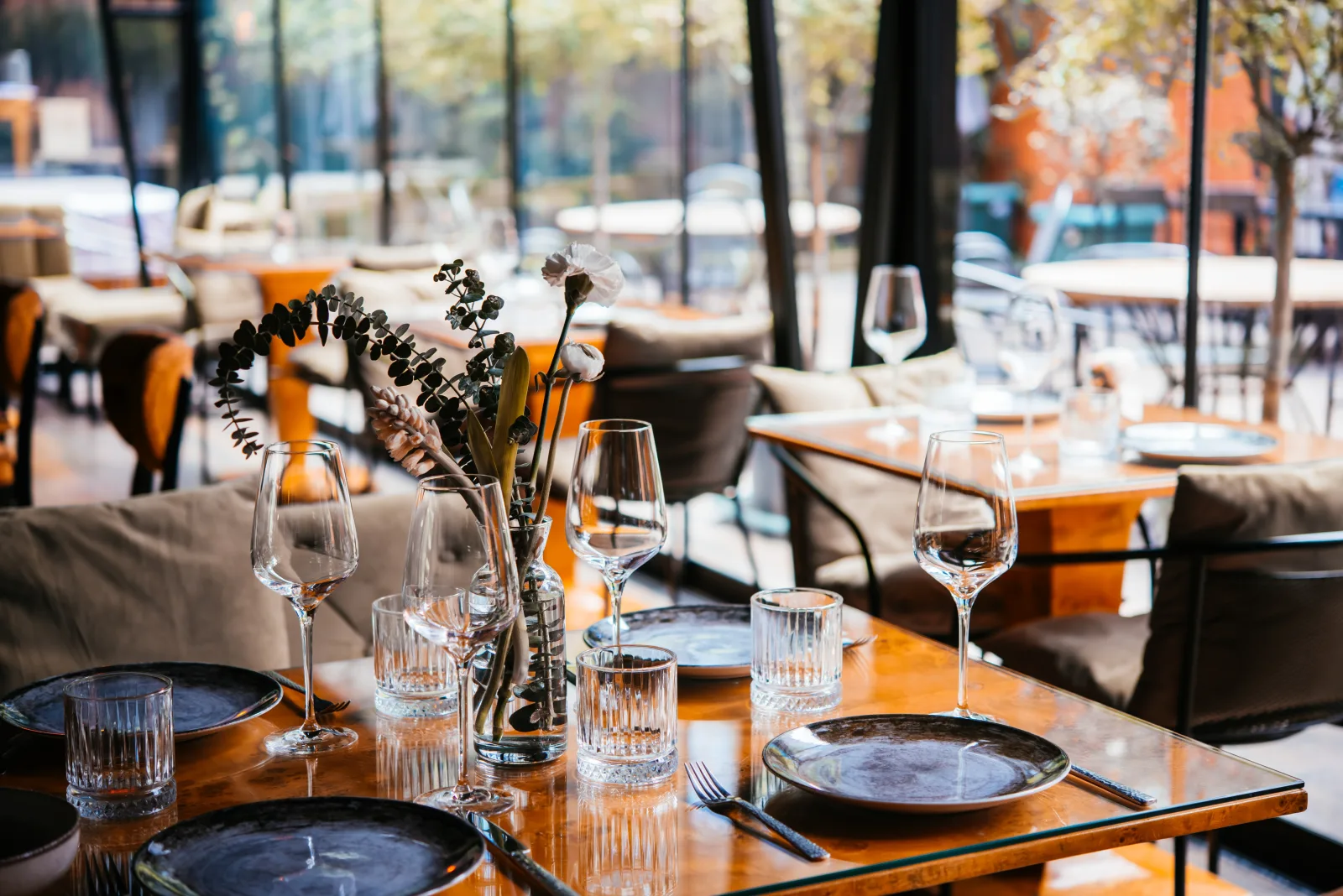

Restaurant insurance is not one policy. It is a stack of separate lines — general liability, property, workers compensation, equipment breakdown, spoilage, commercial auto and often liquor liability — that arrives as one document with one premium and responds one line at a time. Most operators are hurt not by a missing policy but by assuming the stack answers as a whole.
Ask an operator what their restaurant insurance covers and you will usually get a single answer, because it arrives as one policy document with one premium and one renewal date. Ask an adjuster the same question after a fire and you will get several, because what answers for the hood is not what answers for the food that was under it, and neither is what answers for the cook who was standing beside it.
That gap between how the cover is sold and how it responds is where restaurant operators get hurt. It is not usually a missing policy. It is a stack that was assembled without anyone asking which part of it was going to answer for the specific ways a kitchen goes wrong.
This page is about that stack: what it is made of, why the line drives nearly all of it, what an underwriter is actually reading when they price your operation, and what to check before you accept a quote.
What a restaurant policy is actually made of
The document on your desk is probably a package: several lines of coverage issued together, on one policy number, with one renewal. That packaging is convenient and it is also the reason so many operators discover the seams only at a claim. Underneath it, these are separate agreements that were underwritten separately and respond separately.
Commercial property is the one that carries the largest number for most independents, and it is rarely the building. If you lease, the shell belongs to the landlord and the fit-out belongs to you: every improvement you or a previous tenant paid to install, from the ventilation and refrigeration down to the millwork and the floor finish. That work is expensive, it is yours to insure, and it is routinely under-scheduled because nobody has added it up since it went in.
General liability answers for harm to people who are not your employees: the guest who slips crossing a wet patch by the service door, the allegation of foodborne illness, the injury on the way out of the room. It is the line every operator has and the one whose exclusions are least often read.
Workers compensation is the employee side, and in food service it is not a formality. Burns, cuts, slips on a wet line and strains from lifting are the ordinary output of a working kitchen, and how those claims are handled is one of the things that decides what your account looks like at renewal.
Equipment breakdown and spoilage sit next to each other and are constantly confused. Breakdown answers for the machine that failed from the inside — the compressor, the control board, the motor. Spoilage answers for the product that was lost because it did. You can hold one without the other, and operators frequently do without knowing it.
Two more sit at the edges. Commercial auto matters the moment anyone drives for the business, including in their own car, and umbrella liability sits above the liability lines and does nothing at all except when the schedule of underlying insurance says it does.
Why the kitchen decides the price
Two restaurants of the same size in the same town can price very differently, and the reason is almost always back of house. A kitchen concentrates heat, grease, water and sharp edges into a small space where people move quickly, and every one of those elements shows up somewhere in the rating.
Cooking method is the first thing an underwriter looks at. Open flame, a char-broiler, and above all deep frying put grease into the air; the air goes into the hood and duct; and the duct is the path a fire takes into the structure if it is not clean. That is why the questions about your hood system are not paperwork. The cleaning schedule, who performs it, and whether the suppression system carries a current inspection tag are the closest thing an underwriter has to a direct measurement of how the kitchen is run.
Refrigeration is the second. A walk-in is a large stock of perishable product sitting behind a single mechanical system, and a restaurant with a lot of it and no service record is carrying an exposure that shows up in two lines at once.
And the line itself is where the employee injuries come from. A kitchen produces a predictable pattern of burns, lacerations and slips, and what distinguishes accounts is not whether those happen but whether there is any evidence they are being managed — non-slip flooring in the wet areas, cut gloves on the prep station, a genuine practice around reporting rather than a poster.
The room, and the people you did not hire
Front of house produces a different and smaller set of claims than the kitchen, but they are the ones most likely to become a demand letter. A guest injured in your dining room is a stranger with no relationship to you other than the one you just created, and there is no compensation system standing between them and a lawyer.
The ordinary cases are unglamorous. Water tracked in from outside on a wet night. A step or a threshold that regulars know about and a first-time guest does not. A chair that failed. Something carried through a crowded aisle at service. These are the claims the general liability line exists for, and they turn on whether you knew about the hazard and what you did about it — which means they turn on your records, not on your recollection.
Foodborne illness allegations sit here too and behave differently from the rest. They arrive late, they are difficult to attribute, and the defense usually rests on documented process — temperature logs, receiving records, staff illness policy — rather than on the incident itself.
If you also run a bar program
A full-service restaurant that serves alcohol is still a restaurant for underwriting purposes, and it belongs on this page rather than on the bar one. What changes is that one specific exclusion now reaches you.
The standard general liability form excludes liability arising out of serving alcohol. That exclusion does not care that your alcohol sales are a small part of the ticket or that you close at ten. It applies to a dining room with a wine list on the same terms it applies to a tavern, and the coverage that answers it is a separate purchase: liquor liability. What it does, how assault and battery is treated inside it, and why two quotes with the same limit can behave very differently are set out in full there rather than repeated here.
The practical point for a restaurant is narrower. Alcohol sales as a share of revenue, whether you have a late-night trade, and whether service staff have any training on record are what move this line for an operation whose main business is food. If your bar has become the business rather than a part of it, the bar insurance page is the better description of how you will be underwritten.
What an underwriter reads before quoting a restaurant
Underwriting a restaurant is largely an exercise in inferring how a place is run from a small number of documents. Knowing what those documents say about you is worth more than any advice about how to present the account.
The loss run is read first and read hardest. Not the total — the shape. A file with scattered, closed, unrelated incidents reads very differently from one with the same claim recurring at the same station, and an open claim with no resolution in sight will draw more questions than a closed one of any size.
After that: the cooking method and the hood documentation, because that is the fire story. Payroll by job class, because that is the workers compensation story and because misclassified payroll is one of the more common reasons an audit produces a bill nobody expected. The lease, because it decides what property is yours to insure. Hours of operation and whether there is a late trade. And the equipment schedule, which underwriters take more seriously than operators do, because a schedule that has not been updated since the fit-out is a statement about the account whether or not it was meant as one.
What draws a decline or a non-renewal is rarely a single bad year. It is an open claim with no plan, a hood system with no cleaning record, a building with known deficiencies that were raised at the last inspection and not addressed, or a submission that arrives incomplete twice.
What moves the cost of restaurant insurance?
We do not publish prices, and any page that does is either quoting a different operation than yours or guessing. What can be described honestly is the framework — what an underwriter varies, and in which direction.
Cost segments first by scale: a single independent room, a small group of locations under one owner, and a larger multi-unit operation are three different underwriting conversations, and they are not simply the same conversation multiplied. A group gets read as a system with shared standards; a single site gets read on its own file.
Within any segment, the drivers that actually move the number are the cooking method and the resulting fire load, the value of the fit-out and equipment you are asking the property line to carry, payroll and its distribution across job classes, your claims history and its shape, alcohol as a share of sales, the hours you keep, and the construction and protection of the building itself. Where you operate matters too, because the property peril profile and the workers compensation system both change at the state line.
The lever most under your control is documentation. The same restaurant with a current hood cleaning record, an updated equipment schedule and a clean description of the operation is a materially easier account to place than one without them, and that difference is real rather than presentational.
Regulation is mostly local, and that is the hard part
There is no federal restaurant license and no single national rulebook. The FDA publishes the Food Code, but it is a model: states adopt it, in different editions, with their own amendments, and enforcement usually sits with a county or city health department rather than with the state. Two restaurants a short drive apart can be inspected against different editions of the same document.
The same fragmentation runs through the rest of it. Workers compensation is state law, and in a small number of states it is bought from a state fund rather than from a private carrier. Fire and building requirements, including how your hood and suppression system are inspected, are set by state adoption of model codes and then enforced locally. Alcohol licensing is a state matter and often a municipal one on top.
This is why a national quote that never asked where you are is not really a quote. It matters for the cover you need, for who regulates you, and for what an underwriter expects to see on file.
- Restaurant insurance in Alabama
- Restaurant insurance in Arizona
- Restaurant insurance in Arkansas
- Restaurant insurance in California
- Restaurant insurance in Colorado
- Restaurant insurance in Connecticut
- Restaurant insurance in Delaware
- Restaurant insurance in Florida
- Restaurant insurance in Georgia
- Restaurant insurance in Idaho
- Restaurant insurance in Illinois
- Restaurant insurance in Indiana
- Restaurant insurance in Iowa
- Restaurant insurance in Kansas
- Restaurant insurance in Kentucky
- Restaurant insurance in Louisiana
- Restaurant insurance in Maine
- Restaurant insurance in Maryland
- Restaurant insurance in Massachusetts
- Restaurant insurance in Michigan
- Restaurant insurance in Minnesota
- Restaurant insurance in Mississippi
- Restaurant insurance in Missouri
- Restaurant insurance in Montana
- Restaurant insurance in Nebraska
- Restaurant insurance in Nevada
- Restaurant insurance in New Hampshire
- Restaurant insurance in New Jersey
- Restaurant insurance in New Mexico
- Restaurant insurance in New York
- Restaurant insurance in North Carolina
- Restaurant insurance in North Dakota
- Restaurant insurance in Ohio
- Restaurant insurance in Oklahoma
- Restaurant insurance in Oregon
- Restaurant insurance in Pennsylvania
- Restaurant insurance in Rhode Island
- Restaurant insurance in South Carolina
- Restaurant insurance in South Dakota
- Restaurant insurance in Tennessee
- Restaurant insurance in Texas
- Restaurant insurance in Utah
- Restaurant insurance in Vermont
- Restaurant insurance in Virginia
- Restaurant insurance in Washington
- Restaurant insurance in West Virginia
- Restaurant insurance in Wisconsin
- Restaurant insurance in Wyoming
Why Wexford Restaurant Insurance
We are an independent agency, licensed in 48 states, and restaurants and bars are what this brand writes. That focus is the reason the submission we send an underwriter looks the way they want it to look, and the reason the questions we ask you are the ones that change a quote rather than the ones that fill a form.
A licensed agent reads every submission. If your operation has something unusual in it — a shared kitchen, a food hall stall, a seasonal patio that doubles your covers for part of the year — that is a conversation, not a checkbox, and it is better had before the quote than after the claim.
Learn more
Related coverage
Who we insure
From the blog
Primary sources
- FDA Food Code — the federal MODEL code — states and localities adopt it, in different editions and with amendments, rather than it applying directly
- OSHA restaurant safety eTool — the federal safety agency walking through the hazards of a working kitchen, station by station
- NFPA 96 — commercial cooking ventilation and fire protection — the standard behind hood, duct and cleaning-interval requirements an underwriter will ask about
Questions operators ask
What does a restaurant insurance policy actually include?
There is no single restaurant policy. What operators call one is a stack of separate lines that answer for different things: property for the building work you paid for and the equipment inside it, general liability for harm to guests, workers compensation for injuries to staff, equipment breakdown for the machine that fails on its own, and spoilage for what was in the walk-in when it did. Some carriers wrap several of these into one package with one bill, which makes it feel like a single product. It is not, and knowing which part answers for what is the difference between a claim that pays and an argument.
We lease our space. Does the landlord’s policy cover our kitchen?
Almost never in the way operators expect. A landlord insures the structure and the systems that came with it. Everything installed since — ventilation, refrigeration, the fixed equipment, the finishes — is normally yours to insure, and it is usually the larger of the two numbers. Read what your lease makes you responsible for before you decide how much property cover you need, because the lease, not the policy, is what assigns it.
Do we need workers compensation for part-time and seasonal staff?
In most places the obligation turns on the employment relationship rather than on hours, so part-time, seasonal and student staff generally count. The rules are set state by state and the thresholds differ, and four states run their coverage through a state fund rather than through private carriers, which changes how it is bought rather than whether it is required. Tell us where you operate and we will tell you how it works there.
Our kitchen equipment is old. Is that a problem for underwriting?
Age alone is rarely the issue. What underwriters read is maintenance: whether the hood and duct are cleaned on a schedule and by whom, whether the suppression system has a current inspection tag, whether the refrigeration has a service record. A well-maintained older kitchen with documentation generally reads better than a newer one with nothing on file, because the file is the only evidence an underwriter has about how the place is run.
We serve alcohol with dinner. Do we need liquor liability?
Yes, and it is a separate purchase. The standard general liability form carries a liquor liability exclusion, and it applies to a restaurant with a wine list just as it applies to a bar. The volume of alcohol you sell affects what the coverage costs, not whether the exclusion reaches you. The mechanism is set out in full on our liquor liability page.
What is the difference between spoilage and equipment breakdown?
They answer for different halves of the same bad night. Equipment breakdown responds to the failure of the machine itself — the compressor that burns out, the control board that fails. Spoilage responds to the product that was lost because it stopped running. One policy can pay for the compressor and leave the food, or pay for the food and leave the compressor, depending on how the account is built. That is worth confirming before you need to know.
Does a business interruption claim need physical damage first?
Usually yes. Business income coverage in a commercial property policy is generally triggered by a covered physical loss at the premises — the fire that closes the dining room, not the slow week that follows a road closure. There are extensions that broaden it in specific ways, and they are worth reading, but the general rule is that the income side follows the property side rather than standing on its own.
How fast can we get a quote?
That depends less on us than on what you can send. A submission with a current loss run, a clear description of the operation, and the equipment and payroll detail moves quickly. One that arrives without them waits while we go and get them. The fastest route is the quote form, because it asks for the things an underwriter is going to ask for anyway.
Get a restaurant insurance quote
A licensed agent reads every submission. Or call 317-942-0549.