
Bar Insurance · Arkansas
Bar insurance in Arkansas
Arkansas gives the licensee a statutory defense built out of what the room reasonably believed — and then leaves the causation question to a jury. Between those two facts sits almost everything a bar here can do about its own exposure.
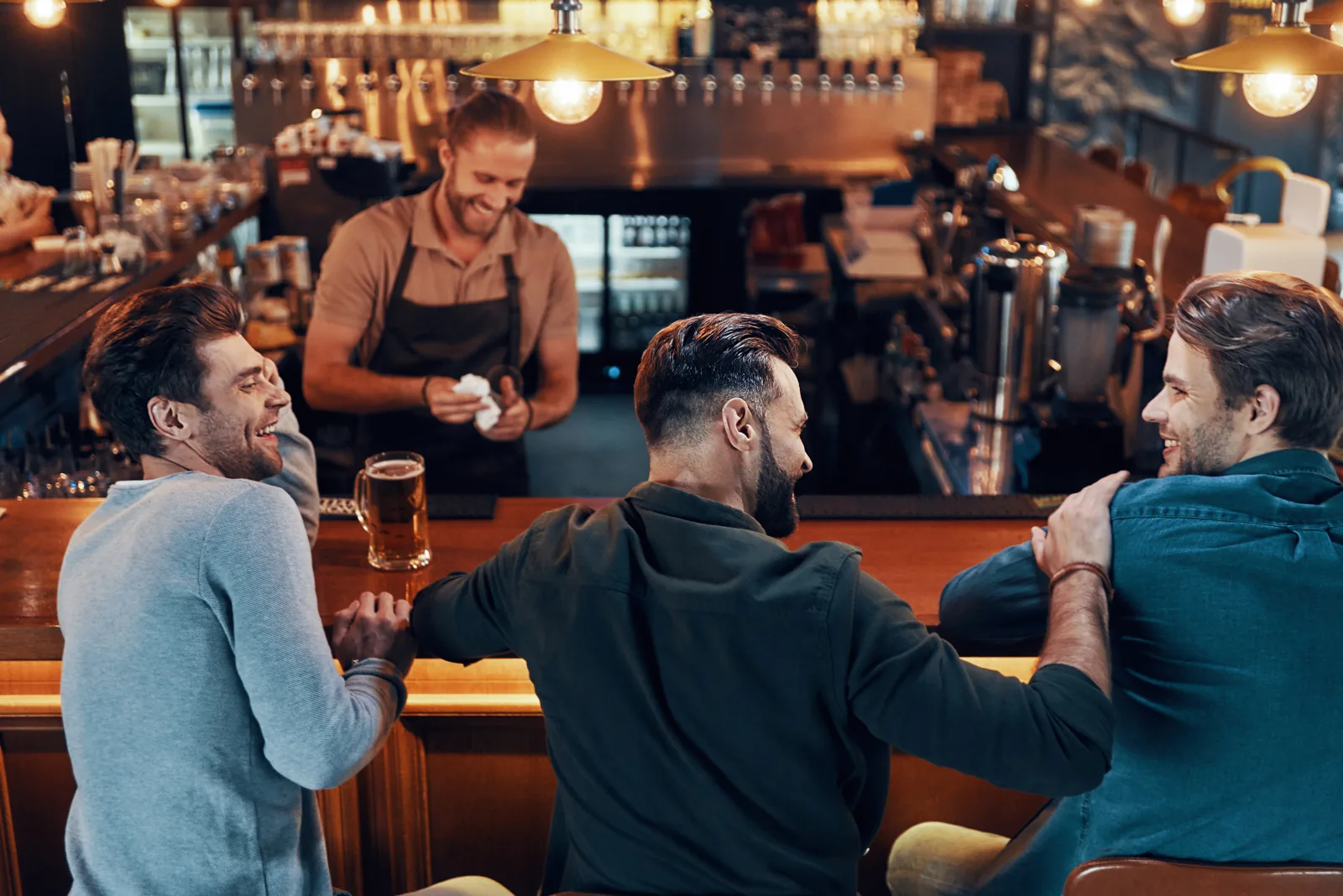

An Arkansas license record does not tell you where the drinking actually happens, and a published division source warns about exactly that on-premise and off-premise distinction. That gap matters because a bar here can be trading under any of four different arrangements. The page separates what the record proves from what it only implies. Where the drinking happened is the first question a claim will ask, and the record does not settle it.
Start with something small that turns out to matter. A published division source carries an express warning that on-premise versus off-premise consumption status is not reflected in the data — meaning that a record confirming a business is licensed does not, on its face, establish that people drink there.
That gap is a nuisance for anyone checking a room from the outside and it is a useful reminder from the inside: in Arkansas, what a document proves and what a reader assumes it proves are two different things. The same discipline is the right one to bring to the state’s civil liability position, which is not what a single section of it looks like.
What follows is the license record and what it will not tell you, then the four economies a bar in this state might be trading in, then the immunity and the two carve-outs that qualify it, the statutory meaning of clear intoxication, the defense the statute hands a careful operator, and finally what it means that causation here is a question for a jury.
A license record that will not tell you where the drinking happens
On-premise alcohol service in Arkansas is licensed by the Alcoholic Beverage Control Division, which sits inside the Department of Finance and Administration. That much is straightforward, and the division’s name is confirmed from its own materials rather than from a summary of them.
What is less straightforward is what the published data supports. A division source carries an express warning that on-premise versus off-premise consumption status is not reflected in the data. So a license record establishes that a business is licensed; it does not, by itself, establish that the business is a room where people sit and drink.
That is worth knowing on both sides of a transaction. If you are buying a going concern, or taking an assignment of a lease, or being asked by a landlord or a lender to evidence what you hold, the record on its own may not carry the fact everyone in the conversation assumes it carries. The operating reality — the hours, the floor, the bar itself — is what settles it.
It matters on a submission for the same reason. An underwriter reading an Arkansas account is building a picture of the room from what the operator says about it, and a license reference does not do that work unaided. A short, plain description of how the room actually trades is worth more here than in states where the credential carries the answer.
A bar here could be trading in any of four different states
Arkansas has a handful of distinct poles instead of a single center, and what separates them is a crowd difference before it is anything else. The capital carries the independent scene. A north-west corridor grown on corporate headquarters supports newer, higher-volume rooms on quite different economics. Delta traditions run down the eastern side. And in the Ozarks and Ouachitas a highland tourism economy hands part of the state a season the remainder of it never sees.
For a bar those are four different underwriting problems wearing one state name. A high-volume room built for corporate-corridor trade has a staffing model, a turnover rate and a crowd density that a long-established Delta room does not. A seasonal highland venue has a compressed year, temporary staff at exactly the moments the room is busiest, and a crowd of visitors nobody behind the bar has met before. One state behaving as several is common enough; what differs is the instrument doing the dividing, and our Kentucky bar page divides its state by what a place may lawfully sell rather than by who comes through the door.
That last point is the one that reaches the liability file most directly. Where the customers are largely visitors, the informal social control that makes a regulars’ room manageable is simply not present, and the written procedure has to carry weight that the room’s own culture would carry elsewhere.
Barbecue and fried-catfish formats are everyday rather than specialist here, which means a very large share of rooms have a working kitchen behind the bar. That is a property and equipment breakdown conversation running alongside the liquor one, and it belongs in the same submission rather than in a later phone call.
The default is that the seller is not reached, and the carve-outs are the exception
The shape to hold on to is an immunity qualified by two carve-outs — and it is a shape no single section of the chapter announces on its own, which is why the chapter has to be read as a chapter.
The first carve-out is the sale to a minor. One section declares the knowing sale of alcohol to a minor to be contrary to public policy, and another provides that where it is proven that a retailer knowingly sold to a minor — or sold in circumstances where the retailer reasonably should have known the purchaser was a minor — a civil jury may determine whether that knowing sale constituted the proximate cause of the injury.
The second carve-out does the same for sale to a clearly intoxicated person. Same structure, same route to the jury, different condition on the person served.
Read as a whole, then, the ordinary Arkansas sale does not expose the seller, and the two routes that do are both keyed to a state of the purchaser that the retailer knew about or reasonably should have known about. Neither is an accident-based test. Both are knowledge tests, which means both are, in the end, questions about how the room was being run. Shelter for the seller is not an Arkansas peculiarity, though the drafting varies a great deal: our Delaware bar page reads a title whose only civil-liability provision points the other way entirely.
None of this touches what the beverage regulator may do about a license, which is a separate matter running on its own track. A civil immunity is not a regulatory one, and it is a mistake to read either as covering the other.
“Clearly intoxicated” is defined, and the definition is a demanding one
The statute does not leave clear intoxication to argument. It defines it: so obviously intoxicated that at the time of sale the person presents a clear danger to others.
Two parts of that are doing work. “So obviously” sets the threshold above ordinary impairment — the condition has to be apparent, not inferable. And “at the time of sale” anchors it to a moment, the way a knowledge test has to be anchored if it is going to be answerable at all.
The third part, “presents a clear danger to others”, is the one operators tend to skip past, and it is the most distinctive. The definition is not written purely about the person’s condition; it reaches the risk that condition creates for other people. That is a higher and narrower thing than looking unwell or unsteady.
What follows for a room is a training point rather than a legal one. Staff who are taught to watch for a defined condition make better and more consistent decisions than staff told to use their judgment, and the record of a consistent decision is the thing that survives into a claim. It is also the thing an underwriter can see from outside.
The statute hands you a defense, and it is made of documents
Arkansas gives the retailer a statutory affirmative defense: that the retailer had a reasonable belief that the person was not clearly intoxicated, or that the person would not be operating a motor vehicle while impaired.
An affirmative defense is not the same as an argument. It is a defined route with defined elements, and the party running it has to establish it. So the practical question is not whether your belief was reasonable in the abstract; it is what your room can produce, years later, that speaks to what it believed at the time.
That points at the ordinary apparatus, done properly rather than nominally: a service policy that says what staff are to do and does not soften as the room fills, refusal records written on the night, incident notes taken while the evening is still in someone’s head, and a documented training program with a record of who completed it and when. None of that is exotic. All of it is the difference between a defense you have and a defense you would like to have had. Paper standing in for a state of mind recurs across this trade — the line our Georgia bar page draws between identification relied on and identification merely glanced at is the same idea fastened to a different element.
The second limb of the defense is worth reading on its own, because it points somewhere unexpected. A belief about whether the person would be driving is a belief about how customers leave. Whether the room asks, whether there is a practice around it, and whether anyone recorded it are questions about departure rather than service — and departure is the part of the night most venues document least.
If your business also puts staff or vehicles on the road, that same departure question runs into the commercial auto side of the program, which is worth checking rather than assuming it follows.
Causation goes to a jury, and that shapes the cost before it shapes the outcome
Both carve-outs are framed the same way: where the elements are proven, a civil jury may determine whether the sale constituted the proximate cause. Causation, in other words, is expressly a question for the jury rather than something resolved on the papers.
For an operator that is a cost fact first. A claim whose central question is reserved to a jury is expensive to defend even when the defense is a good one, because the road to a determination runs through discovery, through depositions, and through the reconstruction of a night nobody wrote down. So read your own wording for how it treats defense costs against the limit. In a state that hands causation to a jury, that clause does more work than the limit does.
The tail deserves the same attention, and this state supplies a sharper reason for it than most. The defense the statute hands you is assembled out of what the room believed at the time, and belief is proved from material that decays — rosters, refusal notes, footage on a recorder that overwrites itself on a cycle nobody chose deliberately. A claim surfacing two policy years after a busy season needs that material to have outlived the season. Which policy responds is the second question, and it turns on whether the wording answers to the evening in question or to the day somebody first presents a claim about it. A break in the run of policies behind you narrows the answer, and the umbrella deserves the same inquiry, since an excess layer is only ever as unbroken as the layers written beneath it.
The building half of an Arkansas file sits on the Arkansas restaurant page, which also carries the roster question — the state is absent from the national plans list, and that page is careful about what an absence from a membership list is and is not evidence of. None of it changes because the occupant is a bar. One point does bear repeating from this side: damage by flooding is placed separately, federally or privately, and the commercial property form is not the document that answers it.
Major Arkansas bar markets
- Little Rock. The capital carries the independent scene, which in bar terms means owner-operated rooms with long-tenured staff and a regular crowd. Familiarity is a genuine control on service decisions here, and the submission that reads best is the one that shows the procedure also works on the nights the regulars are outnumbered.
- Bentonville. The north-west corridor grew on corporate headquarters and supports newer, higher-volume rooms on quite different economics from the rest of the state. Volume and turnover put the weight on written practice rather than on individual judgment, which is exactly the shape the statutory reasonable-belief defense is built to reward.
- Fayetteville. University-town trade concentrates demand into a handful of dates and pushes the crowd toward the age boundary, which puts the first carve-out — the knowing sale to a minor — directly in front of the room. What has to survive afterwards is evidence of a check actually made on the night, because the statutory defense is assembled from what the room believed rather than from what a binder says it requires.
- Springdale. Corridor rooms serving a crowd that arrives by car rather than on foot, which puts the second limb of the reasonable-belief defense — the belief about whether a customer will be driving — squarely in play. How people leave is the part of the night most venues document least and the part a defense most often needs.
- Fort Smith. A steadier weekly rhythm than the corridor or the university towns, with rooms whose trade is local and repeat. Loss history from an account like this is read for pattern rather than size, and a run of small altercation claims across different nights says more about management than one large loss does.
- Jonesboro. Regional-center trade with a mix of local custom and traffic passing through, and a kitchen behind most bars given how ordinary barbecue and catfish formats are here. That makes the property and equipment side part of the same submission rather than a separate conversation held later.
Learn more
Related coverage
Who we insure
Primary sources
- Arkansas DFA — Alcoholic Beverage Control Division — the licensing body, sitting inside the Department of Finance and Administration; the division’s own materials are where the published-data caveat this page opens on comes from
- Ark. Code §§ 16-126-101 to 16-126-106 — sale of alcohol to a minor; dram shop — the chapter the whole civil question lives in; it has to be read as a chapter rather than a section, because the sections do not each carry the shape of the answer
- Arkansas State Board of Health — Rules Pertaining to Retail Food Establishments — the food rule for a bar with a kitchen behind it; the kitchen story belongs to the restaurant page and this is the way into it
Arkansas bar insurance FAQs
Can I tell from an Arkansas license record whether a place serves for drinking on the premises?
Not reliably. A division source carries an express warning that on-premise versus off-premise consumption status is not reflected in the data. The record establishes that a business is licensed; how the room actually trades is what settles the rest, which is why a plain description of the operation is worth including on any submission here.
If a customer leaves our bar and causes harm, can we be sued in Arkansas?
Only through one of two statutory carve-outs. The general position is an immunity for the seller. The routes past it are a knowing sale to a minor, or a sale in circumstances where the retailer reasonably should have known the purchaser was a minor, and a sale to a clearly intoxicated person. Both are knowledge tests rather than outcome tests.
What counts as clearly intoxicated under the Arkansas statute?
The statute defines it: so obviously intoxicated that at the time of sale the person presents a clear danger to others. All three parts matter — the condition has to be obvious rather than inferable, it is measured at the moment of sale, and the definition reaches the danger the condition creates for other people rather than the condition alone.
What is the reasonable-belief defense, and how do we put ourselves in a position to use it?
It is a statutory affirmative defense that the retailer had a reasonable belief the person was not clearly intoxicated, or would not be operating a motor vehicle while impaired. Because it is an affirmative defense rather than an argument, the room has to be able to establish it — which in practice means contemporaneous refusal records, incident notes written on the night, and a training program with a record of who completed it.
Who decides whether the sale actually caused the injury?
A jury. Both carve-outs are written so that where the elements are proven, a civil jury may determine whether the sale constituted the proximate cause. That makes the central question one that cannot be resolved on the papers, which is a cost fact before it is an outcome fact and a reason to understand how your policy treats defense costs.
Does the second limb of the defense really turn on whether the customer was driving?
It refers to a reasonable belief that the person would not be operating a motor vehicle while impaired, so a belief about how a customer leaves is capable of being part of the defense. That points at the departure end of the evening — whether the room asks, whether there is a practice, and whether anyone recorded it — which is the part of a shift most venues document least.
Our highland season is short and intense. What survives the shutdown?
The evidence problem does. A claim can surface long after the season it belongs to, and the defense this state offers is assembled from records made at the time — who served, what was refused, what the cameras still hold. Keeping those past the closure matters as much as knowing which policy responds — and that second question is worth asking anyway: does your cover answer to the night in question, or to the day a claim about it lands?
Which policy answers a claim brought through one of the carve-outs?
A separate one. General liability wording stands apart from alcohol claims, so the two routes the chapter leaves open — the knowing sale to a minor, and the sale to a clearly intoxicated person — arrive at cover a room has to arrange in its own right. Our <a href="/coverage/liquor-liability/">liquor liability</a> page walks through the carve-out in the standard wording and the policy written to answer it.
Get a Arkansas bar insurance quote
Tell us what you run and where. Or call 317-942-0549.