
Bar Insurance · Georgia
Bar insurance in Georgia
Two credentials, in a fixed order, before a Georgia room may pour at all — and then a liability statute that gives a documented identification practice something most states only give it in argument: standing in the statute itself.
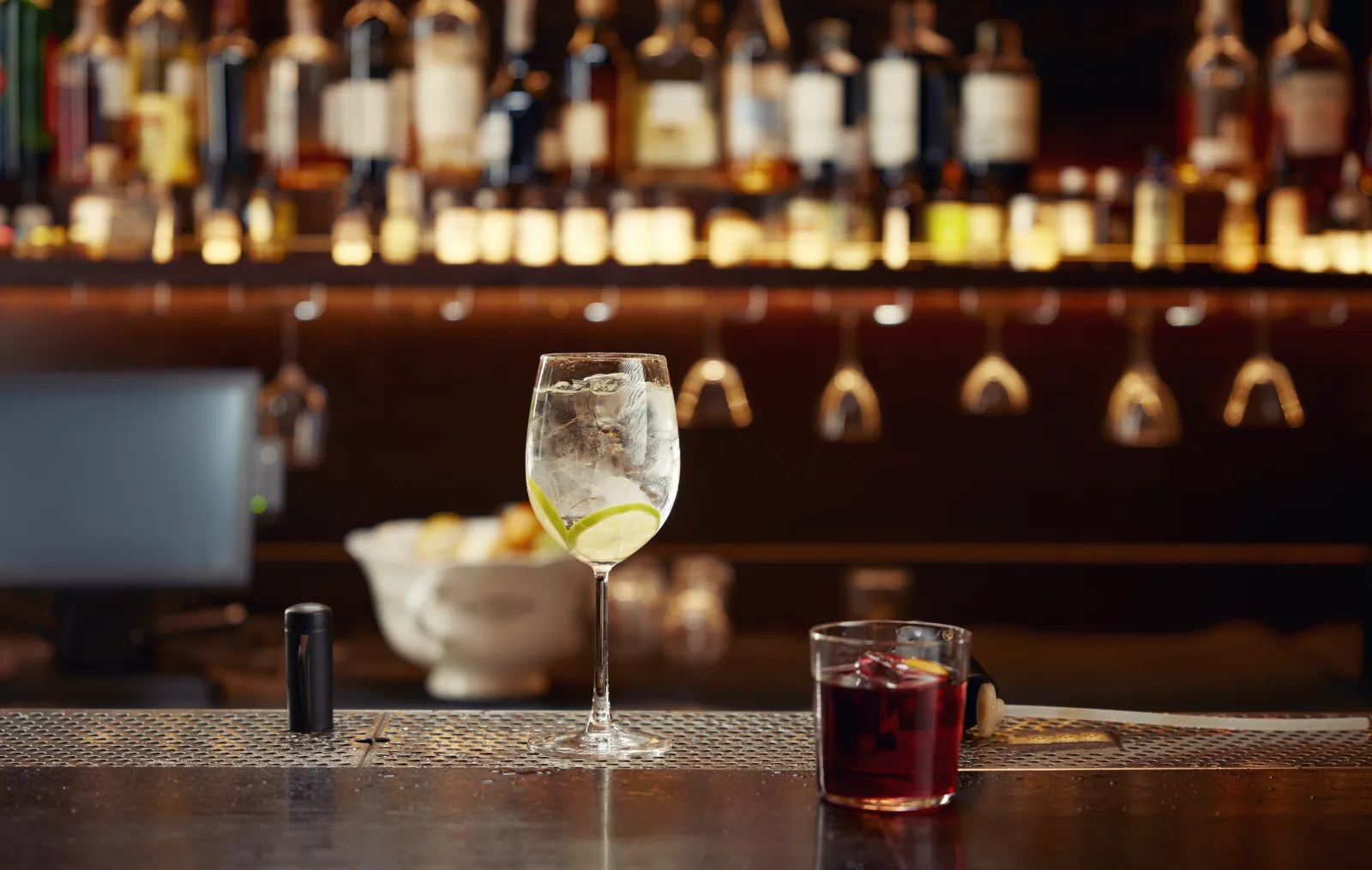

Georgia requires two credentials, and the order in which you obtain them sets your opening date. The defense available to a licensee is a separate matter from either. This page keeps the licensing sequence and the liability question apart, because conflating them is how an operator ends up with a permitted room and an uninsured exposure.
Two things about Georgia decide most of what a bar file here looks like, and neither of them is a coverage question. The first is that a room needs two licenses and they issue in a fixed order. The second is that the liability statute contains an operator-side defense written into the section itself, keyed to something a venue does at the door.
Why an alcohol claim has to find its own policy at all is a question about the form rather than about this state, and our liquor liability page answers it. Georgia’s contribution is to the shape of what arrives there.
The route through, then: the two credentials and the sequence, the conjunctive exception and why one condition alone will not do it, the bar on the drinker recovering from the provider, the identification-reliance defense and what it asks a room to be able to show, the three quite different nights this state produces, and what changes when the local half of your licensing is also part of your renewal.
Two credentials, in order, and the order sets your opening date
On-premise service in Georgia is licensed by the Alcohol and Tobacco Division of the Department of Revenue, and the credential is the Retail Consumption Dealer license, issued by beverage class in combinations of liquor, beer and wine.
That is only half of it. A Georgia room needs a license from its city or county governing authority as well as the state one, and the local one comes first. The state side is now delivered through a centralized licensing portal, while local governing authorities retain their own standards.
Read that last clause carefully, because it is the one people compress. A centralized portal is a delivery channel. It has not merged two sets of standards into one, and it does not put the state in a position to substitute its judgment for the local authority’s. An operator dealing with a modern state process and a local process with its own expectations is dealing with two processes, not one process with two windows. Two governments licensing a single room is a recognizable structure rather than a Georgia oddity — our Illinois bar page describes a room licensed twice over by authorities that are not the same authority — and the consequence for whoever is holding the lease is identical.
The commercial consequence is a calendar consequence. Your opening date is set by the slower half, and the local half is the one that has to complete first. That is a business-interruption-shaped problem before it is an insurance one — a lease running, a fit-out finished, staff hired, and a room that cannot legally pour. It is worth building the sequence into the plan rather than discovering it.
It is also worth being precise about what this page does and does not cite. The substance of the local-first sequence and the portal is consistent across the department’s own materials; the statutory section numbers behind it came through departmental pages rather than fetched statute text, so they are not published here. Where a number would look authoritative without being verified, leaving it out is the honest option.
The exception has two conditions, and either one alone is not the exception
The civil starting point here is immunity, and the qualification placed on it is conjunctive. It carries a double condition, and both parts have to be satisfied before a provider can be reached. Establishing one of them is not establishing the exception.
That structure is unusual enough to be worth stating on its own, because it changes what a claim is actually about. Where an exception has a single element, the argument is about whether that element happened. Where it has two, the argument moves to the second one, and the second one is where the fight goes. A test built out of two limbs sits immediately next door as well, and our Alabama bar page works through what a room has to be able to describe when both of them must be met together.
This page describes the shape and does not enumerate the limbs. The material it is built from is internally inconsistent about whether that detail is publishable, and where two instruments disagree the narrower one is the one to follow. What is safe to work from — and what actually matters operationally — is that a Georgia claimant has to establish two things rather than one, and that a room’s defense is not confined to disputing the more obvious of them.
The section also does something for the operator on the other side of the same subsection: it bars the drinker from recovering from the provider for their own injuries. A person who drank and was hurt does not have a claim against the room that served them. That closes off an entire category of claim that operators in some other states have to think about, and it is a genuine structural feature of the Georgia position rather than a technicality.
Identification you relied on, not identification you glanced at
Subsection (c) is the part of the Georgia statute a bar should actually build a practice around. Evidence that the seller was furnished with, and acted in reliance on, identification showing the person to be of legal drinking age constitutes rebuttable proof that the service was not willful, knowing and unlawful.
That is a statutory reward for a documented identification practice, and there are not many of those. In most states a good door procedure is an evidential argument you make; here, the fact of having been furnished with identification and having relied on it carries a defined status in the section itself.
Two words in that provision do the work. “Furnished with” means the identification was actually produced to the seller — not that the customer looked old enough, and not that somebody assumed a check had happened further up the queue. “Acted in reliance on” means the decision to serve followed from the check. A check performed and then ignored is not reliance, and neither is a check performed by a door team whose refusals never reach the bar.
It is also rebuttable proof rather than a bar, which is the right way to hold it. It shifts the ground under an argument; it does not end one. A room whose identification practice is real and recorded is in a materially better position than one whose practice exists in a training binder, and the difference between those two rooms is visible from outside — to a claimant, and to an underwriter reading the submission.
There is a staffing consequence in that which is peculiar to this state. Read the subsection closely and the person it describes — the one furnished with the identification, the one whose decision to serve followed from it — is, in most rooms, whoever is standing at the entrance. Where that person is engaged through a security firm rather than carried on your own payroll, the evidence that earns you a statutory defense is being produced by somebody else’s employee. Two lines then have a stake in the arrangement at once: general liability is asked who answers for that person’s conduct, and workers compensation is asked whose employee they were when the night went wrong. Neither question is settled by the heading on the contract, and both are cheaper to settle at placement.
Three Georgias, three different nights behind the bar
Metro Atlanta carries a dense bar and nightlife layer alongside chef-driven independents and hotel and convention food-and-beverage tied to a major air hub. For a bar the operative feature is that a large share of the crowd is transient and unknown to the staff, and that a convention calendar loads the year unevenly — the heaviest weeks are set by somebody else’s diary rather than by the day of the week. The metro is also a great many separate governing authorities inside one travel-to-work area, which is the local half of the license differing across a boundary a customer crosses without noticing. And it carries an unusually deep bench of franchised and corporate-headquartered brands, which means contractual insurance requirements frequently set the limits before an underwriter does. A crowd that turns over completely between weeks is the harder half of that, and our Florida bar page takes up what a room loses when nobody behind the bar knows anybody in front of it.
Savannah’s historic district sustains a bar culture shaped by its own local rules, and the coastal and golf-resort corridors carry seasonal visitor demand. Two rooms of similar size can therefore be operating under different local constraints, which is exactly the situation in which an account-level generalization goes wrong.
Elsewhere the state runs to Southern and barbecue traditions, meat-and-three rooms and family-owned operations held across generations. A bar in that setting is usually a room with a kitchen and a known crowd, and its risk profile has more in common with a neighborhood business than with a nightlife venue that happens to share a state.
College towns are the third pattern and the sharpest. Late-night and game-day trade concentrates a disproportionate share of the year into a handful of dates, and a single autumn Saturday can outweigh ordinary weeks. That is a crowd-density problem, a surge-staffing problem and an identification problem arriving together — on the day when the least experienced staff on the roster are working the busiest hours, in a crowd sitting closest to the age boundary. It is the single most useful thing a Georgia college-town submission can describe honestly.
When your renewal has a local half as well as a state one
Because local governing authorities retain their own standards, the licensing relationship a Georgia room has is an ongoing local one rather than a one-time filing. Standards can be reviewed, conditions can attach, and the authority that granted the first credential is the authority that keeps granting it.
That has a consequence for your file that most states do not produce. Cover for alcohol claims is written to describe a room permitted to pour, and in Georgia the permission has two halves — so it can be narrowed, conditioned or stopped by a body your insurer has never heard of, while the state credential in your drawer still reads exactly as it did on the day it issued. The state half will not report the local half for you. Tell your agent when a condition attaches, when a renewal goes to a hearing, when hours or format change, and when the room transfers; the description in the file is what the cover answers against, and the gap between it and what the city now permits is a gap that only ever surfaces at the worst moment.
A transfer deserves its own line. Buying a going concern in Georgia means acquiring, or re-applying for, both halves of the credential, and the local half is the one that governs the timetable. An acquisition modeled on the state process alone is modeled on half the process.
The property side of a Georgia file belongs to the Georgia restaurant page, which sets out the inland flood question and the residual property market in full. One point transfers directly to a bar and is worth stating in bar terms: the Georgia Underwriting Association is a residual PROPERTY market, it is not governmental, and its own commercial page states there is no liability coverage. So a room whose building becomes hard to place has solved nothing about its liquor exposure by going there — the liability half has no residual route in this state, and it has to be solved on its own terms.
Major Georgia bar markets
- Atlanta. A dense nightlife layer plus hotel and convention trade tied to a major air hub, which produces a crowd that is largely transient and demand that arrives in spikes rather than on a weekly rhythm. The deep bench of franchised and corporate-headquartered brands also means contractual insurance requirements often set the limits before the underwriter reaches the question.
- Savannah. Historic-district rooms operating under a bar culture shaped by local rules of their own, which is the practical reason two comparable venues here can be running under different constraints. Tourism-driven demand makes the trading year uneven, and a visitor crowd is a crowd nobody behind the bar can vouch for — which is exactly the circumstance in which the statutory reliance defense has to be earned at the entrance and recorded, on every one of them.
- Athens. A college town where game-day and late-night trade concentrate a disproportionate share of the year into a handful of dates, and a single autumn Saturday can outweigh ordinary weeks. Surge staffing meets a crowd sitting close to the age boundary, which is precisely the night the identification-reliance defense is built for.
- Augusta. Demand concentrated by a small number of high-attendance events rather than spread evenly, so the year has a shape that a flat description of the room misses entirely. Temporary staff working the peak weeks are the ones making service decisions under the most pressure, which is a training and records question before it is a rating one.
- Columbus. A steady resident and installation-driven base rather than a visitor one, producing a more predictable week and rooms whose regulars are known to staff. Familiarity is a real control, and the submission worth writing is the one showing the procedure still holds on the nights the regulars are outnumbered.
- Macon. Southern and barbecue formats as everyday rather than speciality trade, which means most bars here sit behind a working kitchen. That puts property and equipment breakdown into the same submission as the liquor exposure, and makes business income wording — the period of restoration in particular — worth reading before it is needed.
Learn more
Related coverage
Who we insure
Primary sources
- Georgia DOR — consumption on premises — the department’s own page for the on-premise credential, which is the Retail Consumption Dealer license issued by beverage class
- Georgia DOR — Alcohol and Tobacco Division — the division that licenses the state side, and the route into the centralized portal the state now delivers that side through
- O.C.G.A. § 51-1-40 — furnishing alcohol; liability — the section this page turns on: the immunity, the conjunctive exception, the bar on the drinker’s own recovery, and the identification-reliance defense in subsection (c)
- Georgia Underwriting Association — commercial — the residual property market’s own commercial page, which states the products it writes and disclaims affiliation with any government entity; its mission statement and this page do not agree, and this is the one followed
Georgia bar insurance FAQs
Which license does a Georgia bar actually need?
Both a local one and a state one. The state credential for on-premise service is the Retail Consumption Dealer license, issued by the Alcohol and Tobacco Division of the Department of Revenue by beverage class in combinations of liquor, beer and wine. Alongside it a room needs a license from its city or county governing authority, and that local one comes first.
The state has a portal now. Does that mean one application?
No. The state side is delivered through a centralized licensing portal, but local governing authorities retain their own standards. A portal is a delivery channel rather than a merger of two sets of requirements, so an operator is still dealing with two processes — and the opening date is set by the slower of them, which is usually the local half.
Can a Georgia bar be sued when a customer causes harm after leaving?
Only through a narrow route. The section immunizes the provider and then carves out an exception carrying two conditions, both of which have to be established. That conjunctive structure is the important part: proving one condition is not proving the exception, and the argument in a real case tends to move to the second one.
If someone drinks in our bar and hurts themselves, do they have a claim against us?
The statute bars the drinker from recovering from the provider for their own injuries. That closes off a whole category of claim that operators moving from other states sometimes expect to see, and it is a structural feature of the Georgia position rather than a technicality.
Does checking identification give us anything more than an argument in Georgia?
Yes, and this is the provision worth building practice around. Evidence that the seller was furnished with and acted in reliance on identification showing the person to be of legal drinking age constitutes rebuttable proof that the service was not willful, knowing and unlawful. That is a defined status in the section itself rather than a point made in argument.
What does “acted in reliance on” mean for our door procedure?
That the decision to serve actually followed from the check. Identification produced and then disregarded is not reliance, and neither is a check carried out by a door team whose refusals never reach the bar. The provision rewards a practice that is real and recorded, not one that exists in a training binder, and the difference between those two is visible from outside.
Our local authority has changed a condition on our license. Does that reach our insurance?
It can, and this is the state where it is easiest to miss. A Georgia room is permitted to pour by two authorities, and the local one can narrow your hours, attach a condition or take the permission away while the state credential sits unchanged. Nothing in that sequence notifies your insurer. Because the cover answers against the room your file describes, the moment a local condition changes what you are allowed to do is the moment the description stopped being accurate — so make the call then, not at renewal.
If our property becomes hard to place, does the residual market solve the whole file?
No. The Georgia Underwriting Association is a residual property market, it is not governmental, and its own commercial page states there is no liability coverage. A room whose building has become difficult to place still has to solve its liquor and general liability separately, because there is no residual route for those lines here.
Get a Georgia bar insurance quote
Tell us what you run and where. Or call 317-942-0549.