
Bar Insurance · Arizona
Bar insurance in Arizona
Arizona writes its on-premise licenses as numbered series, and the number is not administrative trivia — it is a description of the business, written by the legislature, that an underwriter will read before they read anything you wrote about yourself.
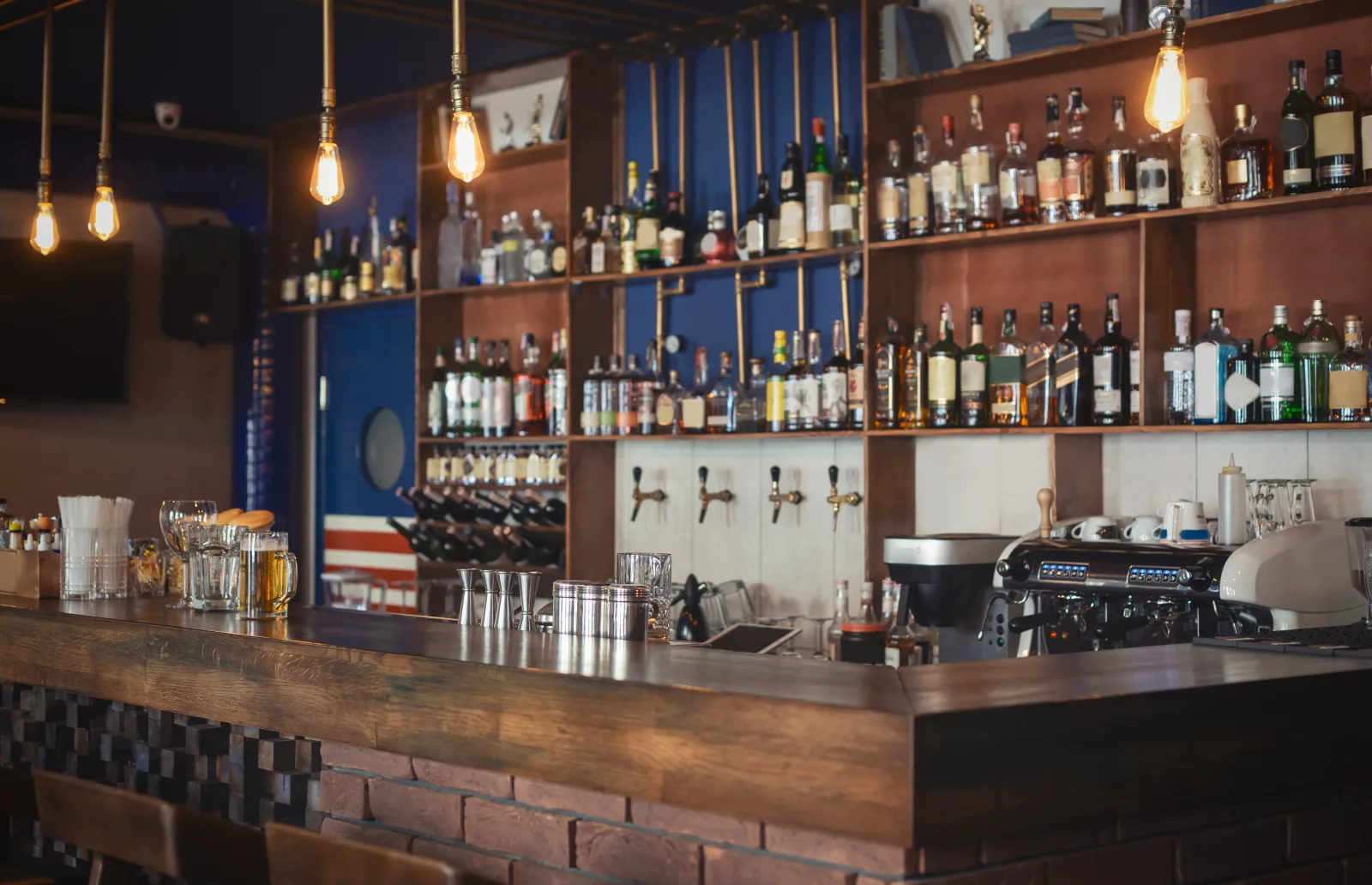

Your Arizona liquor license carries a series number, and that number has already decided what trade you are in before any underwriter looks at the room. The Department of Liquor Licenses and Control sets the series at statute, and the late-hours question sits in the same statute book. This page reads both halves rather than summarising one.
Arizona licenses on-premise alcohol service through the Department of Liquor Licenses and Control, and it does it by numbered series set out at statute. A Series 6 is a bar — an on-sale retailer’s license to sell all spirituous liquors, primarily by individual portions in original containers. A Series 12 is a restaurant license, likewise solely on-premise. A Series 14 is a club license, issued in the name of a bona fide club.
Those three sentences do more work than they look like they do. They mean the trade you are in is a matter of public record before an underwriter asks you a single question, and they mean an operator who thinks of themselves as running a restaurant with a good bar may be holding a document that says something else entirely.
The dram shop position sits alongside that, and it has an unusual shape: Arizona runs an immunity with an exception, and both halves are written into the statute book rather than assembled out of case law. What this page does with that fact is describe the architecture and then stop, because the elements of the exception are not something we are prepared to paraphrase for you.
How the cover itself behaves — which claims the standard wording sets aside, and how assault and battery is handled inside the form — is on the liquor liability page. What Arizona contributes is the frame around it.
A number on your license has already decided what trade you are in
The series designators are not filing references. Each one describes a business, and the description is the legislature’s rather than yours.
A Series 6 is the bar license — an on-sale retailer’s license to sell all spirituous liquors, primarily by individual portions in original containers. Read the phrase carefully, because the word primarily is doing something: the series is defined around the individual portion, which is another way of saying it is defined around service to a person standing or sitting in your room, drink by drink, for as long as you are open.
A Series 12 is the restaurant license, and it too is solely for consumption on the premises. A Series 14 is the club license, issued in the name of a bona fide club rather than to an ordinary commercial applicant — which makes the holder of it a different kind of legal entity before it makes it a different kind of room. Not every state numbers the categories: the permit types our Louisiana bar page describes by what physically stands in the room arrive at a similar sorting by describing the fittings instead, and the reconciliation an operator owes a reader is the same either way.
The practical consequence for a submission is that your series and your self-description have to agree. An operator holding a bar license who submits as a restaurant with a bar is asking an underwriter to reconcile two documents, and the reconciliation will not go the way the operator hoped. It is far better to say what you hold, say what your revenue mix is, and let the file be consistent from the first page.
If the kitchen genuinely is the center of gravity, that is a different placement and a different page — the Arizona restaurant side sets out the compliance and property work that follows a food-led operation here.
One limitation belongs in the open. The series map on this page comes from statute alone. The department’s own site would not serve our researchers, so there is no agency-side corroboration of the wider series list beyond the classes named above, and we would rather tell you that than imply a completeness we did not obtain. A public register can fail an operator from the other direction as well — being complete and still silent on the thing that matters — which is the license-record problem our Arkansas bar page opens on.
Both halves of the answer are in the statute book
Arizona’s civil position on service liability is built as an immunity with an exception, and the unusual part is that both halves were written by the legislature. In a good many states the protection is statutory and the route round it is judicial, or the other way about. Here the grant and the way back are pages in the same volume.
What that changes for an operator is where an argument happens. A dispute about the reach of a judge-made rule is a dispute about precedent, and precedent moves. A dispute about the reach of a statutory exception is a dispute about text, and text moves only when the legislature moves it.
This page does not set out the elements of that exception, and the omission is deliberate rather than an oversight. Our research on this state carries a specific limitation, and paraphrasing the elements of a liability test we could not fully corroborate is exactly the kind of confident-sounding sentence that gets repeated back to an operator at the worst possible moment. The section is short. Read it, or have someone read it for you.
What we will say is that the words obviously intoxicated appear in the underlying service prohibition — the rule about who may lawfully be served, which is a different instrument from the civil liability section and answers to a different body.
That distinction between the two instruments is the one worth internalizing. A civil immunity, however broad, says nothing whatever about what the licensing authority may do to a license. The regulator does not need a plaintiff, does not need damages, and does not have to wait for a lawsuit. An operator who reads a favorable liability rule as permission is misreading which risk they were protected from.
The heat pushes the peak later, and later is a different room
Arizona’s trading year is shaped by an inversion the rest of the country does not run. The cool months are carried by patio service and by visitors wintering here. Then the heat arrives, and it drives the volume indoors and pushes it late.
For a room whose business is drinks, that second half is the one that moves the file. A later peak is not a scheduling detail — it changes the ratio of staff to patrons at the busiest hour, it changes who is on shift, and it lengthens the part of the night that happens after the point at which most people have already been drinking for some time.
Crowd density and altercation exposure track those conditions far more closely than they track anything about what is in the glass. The door, the capacity count and the supervision ratio at the late peak are underwriting subjects in their own right, and a submission that describes an average evening is describing the wrong evening.
The college-town trade around Tempe and the high-country tourist format on the Mogollon Rim run on two different clocks again — one keyed to an academic calendar, one to a visitor season — and neither behaves like a Phoenix-corridor resort bar. Naming which one you are is worth more in a submission than any amount of general description.
The staffing consequence follows. A room that adds hours in the summer is often adding people at the same time, and the people added last are the ones with the least experience of your refusal procedure. That is a training question and a workers compensation question at once, because inexperienced staff working late hours is a recognizable pattern on both sides of the file.
The door is defended to the department, not to a plaintiff
Two controls do the daily work in any room that pours: checking identification, and turning someone down without the refusal becoming the incident. Arizona gives an operator a particular reason to build both properly, and the reason is not the civil section.
The words obviously intoxicated sit in the service prohibition — the rule about who may lawfully be served — and that rule answers to the department. So a room’s checking and refusal practice is material offered to a licensing authority long before it is ever material offered to a court. The audience differs, the timescale differs, and so does the thing at stake: a civil claim reaches the balance sheet, while the department reaches the series designator the whole business stands on. Where a private route has been closed off altogether, the licensing authority becomes very nearly the entire audience for a service record, and that is the position our Kansas bar page has to write from.
That changes what a useful record looks like. Notes kept with a plaintiff in mind are written to show the room behaved reasonably. Notes kept with a regulator in mind are written to show the room behaved the same way twice — that the identical decision gets made at midnight on a full Saturday and at nine on a slow Tuesday, by whoever happens to be pouring. Sameness is harder to achieve than reasonableness, it is more useful when someone comes asking, and it is what an underwriter is circling when they ask how the door is run.
Delivering the refusal is a staffing problem rather than a drafting one. It is the moment a hospitable room stops being hospitable, and how it lands depends on who says it and what they have been taught to say. Rooms that rehearse the sentence come off better than rooms that improvise it.
Door staff carry a contractual question in with them, and Arizona sharpens it, because a Series 14 is held in the name of a bona fide club rather than by an ordinary commercial applicant. Who employs the person on the door, and who answers for what that person does, has to be traced back to the entity actually named on the license rather than left to whatever a services agreement calls the arrangement. Where nobody has done that tracing, one incident can arrive at general liability and at the compensation file from two directions at once.
Documented service training earns its place for an evidential reason. Where the standard the department enforces is built around an observable condition, a room that can produce a syllabus, a list of who sat through it and the dates they did is showing that its people were taught to observe. That is a modest piece of paper with a disproportionate effect on how a submission reads.
Water that arrives after the fire, and the policy it belongs to
Arizona’s water exposure is a flood placement rather than a property one, and it catches operators who have correctly worked out that they are nowhere near a river.
Two mechanisms drive it. Monsoon flash flood moves a great deal of water fast along ground that is dry for most of the year. And post-burn debris flow comes off wildland burn scars above the high-country towns — ground stripped of the vegetation and soil structure that would have absorbed rainfall, so that ordinary rain afterwards runs off carrying material with it.
Neither of them is answered by the property form; both go to the flood side. The Arizona restaurant page carries that split in detail for the building and the contents, and there is nothing to gain by setting it out twice.
For a bar the closure question is not about the building at all. Locking the doors through the worst of the heat stops the takings and stops the pouring, and stops neither of the two things that matter later: the shifts your people have already worked, and the chance that one of them produces a claim some years from now.
This is where Arizona’s architecture turns out to be useful. Because the legislature wrote both the grant and the exception, the rule applied to a night several summers back is the rule as the legislature left it — statutory text does not drift the way a line of decisions drifts. The unsteady element is on your side of the arrangement rather than the state’s: which policy was on risk that summer, on what wording, and whether the years since contain a gap nobody noticed. Put those questions when cover is being moved rather than when a claim lands, and if the program carries an umbrella, ask the same of whatever sits directly under it.
A booked night is an activity the series does not describe
Read the bar license definition once more and notice how narrow it is. It is built around the individual portion — one person served at a time, drink by drink, for as long as the room stays open. That is an exact description of an ordinary Tuesday, and it stops being an exact description the moment a room books an act.
What a stage puts into a room is not more of the same trade. It is a crowd facing one direction rather than spread along a counter. It is a start and a finish belonging to a schedule rather than to the bar’s own rhythm. And it is people on the premises who are not on your payroll — the act, the sound crew, whoever delivered the staging. The heat sharpens all of it, because the months that push the volume indoors and late are the months a programmed night runs longest.
Every one of those relationships has an owner, and the paperwork ought to say which; where it does not, the venue is usually the party left accounting for how many people were in the room. That is a licensing exposure as much as a liability one, because the department granted a room permission to pour rather than permission to promote.
None of which argues against booking acts. It argues for saying so. A file describing drink-by-drink service, attached to a calendar full of programmed nights, has told a reader one thing and shown them another — and the loss run is where the two get compared. Repeated door incidents in a room licensed to pour a portion at a time point at supervision on the nights the room was doing something else. The same run in a room licensed around a table points somewhere else entirely, and the follow-up questions differ accordingly.
Underneath the interesting half, the ordinary machinery keeps running. Most rooms here have a kitchen working behind the bar, so property and equipment breakdown sit in the program on their own account — and refrigeration in this state does its hardest work in the months the rest of the calendar calls quiet.
Major Arizona bar markets
- Phoenix. More licensed rooms than anywhere else in the state, and more kinds of them: downtown late-hours venues, bars attached to resort and golf-destination properties, and neighborhood rooms in between. Summer pushes the peak indoors and later here more sharply than anywhere else in Arizona, which alters the supervision ratio at the busiest hour rather than simply moving the clock.
- Tucson. A university-shaped late trade sitting alongside a deep independent scene, which produces two quite different rooms operating on the same street. Academic-calendar demand arrives and departs on dates rather than gradually, so headcount and hours swing on a schedule an underwriter can be shown rather than asked to guess at.
- Scottsdale. An entertainment district dense enough that a single crowd circulates through several rooms across one evening, so a customer reaches your door having been served elsewhere and leaves to be served elsewhere again. Where a license is granted against a defined premises, that circulation puts the edge of your premises into every conversation about something that happened on the pavement.
- Mesa. A large residential base supporting neighborhood bars with a stable regular clientele, which is a genuinely different underwriting proposition from a destination venue with the same footprint. The informal social control a regulars’ room carries is real, and it is worth describing in a submission rather than leaving an underwriter to assume its absence.
- Chandler. Suburban and employment-corridor venues whose trade is shaped by a weekday working population rather than by a weekend visitor flow, so the week is flatter and the late peak less pronounced. Rooms here are frequently in newer buildings and multi-tenant sites, which brings the lease and the shared-premises boundary into the liability conversation.
- Flagstaff. A high-country market running a college trade and a tourist-town format at once, on an altitude and season that behave nothing like the Phoenix corridor. It is also the part of the state where burn scars sit above the town, which puts the flood placement and the closure question at the front of the program rather than at the back of it.
Learn more
Related coverage
Who we insure
Primary sources
- A.R.S. § 4-209 — license series — the legislature’s own enumeration of the series, which is where the bar, restaurant and club classes are actually defined; our pack could not corroborate the full series map agency-side, so the statute is the source
Arizona bar insurance FAQs
What is the difference between a Series 6 and a Series 12 in Arizona?
They describe different trades. A Series 6 is the bar license — an on-sale retailer’s license to sell all spirituous liquors, primarily by individual portions in original containers. A Series 12 is the restaurant license, likewise for consumption solely on the premises. The series you hold is a public description of what your business is, and it is read before anything you write about yourself in a submission.
Who issues an on-premise liquor license in Arizona?
The Department of Liquor Licenses and Control. The real license series themselves are enumerated at statute, which is where we sourced the classes described on this page — our researchers could not obtain agency-side corroboration of the wider series map, so we have kept to the classes the legislature sets out rather than implying a complete list.
Does Arizona protect a bar from liability for serving someone?
Arizona runs an immunity with an exception, and the unusual feature is that both halves are written into the statute book rather than one of them being assembled out of case law. We deliberately do not set out the elements of the exception on this page, because our research on that section carries a limitation we would rather disclose than paper over. Read the section itself, or have counsel read it.
If the civil rule protects us, can we relax about service?
No, and the reason is that two different instruments are in play. A civil liability rule governs what a court may award. The underlying service prohibition governs who may lawfully be served, and it answers to the licensing authority rather than to a plaintiff. A regulator does not need an injured person or a lawsuit to act on a license, so a favorable liability position is not permission.
What is a Series 14 club license, and does it change our insurance?
It is issued in the name of a bona fide club rather than to an ordinary commercial applicant, which means the holder is a different kind of legal entity before it is a different kind of room. That matters to a placement because the named insured, the membership structure and who is a guest rather than a customer all follow from it, and those are questions a general liability underwriter will ask early.
Why does an Arizona bar get busier later in the summer?
Because the year here runs the wrong way round. Cool-month trade sits out on the patio and leans on winter visitors; once the heat arrives the volume goes indoors and shifts late. For a drinks-led room that lengthens the part of the night with the thinnest supervision and the highest crowd density, which is where altercation exposure actually lives — so the summer file is not the winter file with different weather.
We are not near a river. Why does flood keep coming up?
Because the two mechanisms here are not riverine. Monsoon flash flood moves water fast along ground that is dry most of the year, and post-burn debris flow comes off burn scars above the high-country towns, where a fire has removed the vegetation and soil structure that would otherwise have absorbed rainfall. Both are placed on the flood side rather than answered by a property form.
We shut for part of the summer. What is still running while the doors are locked?
The shifts you already worked. An alcohol claim can surface long after the evening it concerns, so closing suspends the trading without suspending anything attached to the evenings behind you. Two things are worth settling in advance: which policy was on risk for those summers and on what wording, and whether the record of the years since has a gap in it. Both are far easier to answer before cover moves than after a claim lands.
Get a Arizona bar insurance quote
Tell us what you run and where. Or call 317-942-0549.