
Food Truck Insurance · Tennessee
Food truck insurance in Tennessee
Tennessee gives the base kitchen a definition and then, in the revision we read, never asks you to use one. That is a genuinely unusual finding, and it is worth being precise about what it does and does not establish.
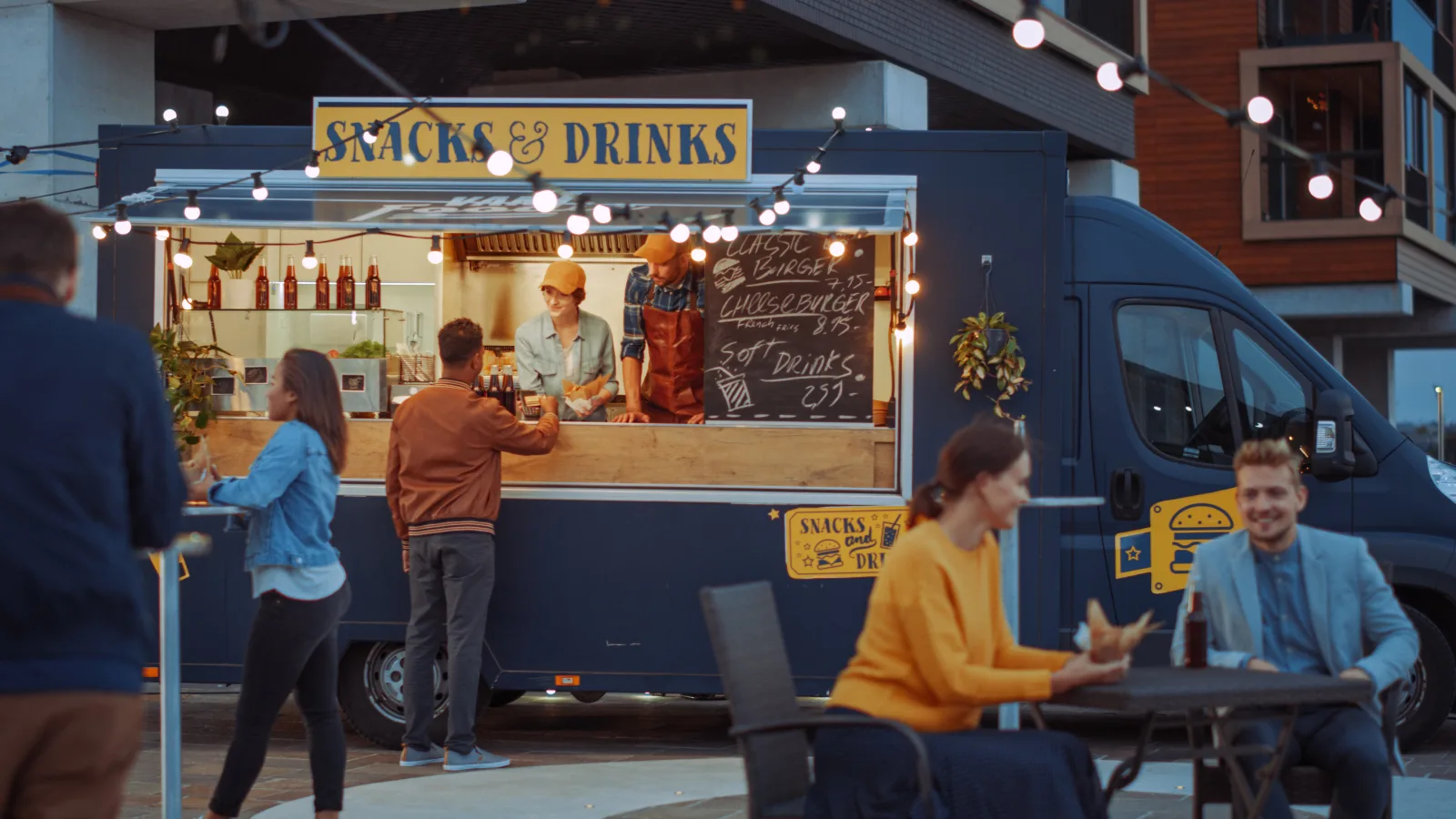

Tennessee defines a commissary and then does not require one, which is a genuinely unusual combination and it is easy to misreport in either direction. This page states the distinction precisely: the definition exists, the obligation does not, and what fills the gap is a different provision entirely. Reporting the definition as a requirement overstates it; reporting no requirement at all understates the position.
Everything that makes a mobile unit awkward to underwrite in general — the same asset is a kitchen and a vehicle, and the two halves are usually priced by people looking at one of them — sits on the food truck insurance page.
What is particular here is a documentary problem. The chapter that governs food service establishments defines a commissary, and defines a servicing area, and in the revision available to us it does not go on to impose the duty those definitions were written to support.
The other Tennessee particular is that the permitting desk is not always the state’s. The chapter defines the department as the state health department or its authorized agent, and the department publishes a list of counties running their own permitting and enforcement under contract.
The chapter defines a commissary and then does not ask for one
Neighboring practice differs: Nevada on no commissary at all, Idaho on servicing area.
Tennessee names the institution outright. Rule 1200-23-01-.01(16) defines a commissary as a food establishment that services a mobile food unit or a pushcart, and .01(102) separately defines a servicing area as the operating base location a unit returns to for cleaning, waste discharge, water and ice refilling and boarding food. The unit itself is defined at .01(68), and the permit at .01(72) is the document the department issues.
Here is the finding that matters, stated with its limits attached. In the July 2015 revision, the word commissary appears once, as a definition. The operative duty to operate from a commissary that appears in the January 2005 revision is not present in the 2015 text. Those are two documents that were actually read and compared. No intervening amendment was located, and this page does not assert that Tennessee abolished the requirement.
That combination — a defined word with no visible duty behind it — is a bad thing to plan around and a good thing to know about. It does not mean a Tennessee operator can dispense with a base; it means that if somebody tells you the rule says you must have one, they should be able to point at where. Ask which revision they are reading, and ask for the paragraph rather than the summary.
The underwriting reality is unaffected by any of this. Wherever water is loaded, waste discharged, bulk product stored and equipment washed, that place is an exposure with a building, a landlord and a set of contents, and no drafting history changes what is standing in it.
The department, or its authorized agent
The chapter defines the department at .01(26) as the Tennessee Department of Health or its authorized agent, and the department publishes that Davidson, Hamilton, Knox, Madison and Shelby are contract counties running their own permitting and enforcement.
That is the state’s own answer to the question everybody wants answered, and it is not the answer people want. There is no single permitting process here. Nashville, Chattanooga, Knoxville, Jackson and Memphis are not incidental places to a mobile food business — between them they are most of the trade in this state — and each of them is running its own program.
For anyone whose business plan involves moving between the three big markets, plan the administration as three relationships rather than one. And treat the guidance you read accordingly: advice written for a contract county is advice about that county, and advice written for the rest of the state is not about the county you are probably trading in.
What the servicing-area definition actually lists
The definition of a servicing area is worth reading as an operations list rather than as regulatory vocabulary. It is the operating base location a unit returns to for cleaning, waste discharge, water and ice refilling and boarding food. Four activities, each of them a way to lose money.
Cleaning is where slips and chemical injuries happen, usually late, usually by whoever is left. Waste discharge is where an environmental problem starts if somebody takes a shortcut. Water and ice refilling is where product safety is won or lost. Boarding food is the moment your entire day’s stock is in transit between a building and a vehicle, which is when it is dropped, left out, or loaded into a unit whose refrigeration has not run for an hour.
None of that is exotic and all of it is routine, which is why it is worth naming. The claims that close a small mobile business are rarely dramatic; they are a spoiled load, an injured helper and a week off the road, arriving in the same fortnight.
Most of the good work here arrives with a contract attached
Tennessee hands a mobile operator an unusual quantity of high-value work on other people’s ground. Through the middle of the state the kitchen, the bar and the stage are frequently one operator, and distillery tourism sustains venues built around the drinking rather than the cooking. The east runs a visitor season with venues of its own. Memphis keeps its own calendar entirely.
Almost all of that trade happens somewhere you do not control, and almost all of it involves putting your name on something. Organizers, venues, breweries, distilleries and private sites commonly want naming on the cover and occasionally set a limit. Reading the paper after committing to the date is the usual order and the wrong one.
The exposure on the ground has a specific shape too: hot equipment, a layout set by somebody else, power from a supply you did not install, and a crowd that has been drinking somewhere you have no say over. That is a liability conversation worth having once, properly, rather than assuming a regular booking is a safe one because it is familiar.
The counterpart risk is concentration. When a large share of the year comes from a small number of events, losing one of them to weather, to a cancellation or to a booking condition you could not meet is a revenue problem no policy was asked about.
Below the threshold, buying the policy is the legal act
Section 50-6-106(5) disapplies the compensation chapter where fewer than five persons are regularly employed, and then provides that such an employer may accept the chapter by purchasing a workers compensation policy, and may withdraw that acceptance by canceling or not renewing the policy and notifying the employees. Our Tennessee restaurant page works through what that means for a small room.
The mobile-specific consequence is unusually direct. Nearly every food truck in this state sits below five, so for most operators here the policy is not merely evidence of a decision — it is the mechanism by which the decision is made. Buying it is the act of acceptance; letting it lapse is the act of withdrawal, and the withdrawal comes with a duty to tell the people affected.
That reframes a renewal. A lapse in this state is not an administrative gap to be tidied up later; it changes the legal footing the business is standing on, and it does so at exactly the moment an operator is most likely to be economizing — the quiet weeks between seasons.
Nothing in a food chapter will ever raise the driving
The chapter governs food. It has no reason to ask how the unit gets to Chattanooga and back, and yet that journey happens on every operating day and on roads nobody has driven before whenever the work is worth taking.
No Tennessee figure appears here — not a limit, not an amount, not a percentage. What we have is a clear account of what has not been established, and showing that is more useful than filling it with something that sounds right.
Three things are worth putting in writing instead. Which named people may take the unit out. What happens when the business is run in somebody’s own car. And, particular to a state with mountain and river routes of this length, what happens when the person driving home has already stood through a twelve-hour service.
Flood is bought on its own here. Damage to the unit sits on the vehicle side of the program and travels with it, while the building holding your stock stays put and answers separately.
Major Tennessee food_truck markets
- Nashville. a city where the kitchen, the bar and the stage often belong to a single operator, which puts a unit in front of late crowds on ground it does not control
- Memphis. a river-city trade with its own barbecue doctrine and its own event calendar, far enough from the middle of the state that working both is a driving decision
- Knoxville. the gateway to an eastern visitor season, with university trade underneath it and mountain roads attached to the good bookings
- Chattanooga. a compact downtown and outdoor-tourism economy where a unit can work a full day without leaving one jurisdiction, which is unusual in this state
- Franklin. affluent suburban and corporate-campus demand south of Nashville, where private bookings arrive with contractual requirements more often than street pitches do
- Murfreesboro. university and commuter-corridor trade with steady weekday volume, and an easy reach into the middle-Tennessee event calendar
Learn more
Who we insure
Primary sources
- Tenn. Comp. R. & Regs. 1200-23-01 — Food Service Establishment (July 2015 revision) — the revision this page was read against; commissary is defined here, and the operative duty that appeared in the January 2005 revision is not present in this text
- Tennessee Secretary of State — chapter 1200-23, all effective rules — the chapter listing, which is how a reader confirms which revision is current rather than relying on a copy of unknown vintage
- Tenn. Code § 50-6-106 — chapter not applicable — the provision that disapplies the compensation chapter below a stated number of employees and describes how an employer accepts it instead
Tennessee food_truck insurance FAQs
Does Tennessee require a food truck to work from a commissary?
The honest answer is that the chapter defines one and, in the July 2015 revision we read, does not impose the duty. The operative requirement present in the January 2005 revision is not in the 2015 text. No intervening amendment was located and we do not assert that the requirement was abolished — if somebody tells you it exists, ask which revision and which paragraph.
What does the Tennessee chapter call the base?
Two things, defined separately. A commissary at .01(16) is a food establishment that services a mobile food unit or a pushcart. A servicing area at .01(102) is the operating base location a unit returns to for cleaning, waste discharge, water and ice refilling and boarding food.
Is there one permitting process for the whole state?
No. The chapter defines the department as the state health department or its authorized agent, and the department publishes that Davidson, Hamilton, Knox, Madison and Shelby are contract counties running their own permitting and enforcement. Those counties contain most of the trade, so for many operators the state process is not the process that applies.
We work Nashville, Memphis and Knoxville. Is that one relationship or several?
Several. Each of those sits in a county that runs its own permitting and enforcement, so plan the administration as separate relationships. It also has an insurance translation: three metros is a real radius, with the driving, the stock on board and the number of site arrangements that implies.
Why does the servicing-area definition matter to an insurer?
Because it is a list of operations rather than a piece of vocabulary. Cleaning, waste discharge, water and ice refilling and boarding food are where a small mobile business actually gets hurt — a slip during a late clean-down, a spoiled load, a helper injured while boarding stock. Those are the claims that arrive together.
A brewery wants us there every Friday. What should we look at?
The agreement first. Venue and event work routinely asks to be named as an additional insured and sometimes specifies limits, and a promise the policy does not support is a worse outcome than declining the booking. Then the physical side: hot equipment in a layout you did not design, on power you did not install, next to a crowd whose drinking you do not control.
We are three people. Does workers compensation apply to us?
The chapter is disapplied where fewer than five persons are regularly employed, and an employer below that line may accept it by purchasing a policy and withdraw by canceling or not renewing and notifying the employees. So for most trucks here the policy is the mechanism, not just the evidence — letting it lapse is a legal act with a notice duty attached.
Should we buy flood cover for the truck?
Damage to the unit sits on the vehicle side of the program, and flood is bought on its own for buildings. The question that reaches a mobile operator concerns whichever building holds the stock, the packaging and the spare equipment — the part of the business nobody can drive anywhere.
Get a Tennessee food_truck insurance quote
Tell us what you run and where. Or call 317-942-0549.