
Bar Insurance · Tennessee
Bar insurance in Tennessee
In Tennessee the first question about a bar is not about the bar. Liquor-by-the-drink reaches a jurisdiction only where a referendum has authorized on-premises sale — so before the lease, before the fit-out, there is a voting record to read.
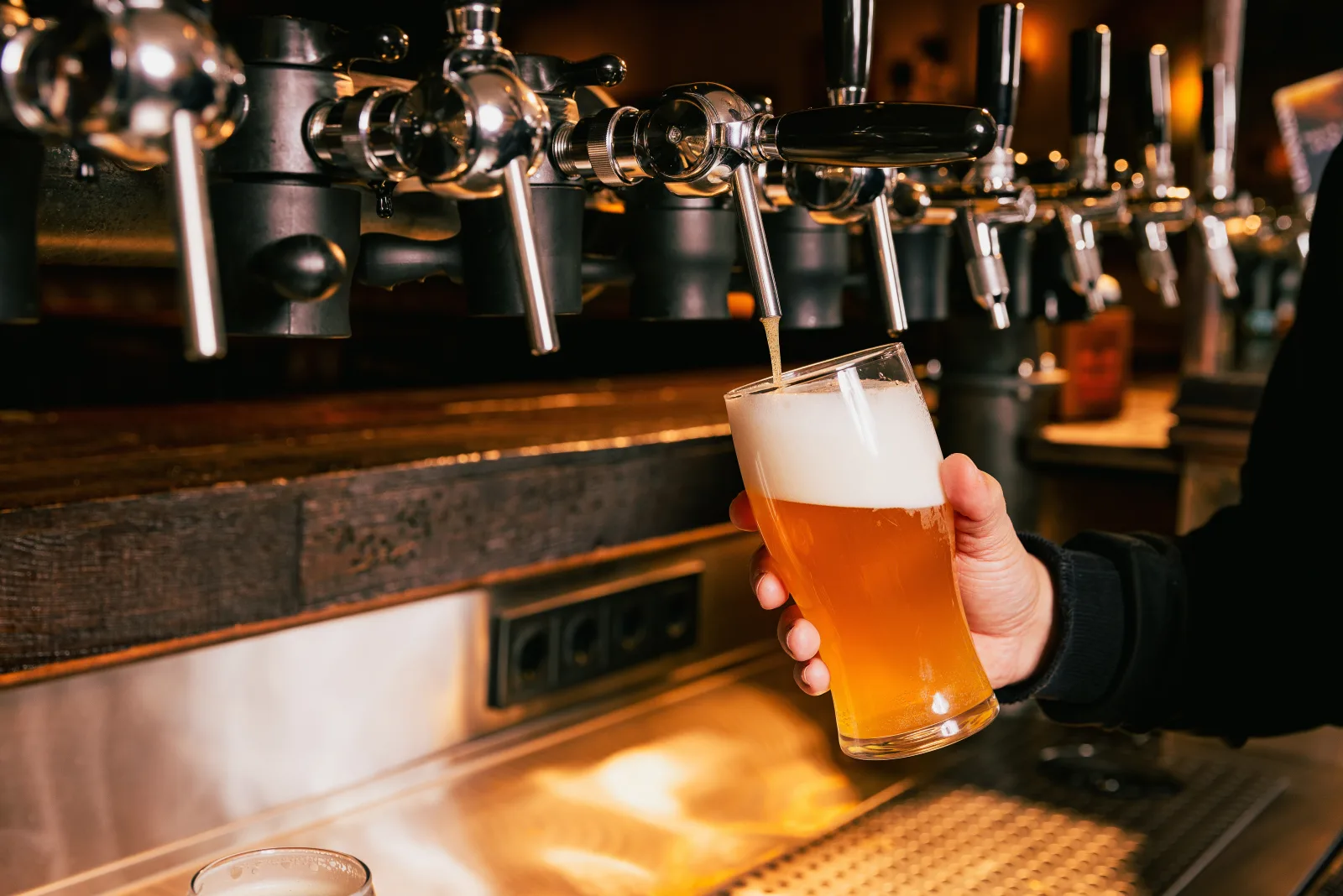

In Tennessee the jurisdiction had to vote before your address existed as an option at all — local option referendum decides whether alcohol service is available before any license question arises. This page starts where the process actually starts, because an operator can do everything else correctly in a jurisdiction that never voted. An address in a jurisdiction that never voted cannot be licensed at all, whatever else is in order.
Why alcohol claims sit outside the general liability policy, and what the separate cover is doing, is a question about forms. The liquor liability page answers it. This one is about Tennessee, and Tennessee starts somewhere unusual.
The Alcoholic Beverage Commission licenses liquor-by-the-drink. But the chapter it licenses under is effective in a jurisdiction only where a referendum has authorized on-premises sale — reachable by petition or by a supermajority resolution of the legislative body, and put to voters as a standardized ballot question. Whether your address is somewhere the chapter reaches is therefore a fact about local voting history rather than about your premises.
That reorders everything. In most states the sequence is find the room, then get the credential. Here there is a prior question, it is answerable from public record, and getting it wrong is expensive in a way no insurance policy addresses.
This page also stops short in two places on purpose, and says so where it does. The material behind it carries the shape of Tennessee’s dram-shop position and not its elements, and it carries two facts about permitting whose combined meaning was withdrawn. Both gaps are marked rather than smoothed over.
The jurisdiction had to vote before your address existed as an option
The liquor-by-the-drink chapter is effective in any jurisdiction that has authorized on-premises sale in a referendum. Two routes reach that referendum: a petition, or a resolution of the legislative body passed by supermajority. What goes to voters is a standardized ballot question.
So the credential you eventually hold rests on a local vote that may have happened long before you looked at the building. That is a genuinely different starting position from a state where licensing is a matter between an operator and a regulator, because the determining fact is not about you at all and cannot be improved by anything you do to the premises.
Two consequences follow and both are commercial. The first is that addresses are not interchangeable in the way a map suggests. A short distance can cross a jurisdictional line, and on one side of it the chapter is in effect and on the other the question was never put or never carried. Nothing about the street tells you which. One state over, the same vote is three-valued: our Kentucky bar page works through territory that is wet, moist or dry, and places that manage to be two of those at once.
The second is about sequence. A lease signed on the assumption that a license will follow is a lease whose value depends on a fact nobody in the negotiation may have checked. This is a public-record question with a definite answer, available before any money moves, and it should be settled at the point where it costs an afternoon rather than at the point where it costs a term of years.
For an insurance file the same fact appears in a smaller way. Where an operator runs rooms in more than one jurisdiction, they may not all be operating under the same chapter, and a program written as though they are is describing a uniformity that does not exist.
The commission does not issue beer permits, and it says so itself
Two statements belong here, from two different sources, and this page is going to set them down and then stop.
The first is the commission’s own, on its own licensing page: it does not issue beer permits, except for brewing high-gravity beer. If you have been sending beer applications toward the commission, or waiting on it for one, the commission itself is telling you that is the wrong door.
The second comes from the beer chapter rather than from the commission. That chapter puts the permit application before the county legislative body or a beer board.
⚠ Now the unusual part, and it is a deliberate refusal rather than an omission. This page is not going to tell you what those two statements add up to. The material behind it carried a summary of their combined effect, and that summary was withdrawn as unsupported while the two underlying facts survived with their sources intact. Writing the withdrawn conclusion in fresh words would be exactly the move the withdrawal exists to prevent — so the facts are here, attributed, and the reader draws whatever follows.
What is safe to act on comes from the first statement alone. If part of your offer is beer, the commission is not the body that issues that permit, and the beer chapter is where the application route is described. Find out which body applies to your address early, because it is a separate process from anything the commission is doing and it runs on its own timetable.
The commission also permits the person standing behind the bar
Alongside the license held by the business, the commission administers server permits. That means the individual pouring holds a state credential of their own. Utah reaches the same individual for the opposite purpose, and our Utah bar page follows a cross-reference that bars an employer from sanctioning staff who refuse service.
For an operator that turns a soft subject into a hard one. Most conversations about who is serving alcohol are conversations about training, culture and judgment, and none of those produce a document. A per-person permit does. It exists, it belongs to a named individual, and it either covers the person who worked last Friday or it does not.
That makes it a roster question with an answer, and the answer is worth keeping current in a form somebody other than the manager can produce. Who currently holds one. Whose has lapsed. Who started this month and where they are in the process. A room that can produce that list in a minute is describing a controlled operation with evidence rather than with adjectives, and it is describing it in the only currency an underwriter can independently understand.
It also sits on the employment side of the file. Whoever is engaged to work an entrance or to pour is engaged on some basis, and whether that basis is employment or a contract affects who answers for their conduct and how the payroll is classified for workers compensation. A permit held by an individual and a contract held with a company are two different documents about the same person, and they should agree.
What this page says about the liability position, and where it stops
Tennessee’s dram-shop position is an immunity with two carve-outs, and it applies a criminal burden of proof in a civil case.
That sentence is the whole of what this page states, and the shape of it is worth a moment even without the detail. An immunity is a starting point rather than an exception. Two carve-outs is a short list rather than a general standard. And a criminal burden of proof applied inside a civil action is an unusual enough structure that most general commentary about liquor liability simply does not contemplate it.
⚠ The carve-outs are not named here and the standard is not described here. Neither reached the material this page was built from, and this is precisely the sort of subject where an approximate version does more damage than a blank — an operator told a roughly-shaped rule will train to the rough shape, and the parts they get wrong will be the parts that matter.
The two sections are cited below and they are short. Read them, and take the consequences to a Tennessee lawyer rather than to a summary — including this one, which has told you the shape of the thing and has been explicit about not telling you the rest.
What that gap does not change is the operating advice, because none of it depends on the elements. The service decisions, the refusal practice, the identification discipline and the records that show any of it happened are worth having under every version of a dram-shop rule that exists anywhere. A room organized on the assumption that it will have to explain itself is organized correctly whatever the standard turns out to be.
Nothing here arrives from one place, or on one clock
Set the credentials beside each other and the striking thing is how little they have to do with one another. A referendum made your jurisdiction an option before you were an applicant. The commission issues the liquor-by-the-drink license to the business. The beer route runs through a county legislative body or a beer board. The server permit belongs to an individual and not to the company at all.
They come from different places on different timetables, and none is obliged to tell the others what it has done. No part of that is hard. What is unusual is that there is no moment in the year when the whole of it is looked at together, and no body that would notice if one piece had quietly gone out of date. Wyoming spreads its own answers across a local licensing authority, a division inside a revenue department and a commission that no longer exists, and our Wyoming bar page takes them one at a time.
The piece that actually lapses is the individual one, because it is the only part of the position that can leave the building under its own power. A business license does not resign. A server permit walks out with the person holding it, and a roster accurate in the spring describes a different set of people by the autumn.
A multi-site operator carries that unevenly, since the jurisdictional fact beneath each address was settled separately from the others. Around all of it sits the ordinary machinery of insuring a building with people and plant in it — property, the general liability policy and the tower above it. That machinery is the same everywhere. What is not is that here it rests on permissions assembled one at a time by bodies that were never co-ordinating.
Major Tennessee bar markets
- Nashville. The state’s densest concentration of late-trading rooms, many of them running a live entertainment program alongside service, which puts performer and staging arrangements into the file as a standing feature rather than an occasional one. High staff turnover here makes the server permit roster a document that goes stale quickly and is worth refreshing on a schedule.
- Memphis. A western market of long-established independent rooms whose credentials were often obtained decades ago against a description of a smaller or different operation. Confirming that what the business now trades still matches what it once applied for costs an afternoon, and it is the sort of thing that surfaces at the least convenient moment instead.
- Knoxville. An eastern market with campus and visitor demand layered on top of each other, so the trade swings hard across the year and a young profile sits underneath it. Seasonal recruitment turns the server permit into an onboarding question rather than a training one, because a new starter here has a credential to obtain and not only a briefing to attend.
- Chattanooga. A visitor-driven market with a resident base underneath it, and a metropolitan area that reaches toward a state line — which is the clearest reminder that the chapter’s reach is a jurisdictional fact rather than a regional one. An operator looking at two sites should check the two jurisdictions separately rather than by analogy.
- Franklin. A middle-Tennessee market where a great deal of hospitality trade is beverage-led and where catering work at other people’s addresses is common. A caterer credential and an on-premises operation are different activities with different supervision, and describing them as one business understates both.
- Murfreesboro. A growing middle-Tennessee market with campus and resident demand and a good deal of newer development, where operators are frequently taking premises in areas whose licensing history they have not looked into. That is the exact situation the referendum question is designed to catch, and it is answerable before the lease rather than after.
Learn more
Who we insure
Primary sources
- Tenn. Code § 57-4-103 — referendum for on-premises sale — the section that makes the liquor-by-the-drink chapter effective in a jurisdiction only where a referendum has authorized on-premises sale, and that sets out the routes to holding one
- Tenn. Code § 57-5-105 — beer permit application — the beer chapter’s own provision putting the permit application before the county legislative body or a beer board, which is the source for that half of the picture rather than the commission
- Tennessee Alcoholic Beverage Commission — licensing — the commission’s own licensing page, including its statement that it does not issue beer permits except for brewing high-gravity beer, and the server permits it administers
- Tenn. Code §§ 57-10-101 and 57-10-102 — dram shop, and the standard of proof — the two sections this page declines to summarize past their shape; the elements and the standard are here and they are short enough to read in full rather than in any account of them
Tennessee bar insurance FAQs
Can a bar hold a liquor-by-the-drink license anywhere in Tennessee?
The chapter is effective in a jurisdiction that has authorized on-premises sale in a referendum, so whether it reaches your address is a question about that jurisdiction’s own record rather than about your premises. This page does not tell you the position for any particular place — it tells you which question to ask, and that the answer is a matter of public record.
How does a jurisdiction authorize on-premises sale?
By referendum, reached either by petition or by a resolution of the legislative body passed by supermajority, and put to voters as a standardized ballot question. Two routes in, one question on the ballot, and the chapter becomes effective where it carries.
We are about to sign a lease. What should we check first?
Which jurisdiction the address sits in, and whether the chapter is in effect there. It is the cheapest check available and the most expensive one to skip, because it cannot be fixed by anything you do to the building afterwards. A short distance can cross a line that is invisible from the pavement.
Does the Alcoholic Beverage Commission issue our beer permit?
No — the commission states on its own licensing page that it does not issue beer permits, except for brewing high-gravity beer. Separately, the beer chapter puts the permit application before the county legislative body or a beer board. This page sets those two facts down and deliberately does not summarize their combined effect, because the summary that existed was withdrawn as unsupported.
What is a server permit?
A credential the commission administers for the individual rather than for the business. That is unusual and useful: it turns the question of who is serving into something documentary, so an operator can produce a roster of who currently holds one, whose has lapsed and who is mid-process — which is a far harder answer than a statement that staff are trained.
What is Tennessee’s dram shop position?
An immunity, with two carve-outs, applying a criminal burden of proof in a civil case. That is the shape of it, and that is the whole of what this page states. Neither the carve-outs nor the standard is set out below that headline, because neither reached the material this page was built from.
Why will this page not set out the carve-outs?
Because a roughly-remembered version of a liability rule is worse than an acknowledged gap, and it looks identical on the page to a verified one. An operator who is told an approximate rule trains their room to the approximation. The two sections are cited below, they are short, and the consequences are a question for a Tennessee lawyer rather than for an insurance page.
Get a Tennessee bar insurance quote
Tell us what you run and where. Or call 317-942-0549.