
Bar Insurance · Indiana
Bar insurance in Indiana
In most states a bar owner applies for a permit. In Indiana a bar owner more often buys one, from a holder or at auction, at whatever it costs that year — which makes the permit an asset on the balance sheet before it is a permission on the wall.
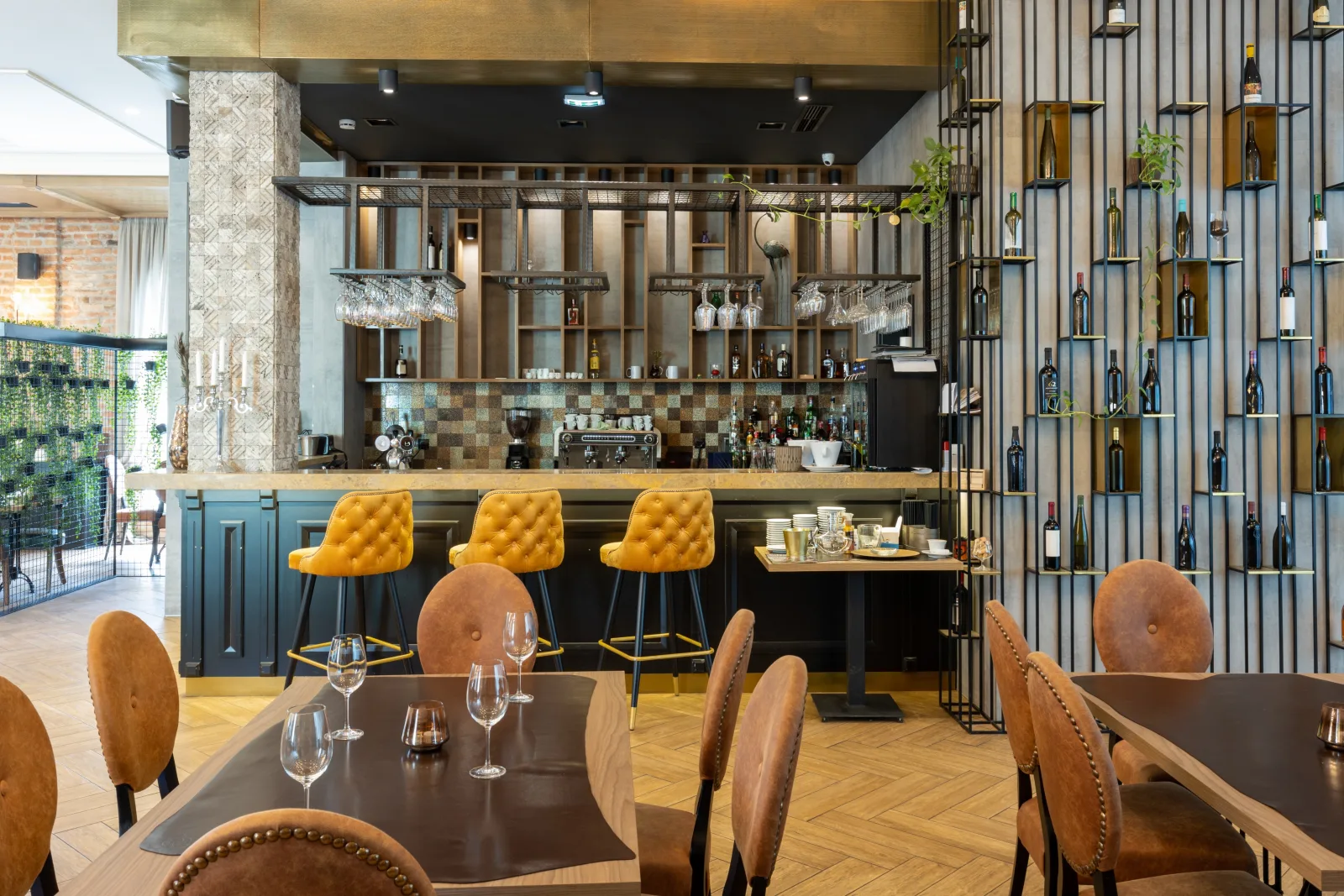

An Indiana liquor permit is a balance-sheet item before it is a permission. It is transferable, it has a market, and it is frequently the most valuable single asset in a bar purchase. That changes what due diligence looks like and what a lender asks for. This page treats the permit as property as well as paperwork.
Liquor claims are excluded from a general liability form everywhere, which is why a separate policy exists for them. That is coverage material rather than Indiana material, and the liquor liability page carries it.
The Indiana material starts somewhere unusual: with what the permit costs to obtain and who you obtain it from. Retailer permits here are quota-limited by municipal population, and availability is constrained enough that new entrants routinely acquire from existing holders or through the Alcohol and Tobacco Commission’s own permit auctions. A permit with a real acquisition cost is a transferable asset, and that is a structural fact about how Indiana bar concepts get financed and valued.
The second Indiana fact is a statute whose reach is defined by an act rather than by a status. Indiana Code section 7.1-5-10-15.5 is a liability-limiting provision, and the thing it limits liability for is furnishing — which the statute defines broadly enough that it does not distinguish a licensed vendor from a social host.
This page takes those two in order, is explicit about where its statutory text came from, and then turns to the rooms themselves. The property and payroll side of an Indiana hospitality account — including the river exposure and the seismic question in the south-west — sits on the Indiana restaurant page and is not rewritten here.
The permit is a balance-sheet item before it is a permission
The Indiana Alcohol and Tobacco Commission licenses on-premise service, and retailer permits are quota-limited by municipal population. That single design choice produces almost everything distinctive about opening a bar in this state.
Because the number of permits available in a municipality is capped, availability is constrained, and constrained availability produces a market. New entrants here routinely acquire a permit from an existing holder, or through the Commission’s own permit auctions, rather than simply applying and waiting. A permit obtained that way has a real acquisition cost attached to it, which turns the permit into a transferable asset rather than a piece of paper. A quota is not the only thing that gives a credential durable value — our Idaho bar page adds a renewal right attaching to unbroken trading — and between them those two features are what make a permission behave like property.
That reframes several conversations at once. A lender looking at an Indiana bar is looking at collateral that includes the permit. A landlord may take an interest in what happens to it. A partnership agreement that is silent about who holds the permit and what happens on a split has left the most valuable single item in the business undefined. And a buyer paying for a going concern is often paying, in substance, for the permission to trade in that municipality at all.
The insurance consequence is not that a permit is an insurable object in the ordinary way — it is that a permit at risk is a business at risk, out of all proportion to whatever physically happened. A permit held back at renewal, argued over, or stuck part-way through a transfer does not simply stop the tills; it puts the most expensive single item on the balance sheet in doubt, in a municipality where nobody can conjure a replacement because the number available is fixed by population. That belongs in the conversation about limits and about what a closure actually costs, rather than in the one that follows it.
It also puts weight on telling your agent when permit status moves. Alcohol cover answers for a room that holds a permit, and in a quota state the permit is the permission and the asset at once — so a change in it is simultaneously a change in what you are covered to do and a change in what the business is worth. Neither of those should reach an insurer first through a claim file.
A provision written around a verb, not around a business
Indiana has a dram shop statute at Indiana Code section 7.1-5-10-15.5, and it is liability-limiting rather than liability-creating. Its work is to bound the circumstances in which a furnisher answers for what the person furnished went on to do.
The unusual part is its reach. The statute applies to any person who furnishes, and furnish is defined to take in barter, deliver, sell, exchange, provide and give away. Six ways of putting a drink into somebody’s hand, gathered under one word. Because the provision is keyed to that act rather than to the status of the person performing it, it does not distinguish a licensed vendor from a social host. That is worth holding beside a state which keeps the two firmly apart: our California bar page has to warn that the social host provisions there govern a different actor altogether, and get quoted at licensees anyway.
For an operator, the useful consequence is that the interesting occasions are not only the ones behind the bar on a Saturday. A private hire where the host supplies the drink. A staff round after closing. A comped bottle sent to a table. A charity event where the alcohol is donated and nothing is sold. None of those look like a sale, and the statutory verb reaches acts that are not sales.
That is a reason to think about who is pouring, on what occasions, and under whose arrangements — and to look at how a policy responds when the occasion is not an ordinary trading night. Off-premises functions, hired-in staff and events where the alcohol is not yours are all worth putting on the table at placement rather than assuming they sit inside the description of a bar.
What this page does not do is reproduce the conditions that attach to the provision, and that omission is deliberate. Those conditions are the whole of its practical effect, they are precise, and a partial statement of them would be actively misleading. If a live matter turns on them, that is a question for Indiana counsel and the statute itself.
Where the words above came from, and why we are saying so
A page that tells you what a statute does owes you an account of how it read it. Here is ours, in the words the research note was written in: “The Indiana Code was UNREACHABLE to every fetcher in the research run — the legislature’s site is a JavaScript application returning an identical shell on every path, its API is key-gated, and the third-party publishers are challenge-walled. The statutory text above was retrieved by the COORDINATOR in a real browser, which is the documented route for this class. It is a secondary publisher’s rendering of the current code, not the legislature’s own page.”
Two things follow. The first is that the statutory material on this page was read by a person in a browser rather than pulled by a tool, which is a stronger route than a summary and a weaker one than the legislature’s own served text. The second is that we have not linked the commonly cited third-party URL for the section, because it is walled and would not open for you either. A citation you cannot dereference is decoration.
That disclosure is also why the conditions are held back rather than paraphrased. In the course of this work a summary of the same provision was found to have quietly narrowed a statutory disjunctive — an elision that changed the meaning without announcing itself. Once that has happened to a careful reader, the honest response is to stop paraphrasing the operative words and say where to find them.
Rooms that do not answer to Indianapolis
Indiana’s bar trade is anchored by Indianapolis and then distributed across genuinely independent regional markets that do not orbit it, which is a different shape from a state with one dominant city and a hinterland. The neighbor immediately west runs the opposite arrangement, and our Illinois bar page has to insist that a tavern page there cannot be written as a Chicago page with footnotes.
Downtown Indianapolis carries a food-and-beverage trade whose rhythm is set by a major-event calendar, motorsport above all. For a bar the interesting variable in an event week is not the revenue, it is the room: capacity is reached earlier and held longer, every member of staff is covering more customers than usual, and hardly anybody present is known either to your people or to each other. Crowd management and the entrance do more work in those weeks than in an ordinary month, and they are worth resourcing on that basis rather than on an average one.
Fort Wayne, Evansville, South Bend and the Lafayette and Bloomington university markets each sustain their own operators and their own academic or industrial cycles. The university markets run the sharpest swing of the group, and for a bar that swing lands squarely on identification discipline. A room whose customers sit close to the legal threshold on both sides of it, served by a staff that never stops being replaced, is a room where the practice has to be written down and taught rather than carried in anybody’s head.
North-west Indiana is functionally part of the Chicago metropolitan orbit and prices, staffs and competes accordingly, which shows up in wage costs and in what the room is competing against rather than in the license.
Across the state sit small-town supper clubs, brewery taprooms and a substantial tavern trade, all drawing on the same fixed pool of permits. A taproom is two operations sharing one address — a small factory and a public room — and the underwriting follows the plant as much as the pour: property, equipment breakdown and the liability side all read differently when there is process equipment behind the bar.
Everybody else with an interest in your permit
A permission you applied for belongs to you alone. A permission you bought has an audience. By the time an Indiana bar has traded a while, the parties with a stake in its permit are a longer list than the operator pictures — a lender holding it as collateral, a landlord who would rather it stayed at that address, whoever signed the partnership agreement, an eventual buyer paying in substance for the right to trade in that municipality, and an underwriter who knows a permit at risk is a business at risk out of all proportion to whatever physically happened.
Every one of them opens on the same facts, which is why they belong at the top of a submission: what you hold, who holds it, and whether it is owned outright or still being acquired. Those answers decide what a licensing problem would cost, and in a quota state nobody can conjure a replacement to soften it.
What almost none of them asks about, and all should, is the occasions. A room that only serves across its own bar is simpler than one that caters, hosts private hires, runs off-site events or lets a client supply the drink. Given a provision written around furnishing rather than selling, those are the evenings where nothing went through a till and somebody else’s paperwork is quietly deciding who answers.
The underwriter then asks for what the lender never will: the entrance and the hours. How identification is checked and a refusal handled, who is standing there and on what contractual footing, camera coverage, capacity, and what all of it looks like in an event week rather than an average one. The footing is worth pinning down, because your liability file and your workers compensation file both want to know whose people those are — decided by who instructs them and who can send them home rather than by the document that engaged them.
And the loss runs are read by more people than commission them. One large loss describes a night; a string of small ones describes how the room is run. Where the permit is the most valuable thing the business owns, that second reading counts twice. The building and equipment program underneath it is on the Indiana restaurant page in full — the river systems, the south-western seismic question and the residual market, none of them read differently for a tavern than for a dining room.
Major Indiana bar markets
- Indianapolis. A downtown trade whose peaks are set by a published major-event calendar, motorsport above all, which means the hardest nights of the year are known in advance and can be staffed and controlled for. The permit market is tightest where demand is highest, so an operator here is frequently trading on a permit acquired at cost rather than granted, which raises what a license interruption is worth.
- Fort Wayne. An independent northern market with its own operators and its own labor pool rather than a satellite of the capital. A more resident-weighted crowd gives a room informal social controls a transient one does not have, but those controls are not evidence — an underwriter still reads written procedure, and the value of a documented door policy is unchanged by how well the regulars are known.
- Evansville. A south-western river market where bars sit largely in older buildings shared with other occupancies, frequently at street level beneath them. The building conversation there carries a separate-placement question set out on our Indiana restaurant page, and for a bar it sits alongside the ordinary premises and liability questions rather than replacing them.
- South Bend. A northern market combining an independent operator base with a pronounced academic cycle, so a room can face both a stable weekday trade and a handful of very heavy weekends driven by a calendar it does not control. Those spikes are a capacity and door question rather than a revenue one, and describing them specifically produces a better placement than an annual average.
- Bloomington. A university market where a large part of the customer base sits at or near the boundary of lawful drinking age, which makes identification checking the central control on the room rather than a compliance chore. Student door and bar staff turn over continuously, which means an experienced pair of hands is never the control here — the written procedure and the training record are.
- Lafayette. A second university market running its own academic rhythm, with term and out-of-term functioning as different businesses under one permit. The quota-limited permit regime bears hardest on smaller municipalities, where a single available permit can decide whether a concept opens at all — which is a financing fact operators here tend to know well and out-of-state underwriters often do not.
Learn more
Related coverage
Who we insure
Primary sources
- Indiana Alcohol and Tobacco Commission — the licensing body for on-premise service, and the body that runs the permit auctions through which constrained permits reach new entrants
Indiana bar insurance FAQs
Why do Indiana bar permits change hands rather than being applied for?
Because they are quota-limited by municipal population, so the supply in any given municipality is capped. Availability is constrained enough that new entrants routinely acquire a permit from an existing holder or through the Alcohol and Tobacco Commission’s own permit auctions. The result is a permit with a genuine acquisition cost — a transferable asset rather than an administrative permission, which is why financing an Indiana bar concept looks different from financing one elsewhere.
Does the Indiana dram shop statute only apply to licensed bars?
No. Section 7.1-5-10-15.5 applies to any person who furnishes, and furnish is defined to include barter, deliver, sell, exchange, provide and give away. Because the provision is keyed to the act rather than to the status of the person performing it, it does not distinguish a licensed vendor from a social host. That is why it is worth thinking about private hires, donated alcohol and staff drinks alongside ordinary bar service.
Is the Indiana statute good news or bad news for an operator?
It is liability-limiting in structure, which means its function is to bound when a furnisher answers rather than to create a claim. That is a real difference from a liability-creating statute. What it is not is a general protection, and this page deliberately does not reproduce the conditions the provision attaches, because a partial statement of them would mislead. Those conditions are the whole of its practical effect and belong to Indiana counsel and the statute itself.
We host private events where the client brings the alcohol. Does that sit inside our cover?
It is exactly the question to ask at placement rather than after. The statutory verb reaches acts that are not sales, so an occasion where nothing is rung through a till is not obviously outside the provision — and separately, how your own policy responds to a function where the alcohol is not yours, or where hired-in staff are pouring, is a wording question. Get both looked at together, because the answer to one does not settle the other.
Why does this page not link the usual citation for the Indiana section?
Because it is walled and will not open for you. The commonly cited third-party rendering of the section returns an access error to ordinary requests, and a citation nobody can dereference is decoration rather than a source. The Commission’s own site is linked below for licensing, and the statutory text is best read at the legislature.
How should a downtown Indianapolis bar plan for an event week?
As a different room rather than a busier one. It fills sooner and stays full longer, every member of staff is covering more people, and hardly anybody present is known to your team. What drives an altercation on a night like that is the density and the anonymity rather than anything on the drinks list, so the preparation that pays is at the entrance, in crowd management and in holding capacity — and those are the specific things an underwriter will ask you to describe.
Does a brewery taproom get underwritten as a bar?
Partly. The rest of it is a manufacturing conversation. A taproom runs a small factory and a public room at one address, which changes the property and equipment breakdown position as much as the liability one, and it usually changes what is stored and where. Describe the plant side explicitly rather than letting the room be classified on its front of house — the part of the risk that is least visible from the street is the part that reprices the file.
What happens to our insurance if the permit is suspended or in transfer?
Tell us, because two different things have moved at once. Your cover answers for a room that holds a permit, so the permission is part of what is being insured — and in a quota state the permit is also the most valuable thing the business owns, so a licensing problem is a far larger event than the physical facts suggest. An insurer that learns about it from a claim file is learning about it in the one setting where nothing can be arranged.
Get a Indiana bar insurance quote
Tell us what you run and where. Or call 317-942-0549.