
Food Truck Insurance · South Carolina
Food truck insurance in South Carolina
In South Carolina the base kitchen is not a box you tick on the way to a permit. It is part of the thing being permitted, which is why an operator cannot hold a unit permit while the servicing arrangement is still being sorted out.
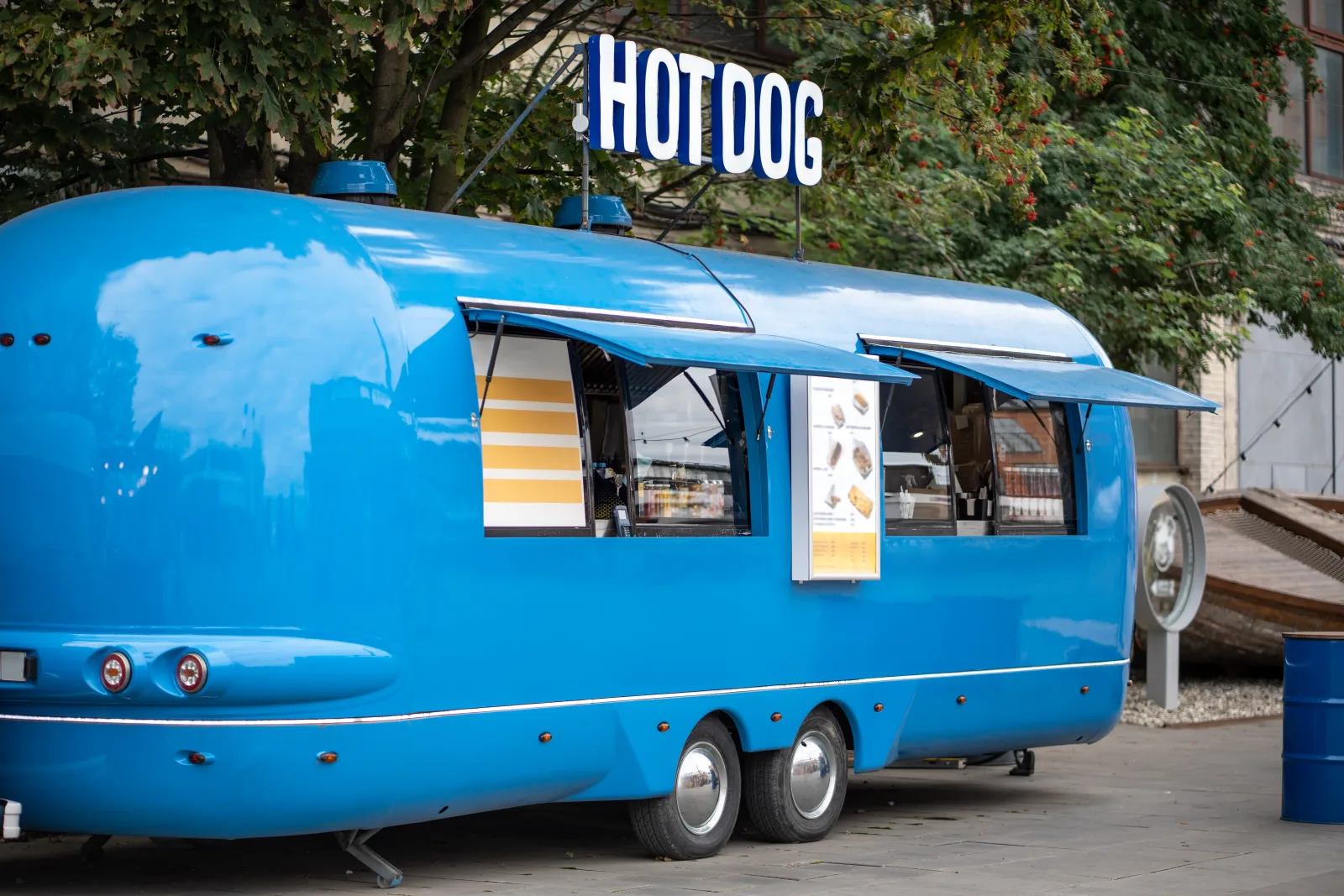

South Carolina puts the base inside the definition rather than attaching it to the permit, and the permit itself comes in two parts. Both facts change what a complete application looks like. This page works through the parts separately, because an incomplete filing here is a common and avoidable delay. Two parts means two ways to be incomplete, and an incomplete application here stalls quietly rather than failing loudly.
The reason a mobile unit is awkward to place anywhere — one asset that is simultaneously a kitchen and a vehicle — is set out on the food truck insurance page.
South Carolina makes it awkward in a particular way by folding the base into the definition of the business. Regulation 61-25 says a mobile food establishment means a retail food establishment that consists of a commissary and mobile food units or pushcarts.
A definition written like that changes the order of operations. In most states you get permitted and then arrange servicing; here the arrangement is part of what is being permitted, and the two halves of the business arrive on the file at the same time whether the operator thinks of them that way or not.
The base is inside the definition, not attached to the permit
Iowa would not recognize the phrasing without translating it to a base of its own name, nor would Kentucky without no term of its own.
Regulation 61-25 defines a mobile food establishment as a retail food establishment that consists of a commissary and mobile food units or pushcarts. Read that as written: the commissary is a component of the establishment being permitted, in the same way an engine is a component of a car rather than a condition of registering one.
The practical consequence catches new entrants. There is no window in which you hold a unit permit and go looking for servicing, because the thing the permit describes does not exist until both halves do. Anyone planning a launch around “get permitted, then sort the kitchen” has the sequence backwards in this state.
For a submission, it means the account has two locations from the first day. Underwriters are used to a mobile operator who mentions a base halfway through the conversation as an afterthought. Here it is not an afterthought — it is half the definition, and describing the business without it is describing something South Carolina does not recognize.
Two permits, rather than a permit and a handshake
A commissary in this state is itself a permitted retail food establishment authorized to provide a servicing area. That raises the arrangement out of the informal: it runs between two permitted businesses rather than between a permitted operator and somebody’s kitchen.
It is a genuine advantage for an operator, and it is worth knowing what it does not do. Both parties being permitted says nothing about who carries the building, who carries the equipment inside it, whose policy answers for your stock in their freezer, or what happens if their permit lapses in the middle of your season. Those are terms in an agreement, and a health regulation is not going to write them for you.
The version of this that goes wrong is quiet. An operator buys time in a permitted kitchen, stores product there, treats the arrangement as settled because both sides are licensed, and discovers after a compressor failure or a break-in that neither policy was written with the other party’s property in mind. Ask the question before the season: whose insurance answers for my property while it is standing in your building?
The menu decides which vehicle you are allowed to be
South Carolina permits pushcarts under the same definition as fully enclosed units, and that is not a courtesy — it is a real regulatory category with real limits. A fully enclosed unit is what a menu of temperature-controlled food requires, and a cart is a different proposition operating under the same heading.
That is an underwriting distinction as much as a compliance one. An enclosed unit is a small building on wheels: it has extraction, fuel, electrical distribution, refrigeration, water and waste, and it can burn. A cart has fewer systems, a smaller footprint, and a different relationship to the weather and to the crowd standing next to it.
Operators who run both should say so plainly. A business described as a food truck that also puts two carts out at events on the same weekend has an exposure profile nobody quoted, and the carts are usually the part staffed by whoever was available.
In the same business within the State, when the business has two addresses
The South Carolina compensation exclusion turns on employers who have regularly employed fewer than four employees in the same business within the State, with a separate limb about total annual payroll in the previous calendar year. Our South Carolina restaurant page works through the structure; the payroll floor is a figure this pack does not publish and no figure appears here.
The mobile-specific question is the phrase in the same business. A mobile food establishment consists of a commissary and units, so the people at the base and the people on the truck are, on the face of the definition, working in one business rather than two. An operator counting only the two faces at the service window may be counting half of a payroll.
This page does not tell you where the line falls for your business, because that depends on facts about your business and on advice this page is not in a position to give. What it says is narrower and useful: if you are near the threshold, the count is a question about the whole establishment as South Carolina defines it, and the definition is unusually explicit about what the establishment contains.
A season that moves the unit, and a base that stays put
The Lowcountry coastal economy runs on tourism and carries a fine-dining density unusual for a state this size, with a season that is a real operating variable rather than a rounding error. Golf-resort hospitality is a format of its own. Upstate, the college and manufacturing towns run on quite different economics and quite different weeks.
A mobile operator can trade both, and many do — which is the thing a fixed restaurant cannot copy and the thing that makes the account harder to describe. The unit that spends its summer on the coast and its autumn upstate has two radii, two crowd profiles and two sets of site arrangements, and an annual policy written on the busier of the two halves is being asked to cover the other one by accident.
The way to handle it is a calendar rather than an average. Say which months are which, where the unit is stored between them, and who is driving during each. An average week is a week that never happens in a seasonal business.
The half of the account nobody in the permit chain will ask about
Regulation 61-25 is about food. It will not raise the driving with you, and the driving is where the largest single loss on a mobile account usually comes from: a vehicle carrying gas cylinders, hot surfaces and a day’s stock, on the road at commercial hours, with a business name painted down the side.
We publish no South Carolina figure of any kind on that side — not a limit, not an amount, not a percentage. The retrieval that would support one has not been done here, and a plausible number is worse than an admitted gap because it gets repeated.
Three questions replace the number. Which named people can lawfully take the unit out. Whether the business ever moves in a private car that nobody has declared. What is hitched on the back, because towed generators and trailers are common in this trade and their cover is almost always assumed rather than checked.
The property half splits along the same line as everything else on this page. Flood is bought separately here, and the state’s residual property mechanism is a wind-and-hail association that appears on the national roster of such plans — a roster is a membership list rather than a finding of eligibility, and nothing on this page says any given risk qualifies. All of that machinery answers for buildings, which in your case means the base, not the unit. Damage to the unit itself answers on the vehicle line, and it travels wherever the unit travels.
Major South Carolina food_truck markets
- Charleston. Lowcountry visitor trade with an unusual density of serious food businesses, which makes event and private-booking work competitive and contract-heavy
- Myrtle Beach. a pronounced season on the Grand Strand where a few months carry the year, and where storage of the unit outside those months is part of the account
- Columbia. university and state-government demand that runs across the whole calendar, which supports a steadier weekday pattern than the coastal markets do
- Greenville. an upstate downtown economy with year-round footfall and shorter working distances, often paired with manufacturing-shift trade nearby
- Spartanburg. manufacturing and interstate-corridor demand keyed to shift changes, where a unit serves hours a fixed kitchen does not
- Rock Hill. trade shaped by proximity to a larger metro across the state line, which puts genuine road time into an otherwise local-looking operation
Learn more
Who we insure
Primary sources
- S.C. Regulation 61-25 — Retail Food Establishments — the definition that makes a mobile food establishment consist of a commissary and mobile food units or pushcarts, and the definition of a commissary as itself a permitted establishment
- S.C. Code Title 42, chapter 1 — workers’ compensation (§ 42-1-360) — the exclusion provision, including the phrase in the same business within the State, which is the part a two-location mobile business has to read carefully
- PIPSO — current property insurance plan members — where the South Carolina wind and hail association is listed. A listing shows existence only — territory and eligibility are neither established there nor claimed here
South Carolina food_truck insurance FAQs
Can we get a South Carolina unit permit and arrange the kitchen afterwards?
No, and the reason is definitional rather than procedural. Regulation 61-25 says a mobile food establishment consists of a commissary and mobile food units or pushcarts, so the base is part of what is being permitted. There is no stage at which a permitted unit exists without one.
Where does South Carolina put the base inside the boundary of its permit?
A commissary. The regulation uses that word, and it defines a commissary as itself a permitted retail food establishment authorized to provide a servicing area. Neighboring states use different vocabulary for the same institution, and the word matters on a form.
Both of us are permitted. Does that settle who insures what?
Not at all. Permits are a public-health arrangement; who carries the building, the equipment, your stock in their freezer and the consequences of an interruption are terms in a private agreement. Ask specifically whose policy answers for your property while it is standing in their building, and get the answer before the season rather than after a loss.
We run carts as well as an enclosed unit. Does that matter?
It matters to the underwriting even though both sit under the same regulatory definition. A fully enclosed unit is what a temperature-controlled menu requires and carries fuel, extraction, refrigeration, water and waste; a cart has fewer systems and a different relationship to the crowd. Describe both, especially if the carts go out with occasional staff.
Does the crew at our base sit inside the payroll South Carolina looks at?
That is exactly the question worth asking, and this page does not answer it for your business. The exclusion turns on employees regularly employed in the same business within the State, and South Carolina defines the mobile food establishment as consisting of the commissary and the units. Counting only the faces at the window may be counting half the payroll.
Does one South Carolina permit reach the whole state?
None is published here. The retrieval behind such a figure has not been done, and we would rather show the gap than fill it. Answer three things instead: which named people may take the unit out, whether an undeclared private car does work for the business, and what covers anything hitched on the back.
Is there a residual property market our truck can use?
The state’s wind and hail association appears on the national roster of property insurance plans, and eligibility is not something a roster establishes. In any case that market answers for buildings, so the question really concerns your commissary. Loss to the unit is dealt with on the vehicle line.
We work the coast in summer and upstate in autumn. How should that be described?
As a calendar, not an average. Say which months are spent where, where the unit is stored in between, and who drives during each period. A seasonal business has no average week, and an average is what gets assumed when nobody supplies the detail.
Get a South Carolina food_truck insurance quote
Tell us what you run and where. Or call 317-942-0549.