
Food Truck Insurance · New Hampshire
Food truck insurance in New Hampshire
In most states the kitchen a mobile unit works from is a fact you assert on a form. Here it is a licensed establishment in a category of its own, and the application asks you to prove it holds that license or to apply for it yourself.
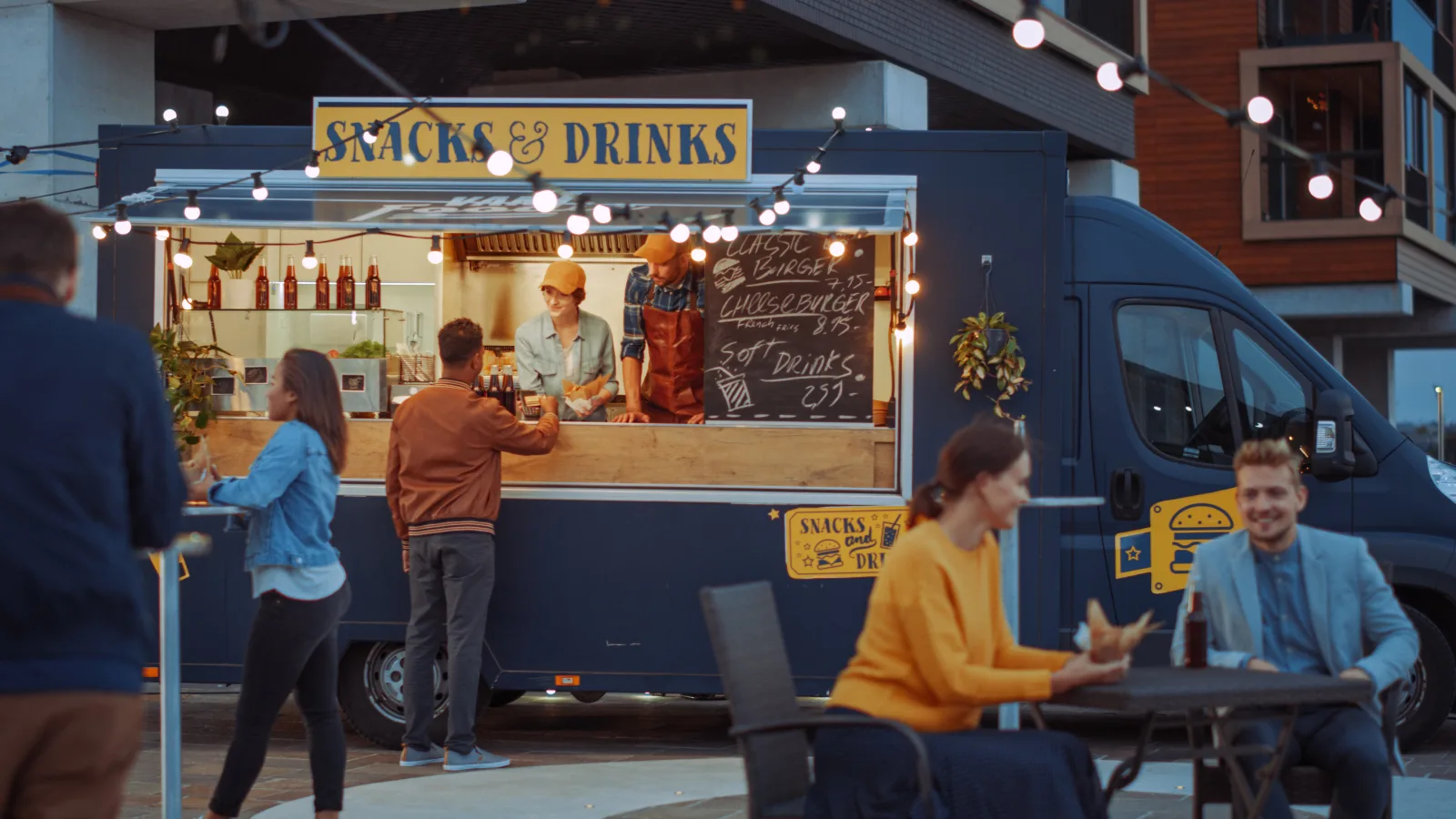

New Hampshire licenses the base as an object in its own category, so an operator holds two licenses rather than one with an attachment. That doubles the renewal calendar and the inspection surface. This page treats the base license as a separate instrument, which is how the state treats it. Two renewal dates and two inspection histories mean two opportunities for a lapse to reach your trading.
Why any of this is difficult in the first place, independent of where you trade, is set out on the food truck insurance pillar.
The unusual thing in this state is that the base is not a footnote to your license. It is a licensed thing in its own right, with its own category, and the application makes you evidence it.
That single drafting decision turns the base from a line on a form into a second regulated object, and a second regulated object is a second thing an insurance file has to describe properly.
The base is a licensed object here, in a category of its own
Washington keeps commissary in its definitions; Alabama keeps commissary in its own.
He-P 2300 does something unusual with the base. A servicing area is its own license category — it carries a category designation, D-6 — which makes it a licensed establishment rather than an address you nominate on an application.
The application follows from that. An operator using a servicing area files either a copy of that facility’s license or a separate application for the facility itself. In other words, the state does not take your word for the base. It wants to see that the base is licensed, or it wants you to license it.
The insurance consequence runs straight off the ownership question. Working out of somebody else’s licensed facility means depending on a license you cannot renew and on terms that decide, between you, which party answers for the structure, for the plant bolted into it, and for your stock in the hours it sits there. Applying for the category yourself means you have just become a two-premises business, and the second one has an address and stays put.
One annual license on the unit, applied for in the capital
The unit’s own license is annual, and the application is made in Concord on a form titled Application for Annual Mobile Food Unit License. A mobile food unit is defined as a food service establishment mounted on wheels or otherwise designed to be immediately moveable, which is broad enough to cover most of what an operator would recognize as a truck or a trailer.
The base carries the name servicing area, meaning the place a unit goes back to on a regular footing. That wording arrives with the federal food code the rule adopts rather than being coined locally, which is why it reads as familiar to anyone who has traded over a state line.
The two licenses run on different objects and can therefore fail independently. The one that catches people is the base, because it is the one an operator does not renew, does not control and does not usually think about until a license they are relying on turns out to have lapsed.
The word commissary appears in the statute and does not mean your base
RSA 143-A uses the word commissary. It is not describing a mobile base. In that chapter it is a type of food service establishment, listed alongside a catering kitchen — a category of premises rather than a role a premises plays for a truck.
That distinction is worth carrying carefully, because cross-wiring the two is a natural mistake and a costly one. An operator who reads the statutory word and concludes that their base is a commissary in the sense used in neighboring states will describe their operation using a term this state applies to something else, and the description will be inspected against the wrong provisions.
The correct pairing here is simple to state and easy to lose. Your base is a servicing area, licensed in its own category. A commissary in this state’s statute is a different kind of establishment altogether, and the two words are not interchangeable no matter how often they are used as though they were elsewhere.
A carve-out shaped like a city health officer
RSA 143-A does not claim everything. It carves out of the state scheme any establishment licensed by a city health officer under RSA 47:17, or by a town health officer under RSA 147:1. So there are two licensing routes here rather than one, and which one applies to you turns on where the establishment sits.
The carve-out is qualified rather than absolute, and the qualification matters. The department may still inspect where it has reason to suspect an imminent health hazard as defined in the chapter. Being outside the state licensing scheme is not the same as being outside the state’s reach.
For a file, this is a question with a one-sentence answer that an operator should be able to give without looking anything up: which authority licenses you, under which route, and who therefore turns up to inspect. Operators who cannot answer it are usually operating on an assumption made when they started and never checked since.
Whether a licensed unit may travel is not something we can tell you
The next question is always the same one: does a license obtained under one of those routes let you trade elsewhere in the state. That is not addressed in the material behind this page. What is established is the licensing carve-out — who licenses whom — and not the geography of what the license permits.
We would rather publish that gap than close it with something reasonable-sounding. A confident sentence about portability is exactly the kind of claim that gets repeated by other pages until it looks settled, and the operator who acts on it is the one holding a booking they cannot work.
The practical route is unchanged from anywhere else: ask the authority that licenses you, ask the authority where you intend to trade, and treat an unanswered question as a no until one of them answers it. Where a state runs a published portability scheme, it publishes one.
A short season puts the same road into fewer months
A great deal of trade in this state is seasonal — resort towns, lakes, the seacoast, an event calendar that swells and empties — and a compressed season does something specific to a vehicle account. The mileage does not shrink. It concentrates, into months where the operator is tired, the crew is casual and the days are long.
A kitchen that drives is a motor exposure and a premises exposure at once, and the motor half is the one operators under-describe. No state duty is quoted anywhere here. That confirmation was never run to a source for this state, and a visible hole beats a plausible filling.
The questions that actually move a mobile auto file are unaffected by any limit. Who else drives, how often somebody uses their own car for the business, and how far the unit goes on the days it goes furthest rather than on an average week. In a season-shaped operation the honest answer to all three is different in July from what it is in February, and the quote should be built on the July version.
Major New Hampshire food_truck markets
- Manchester. the largest year-round market in the state, with downtown, event and industrial-corridor demand that does not switch off when the season does
- Nashua. southern-tier trade close enough to a state line that a meaningful share of customers arrive from outside, which widens the catchment and the driving with it
- Concord. capital-region weekday work and a state event calendar, and the place the unit’s own annual application is made out to
- Portsmouth. a seacoast market with a reputation well beyond its size, where a compressed visitor season carries a disproportionate share of the year’s takings
- Dover. a working seacoast-adjacent city with campus and mill-district trade, steadier through the year than the resort markets it sits between
- Keene. a western market where a mobile unit is often the only realistic way to serve a small town’s event calendar, and where the distances between bookings are real
Learn more
Related coverage
Who we insure
Primary sources
- N.H. Code Admin. R. He-P 2300 — sanitary production and distribution of food — the rule carrying the mobile food unit definition, the servicing area as an operating base, and the base’s own license category
- RSA chapter 143-A — food service licensure — the chapter that carves establishments licensed by a city or town health officer out of the state scheme, and that uses the word commissary in an unrelated sense
New Hampshire food_truck insurance FAQs
Does the base a food truck works from need its own license here?
Yes, and that is the fact that makes this state different. A servicing area is its own license category, and an applicant using one files either a copy of that facility’s license or a separate application for the facility itself. The state does not accept the base as an assertion on a form.
What is the license on the unit itself?
An annual one, applied for in Concord on a form titled Application for Annual Mobile Food Unit License. A mobile food unit is defined as a food service establishment mounted on wheels or otherwise designed to be immediately moveable, which reaches most trucks and trailers an operator would recognize.
Our neighbors call the base a commissary. Is that the word here?
No, and this is worth getting right. The word does appear in the food service licensure chapter, but there it is a type of food service establishment listed alongside a catering kitchen — not a mobile base. Your base is a servicing area. Using the other word will have you inspected against provisions written for a different kind of premises.
Is our license a state license?
It depends where you are. The licensure chapter carves out establishments licensed by a city health officer or a town health officer, so there are two routes rather than one. The department nevertheless keeps a power to inspect where it suspects an imminent health hazard, so sitting outside the state scheme is not the same as sitting outside the state’s reach.
Can we take a licensed unit into another jurisdiction?
We cannot tell you from the record behind this page. What is established here is who licenses whom, not where a license lets you trade. Rather than offer a plausible answer, we would point you at both authorities — the one that licensed you and the one where you want to work — and suggest getting the answer before a date is booked.
Which food code edition applies?
The rule adopts a federal edition, and we describe it without a year on this page because the edition and effective date were not verified to the standard we hold numbers to. That is a deliberate omission rather than an oversight, and it does not affect anything on this page: the base vocabulary, the license categories and the carve-out are all established independently.
Does a short season reduce what we should carry?
It concentrates the exposure rather than reducing it. The same road, the same events and the same turnover of casual help land inside fewer months, with longer days at the end of them. On the state duty we are silent, because that check was not carried to a source — but the questions that count are the driver list and the longest days rather than an average week, and they should be answered on July.
Get a New Hampshire food_truck insurance quote
Tell us what you run and where. Or call 317-942-0549.