
Food Truck Insurance · Nebraska
Food truck insurance in Nebraska
Nebraska does not say a mobile food unit must return to its commissary each day. It says a mobile food unit is a vehicle that does. That is a smaller sentence and a much larger idea, and it is the reason this page starts where it does.
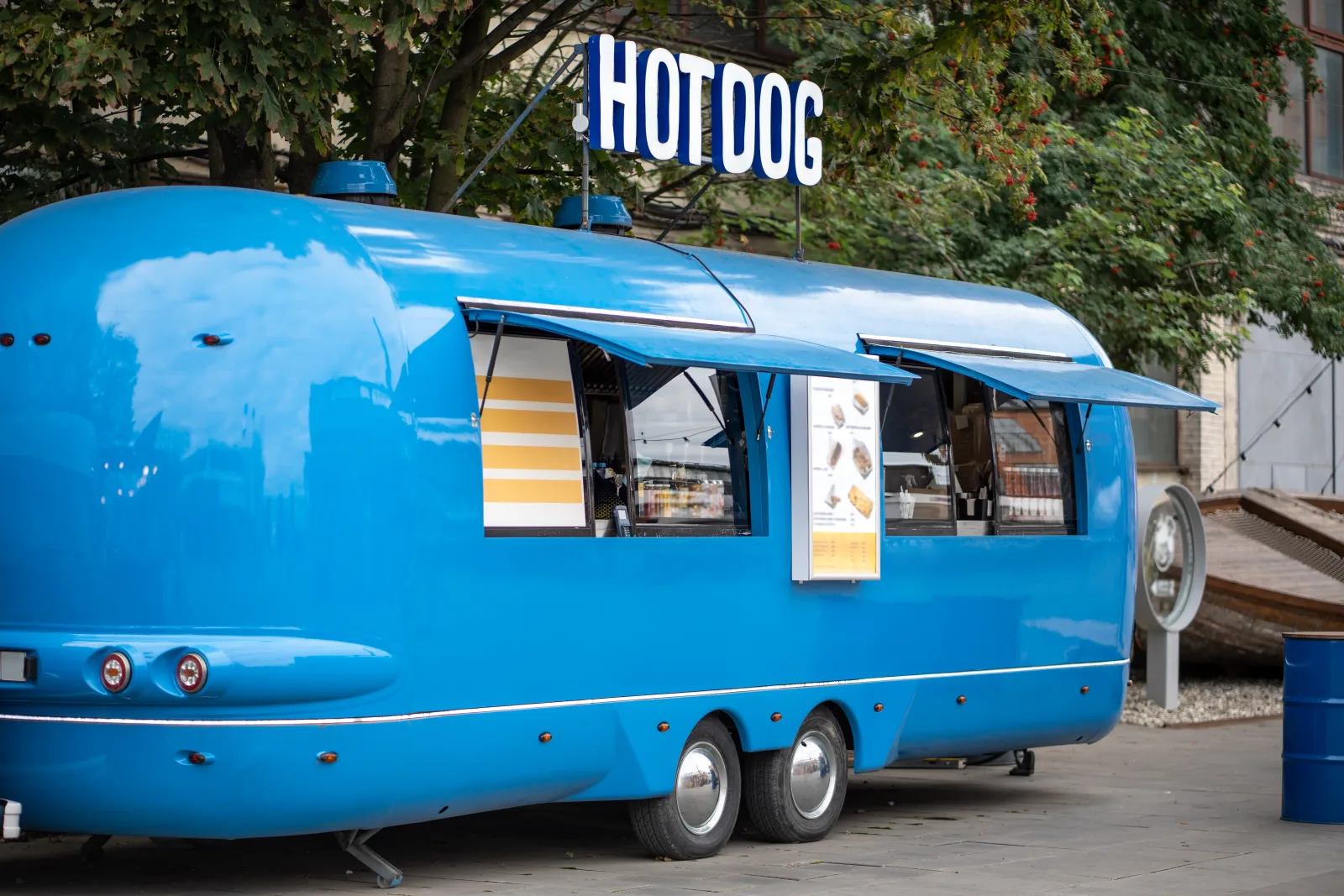

Nebraska writes the daily return into the definition of what the unit is, so returning is part of the identity of the operation rather than a condition placed on it. That framing changes how a lapse is treated. This page follows the statutory definition rather than the operational habit. A unit that stops returning has stopped being the thing the statute permits, which is a harder position than a breach.
Two Nebraska definitions sit next to each other and do the work. Section 81-2,242.02 defines a commissary as a food establishment where food, food containers or food supplies are kept, handled, prepared, packaged or stored for use in mobile food units, pushcarts or vending machines. Section 81-2,251.04 defines a mobile food unit as a vehicle mounted food establishment designed to be readily movable that returns to a commissary daily for cleanup and service.
Note the direction of each. The commissary is defined by what it is for — supplying mobile operations — rather than by its address or its ownership. The vehicle is defined partly by an action it performs. Between them they describe a system rather than two objects.
The general case for how a mobile unit is underwritten, and why one quote rarely fits both halves of it, is on the food truck insurance page. Below is what Nebraska adds to that, including one section from 2023 that is more interesting for what it permits than for what it does.
The daily return is part of what the statute says you are
The New Mexico version of this paragraph would say servicing area, and the Pennsylvania version no term of its own.
Most states express the base relationship as an obligation: the unit shall return, the unit must report, the unit is required to have. Nebraska folds it into the definition instead. A mobile food unit is a vehicle mounted food establishment designed to be readily movable that returns to a commissary daily for cleanup and service.
Drafted that way, the return is not something you might fall short of by degrees. It is a component of the description. An operation that does not return has not committed a lesser breach of a requirement; it has stopped matching the definition it was licensed against, which is a more awkward position to be in and a harder one to argue about afterwards.
The operating consequence is one operators rarely put in a submission: a Nebraska unit makes a return trip every single trading day, on top of whatever driving the bookings themselves required. That is mileage, made at the end of a shift, in a loaded vehicle, by somebody who has been on their feet since morning. It is a genuine part of the exposure and it is invisible in any estimate built from event dates.
Two statutory names for the same vehicle, both still live
Nebraska calls the thing two different names in two different places, and both are current law. The definitions use mobile food unit. The 2023 sections use mobile food establishment. Neither has replaced the other and they should not be quietly merged.
This is a small thing that behaves like a large one on paperwork. A form asking about a mobile food establishment and a statute defining a mobile food unit can look, to somebody moving quickly, like two different subjects — and an operator trying to be careful may end up answering the wrong question carefully. When you are filling something in, note which term the document in front of you is using and answer in that vocabulary.
It matters for advice as well. A summary that normalizes the two into one term has removed information from the statute, and the missing information is exactly what tells you which provision you are reading. Where this page names a term it names the one the cited section uses.
A 2023 section lets cities agree; it does not make them agree
Section 81-2,278.01, enacted in 2023, lets a political subdivision grant reciprocity for local licensing of mobile food establishments. It is a genuinely useful piece of legislation for a class of operator who spends a great deal of time collecting duplicate permissions.
The verb is the whole story. A political subdivision may enter into an agreement under the Interlocal Cooperation Act. It is an authorization, not a scheme. Nothing in it requires any jurisdiction to do anything, and whether any Nebraska jurisdictions have actually entered such agreements is not something this page can tell you — it was not established.
So the instruction is precise: do not plan a season on the assumption that Nebraska mobile licenses are reciprocal, because that is not what the statute says and it may not be true anywhere. Do ask the jurisdictions you work in whether they have an agreement with their neighbors, because the mechanism now exists and asking is free. And keep whatever answer you get, because an underwriter reading a mobile file wants evidence that the operator knows where they are permitted to trade.
Your regulator may be a body under contract
Section 81-2,252 defines the regulatory authority as the department, or a political subdivision or state agency under contract with it. That third possibility is the one worth noticing, because it means the people inspecting you may be doing so under an agreement rather than as the department itself.
For an operator the practical effect is that the office, the individual and the local practice can differ from place to place while the rule stays the same. That is not a problem, but it is a reason to find out who your regulatory authority actually is rather than assuming a state office, and to ask them your questions rather than asking the internet.
It also explains something operators find frustrating: two honest answers to the same question, given in two Nebraska towns, both correct. The contract structure produces local variation in practice under a single statutory framework, which is exactly the terrain where advice written for one town travels badly to the next.
The commissary definition is about supply, not about your address
Nebraska defines a commissary as a food establishment where food, food containers or food supplies are kept, handled, prepared, packaged or stored for use in mobile food units, pushcarts or vending machines. It is defined by function. What makes something a commissary is that it supplies mobile operations.
That framing helps with a question operators ask constantly, which is whether a particular arrangement counts. A restaurant kitchen used outside service hours, a shared production space, a family business with room to spare — the test the statute suggests is about what the place does for the unit, not about what sign is over the door.
The insurance conversation runs alongside it and is answered by a document rather than by a definition. Whose building is it. Whose equipment is in it. Who insures your stock while it sits there. What happens if their premises are unusable in the middle of your season, and how quickly you could work from somewhere else. Nebraska has told you what the base is for; it has not told either of you who carries the loss.
Interstate corridors, and a unit that follows them
A large part of the Nebraska mobile trade happens at distance. Beyond the two eastern cities, the good bookings are spread across towns that are an hour or more apart, and a unit that wants that work does the driving. The corridor towns and truck-stop trade that support fixed kitchens support mobile ones for the same reason: that is where people are.
Layer the statutory daily return on top of that and the arithmetic gets uncomfortable. A booking two hours away is a four-hour round trip before the return to the commissary is counted, and the last hour of driving happens after a full service. That is the shape of the risk on a rural Nebraska mobile account, and it is not visible from a description of the food.
The eastern cities behave differently — a denser pitch map, more competition, more event work, shorter journeys and a bigger share of the exposure sitting at the pitch rather than on the road. An operator who does both has two risk profiles in one business, and saying so is more useful than any single number they could give.
The unit is the vehicle and the kitchen on one file
Everything above about returns and corridors adds up to a simple underwriting point: on a Nebraska mobile account, the road carries the severity. A signwritten unit with a cooking line, gas bottles and stock inside it, involved in a collision at highway speed, is not a moderate loss, and no amount of care at the serving window changes that.
The federal responsibility rules raised here govern hired freight crossing boundaries above a stated weight. A Nebraska unit doing Nebraska work satisfies no part of that, which leaves the state requirement governing — and no Nebraska figure is carried here, neither a floor nor a ceiling, because none has reached the evidential bar we set before printing a number.
What is worth more than a figure is a truthful driver list. Who takes the unit to a booking. Who makes the return at the end of the night. Whether a family member who helps on busy weekends has ever been added to anything. And whether anybody has checked what covers a member of staff who runs to a supplier in their own car mid-service. Those decide claims.
Major Nebraska food_truck markets
- Omaha. the deepest market in the state, with a revitalized warehouse district, a long event calendar and enough pitch competition that location and timing decide a unit’s week
- Lincoln. a campus and capitol market where institutional weekday demand and a term-driven student trade run on two different calendars in the same city
- Bellevue. a market shaped by shift patterns and steady weekday demand, which suits a unit working a fixed rotation rather than chasing events
- Grand Island. a central market where fairs and shows carry a disproportionate share of the year, and where the surrounding towns are a genuine drive apart
- Kearney. an interstate-corridor market with event and conference trade, far enough west that a unit here works its own territory rather than commuting east
- Fremont. a smaller market close enough to the largest one to work both, which in practice means a unit based here drives more than its trading pattern suggests
Learn more
Who we insure
Primary sources
- Neb. Rev. Stat. 81-2,251.04 — Mobile food unit, defined — the definition that makes the daily return to a commissary part of what a mobile food unit is, rather than a duty imposed on one
- Neb. Rev. Stat. 81-2,242.02 — Commissary, defined — the commissary defined by purpose — a food establishment where food, containers or supplies are kept for use in mobile food units, pushcarts or vending machines
- Neb. Rev. Stat. 81-2,278.01 — local licensing reciprocity — the 2023 section permitting a political subdivision to enter an agreement for reciprocity in local licensing; it authorizes reciprocity rather than creating it, and whether any jurisdiction has used it is not established
- Neb. Rev. Stat. 81-2,252 — Regulatory authority, defined — the section making the regulatory authority the department, or a political subdivision or state agency under contract with it
Nebraska food_truck insurance FAQs
Does a Nebraska food truck have to return to its commissary every day?
The daily return is written into the definition. Section 81-2,251.04 defines a mobile food unit as a vehicle mounted food establishment designed to be readily movable that returns to a commissary daily for cleanup and service. It is not framed as a duty attached to the unit — it is part of what the unit is.
What counts as a commissary here?
Section 81-2,242.02 defines it by function: a food establishment where food, food containers or food supplies are kept, handled, prepared, packaged or stored for use in mobile food units, pushcarts or vending machines. The test is what the place does for the unit, not what kind of business it is otherwise.
Why do I see both mobile food unit and mobile food establishment?
Because both are live in Nebraska statute. The definitions use mobile food unit; the 2023 sections use mobile food establishment. Neither replaced the other. When you are completing a document, use the vocabulary that document uses, and be careful with summaries that quietly merge the two.
Is a Nebraska mobile license reciprocal between jurisdictions?
We are not going to say that it is. Section 81-2,278.01, enacted in 2023, lets a political subdivision enter an agreement granting reciprocity — the verb is may. It authorizes reciprocity rather than creating it, and whether any jurisdictions have actually done so was not established. Ask the places you trade in, because the mechanism now exists.
Who is our regulatory authority?
Under 81-2,252 it is the department, or a political subdivision or state agency under contract with it. That third route is why practice can vary between towns while the rule stays the same, and it is why you should find out who yours actually is instead of assuming a single state office.
We buy time in someone else’s kitchen. Whose insurance covers what?
Whatever your agreement says, and most of these agreements say nothing. Settle who insures the building, who insures the equipment you use, who carries your stock while it is stored there, and what happens if their premises become unusable in the middle of your season. The statute tells you what a commissary is for; it does not allocate a loss between you.
How should a rural Nebraska operation describe its year?
By distance as much as by dates. A booking two hours out is a four-hour round trip before the daily commissary return is added, and the last leg is driven after a full service. That is the defining feature of the account and it does not appear anywhere in a description of the menu.
Why does this page not give a Nebraska commercial auto minimum?
Because no Nebraska number has reached the evidential bar we set for a published figure, and an exposed gap is the honest option. The rules commonly quoted cover hired freight crossing boundaries above a stated weight, which a Nebraska unit doing Nebraska work is not — so the state requirement governs, and silence beats a plausible number.
Get a Nebraska food_truck insurance quote
Tell us what you run and where. Or call 317-942-0549.