
Food Truck Insurance · Colorado
Food truck insurance in Colorado
Almost every state in this region ties a food truck to a fixed permitted kitchen. Colorado wrote a route out of that requirement, and then made the question of who licenses you depend on where you park the thing overnight.
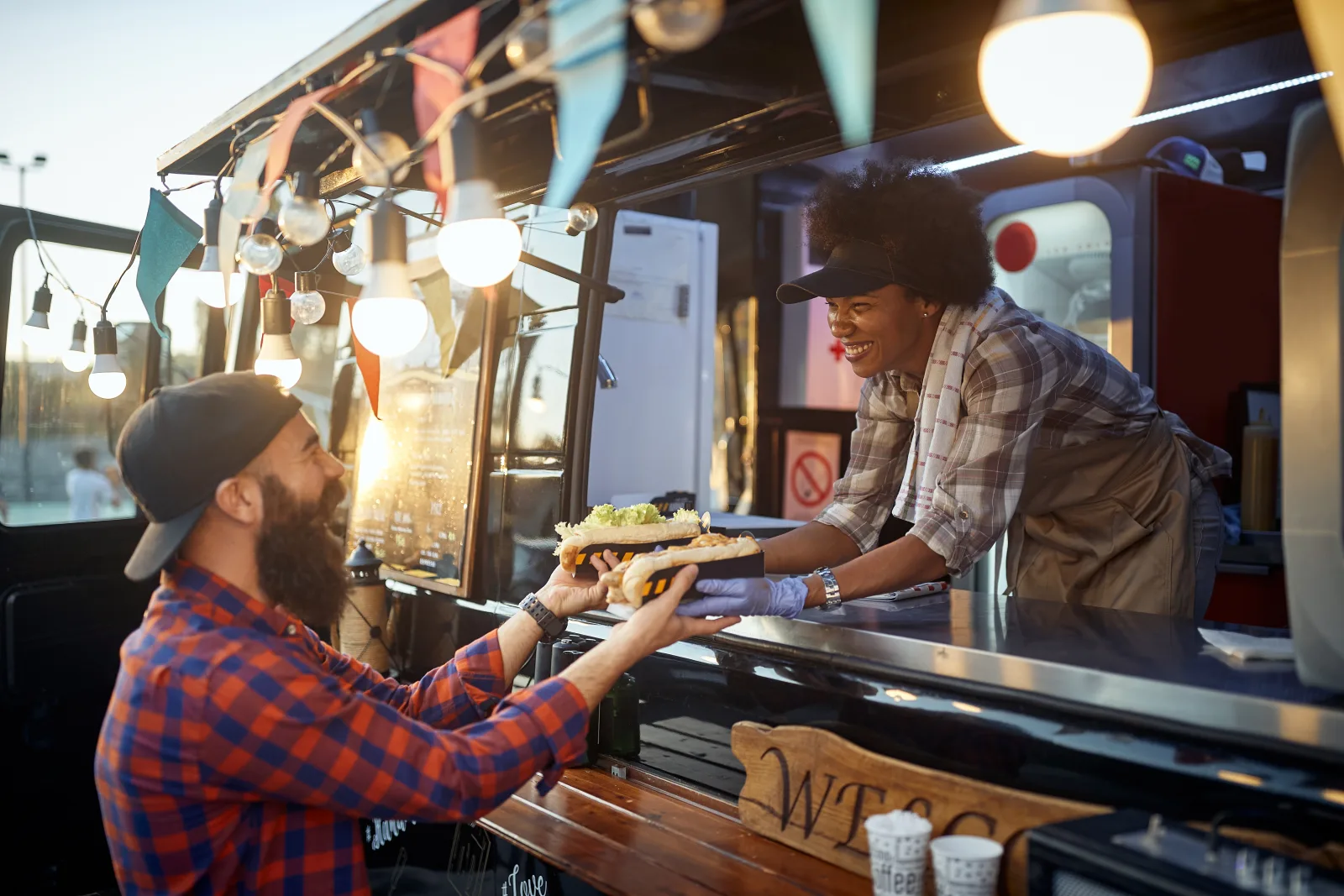

Colorado gave mobile units a chapter of their own, which means the route around the base question runs through rules written for this trade rather than borrowed from fixed establishments. That is unusual and it is helpful. This page works from the mobile chapter and marks where the general food rules still reach a truck.
The general case for treating a food truck as its own class of risk — one asset that is a workplace and a registered vehicle in the same shift — is on the food truck insurance pillar.
Colorado is worth reading separately because it makes two structural choices this region mostly does not. It offers a genuine exemption from the base-kitchen requirement, and it has no single licensing counter.
Mobile units got a chapter of their own here
A unit that also trades in West Virginia meets no commissary at all there, and both, with different meanings if it reaches Maine.
Colorado did not tuck its mobile provisions into the fixed-establishment rules as a set of exceptions. Chapter 9 of 6 CCR 1010-2 governs mobile retail food establishments and pushcarts as their own subject, separately from the rules around it.
That sounds like housekeeping and it has a real consequence for anybody reading the law themselves. In most states you find the mobile requirements by hunting for the word mobile inside a document written about buildings. Here there is a place to look, and the answers in it are written for units rather than adapted to them.
It also means the definitions are Colorado’s own rather than inherited. A commissary here is a facility approved by the Department as a base of operation where a mobile unit reports for servicing, restocking and maintenance. Note the three activities named: this is a functional definition, and an arrangement that provides only one of the three may not be doing what the rule assumes it does.
A self-contained unit can be approved to work without one
Colorado recognizes a self-contained mobile retail food establishment, approved to operate without a commissary. Very few states in this region offer that route, and an operator who has been told flatly that a food truck must have a base kitchen has been told something that is not true here.
Before anyone gets too pleased about it, the exemption has a shape. It is an approval, not a default, which means somebody has to look at the unit and agree that it is what it claims to be. And the reason a base kitchen exists is not purely regulatory — a unit that never returns anywhere is a unit doing its own servicing, restocking and maintenance somewhere, and where that happens is a question an underwriter will ask even if the state does not.
The insurance angle cuts both ways and is worth putting plainly. An operator who works without a commissary has less fixed exposure — no shared walk-in, no stock in somebody else’s building, no dependence on another business’s permit. They also have no fallback: if the unit is off the road, the business is off the road, and business interruption on a mobile account with no base is a sharper question than on one with a kitchen behind it.
Nine counties, and then everywhere else
Who licenses your unit depends on where it is based. The state health department licenses retail food establishments in nine named counties; in the rest of Colorado, the county’s local public health agency does. There is no single state food-truck counter to apply to.
For an operator that is a planning fact rather than a complaint. It means the phrase “the Colorado process” describes something that does not exist in one form, and it means advice from another operator may be accurate about their county and irrelevant to yours. Check where your own base sits against the current list before you build a timetable around anything.
It also means the administrative burden of moving is larger than the rent difference. Relocating a base across the wrong line changes the authority you answer to, not just the postcode on the paperwork.
The taproom pitch, and whose ground you are standing on
A great deal of Colorado mobile trade happens on somebody else’s premises. Along the Front Range, a brewery that wants to serve food and a truck that wants a reliable pitch solve each other’s problem in the car park, and the resulting arrangement is treated by customers as one venue. Resort towns run their own version of it around a two-peak year.
From a liability standpoint that arrangement is more interesting than it looks, because the customer experiences one business and there are two. Where does your responsibility end — at the serving hatch, at the edge of the awning, at the queue that forms across the host’s ground? A slip in that queue will be argued about by two insurers who have never spoken to each other.
The fix is unglamorous and it is a document. Get the host arrangement in writing, find out what their contract requires of you before the season rather than during it, and check that what you have promised is something your policy actually does. Most of these agreements ask to be named on the policy, and being named is not the same as being covered for the thing they think you are covered for.
Grades, distance and the vehicle half of the account
Colorado puts more road under a unit than most operators plan for, and the road is not flat. A Denver business taking mountain work is hauling a tall, heavy box up long grades and holding it back down them, in conditions set by altitude rather than by the forecast. A Western Slope booking costs a day’s driving in each direction. The vehicle side of this account is where the geography lands.
The Colorado requirement is deliberately absent from this discussion. The source work behind such a number was left unfinished for this state, and unfinished work publishes on a page identically to finished work — which is the whole reason we leave the space blank.
What prices this account is a set of habits. The full driver list, and how people joined it. Whether a family pickup ever carries stock or tows anything. And where the unit spends the winter, because a long dormant period in an unattended yard is its own exposure and almost nobody mentions it.
One geographic note that belongs to the base rather than the unit: flood in Colorado includes post-burn debris flow off recent burn scars, and that lands on the flood side rather than on a property form. If your stock lives in a building somewhere below a scar, that is a question about the building. Our Colorado restaurant page takes the fixed-premises version of it.
Major Colorado food_truck markets
- Denver. the deepest mobile trade in the state, with brewery and taproom pitches, an office weekday market and an event calendar that runs most of the year
- Colorado Springs. a large separate market to the south with its own event and institutional demand, far enough out that most operators base for it rather than commute to it
- Fort Collins. a northern brewery and university trade with a strong outdoor season and a pattern of units working host premises rather than street pitches
- Boulder. dense, walkable and permit-constrained, where the limiting factor is usually where a unit may legally stop rather than whether the demand is there
- Longmont. a northern corridor town with growing suburban and event demand, workable from a Denver or Fort Collins base without a long run
- Grand Junction. the Western Slope market, a full day’s driving from the Front Range, which makes it a booked trip and a different mileage profile entirely
Learn more
Who we insure
Primary sources
- 6 CCR 1010-2 — Colorado Retail Food Establishments (ch. 9, mobile) — the mobile chapter itself, including the commissary definition and the self-contained mobile retail food establishment that may operate without one
- CDPHE — retail food licensing, counties served by the state — which counties the state health department licenses directly; outside that list the license comes from the county’s local public health agency
Colorado food_truck insurance FAQs
Does a Colorado food truck have to have a commissary?
Not necessarily, and this is the state’s distinctive rule. Colorado recognizes a self-contained mobile retail food establishment approved to operate without one. It is an approval rather than a default, so somebody has to agree your unit qualifies, but the route exists and most of this region does not offer it.
Can a Colorado unit run with no base at the end of the day at all?
A facility approved by the Department as a base of operation where a mobile unit reports for servicing, restocking and maintenance. Those three functions are named in the definition, which is worth checking your arrangement against — a place that provides only storage may not be doing what the rule expects.
Who issues my license — the state or my county?
It depends where the unit is based. The state health department licenses retail food establishments in nine named counties; everywhere else in Colorado the county local public health agency does. Check the current list against your own base rather than relying on what another operator tells you about theirs.
We are looking at a cheaper base in the next county. Anything to watch?
Possibly a change of licensing authority, depending which counties are involved. That is a bigger administrative move than the rent saving suggests, and it is worth confirming before you sign rather than after.
If we work without a commissary, does that make us cheaper to insure?
It removes some fixed exposure — no stock in someone else’s building, no dependence on their permit — and it concentrates everything into one asset. That cuts both ways. With no base behind you, a unit off the road is a business off the road, so business interruption deserves a harder look rather than a lighter one.
We trade mostly outside breweries and taprooms. Whose liability is the queue?
That is exactly the argument you want settled on paper beforehand. The customer sees one business and there are two, and a slip in the line outside your hatch on the host’s ground is the kind of loss two insurers spend months allocating. Get the host arrangement written down and check what it obliges you to carry.
Why is no schedule figure printed for the vehicle side here?
Because the source work behind such a number was left unfinished here, and we would rather leave a gap than fill it confidently. Where a booking means a pass in both directions, the driver list and the length of the runs shape the placement more than any schedule figure does.
Get a Colorado food_truck insurance quote
Tell us what you run and where. Or call 317-942-0549.