
Bar Insurance · Pennsylvania
Bar insurance in Pennsylvania
In most states a liquor license is a permission. In Pennsylvania it is also a transferable asset carried at what it cost to acquire — and that single difference reaches further into an insurance program than the liability statute does.
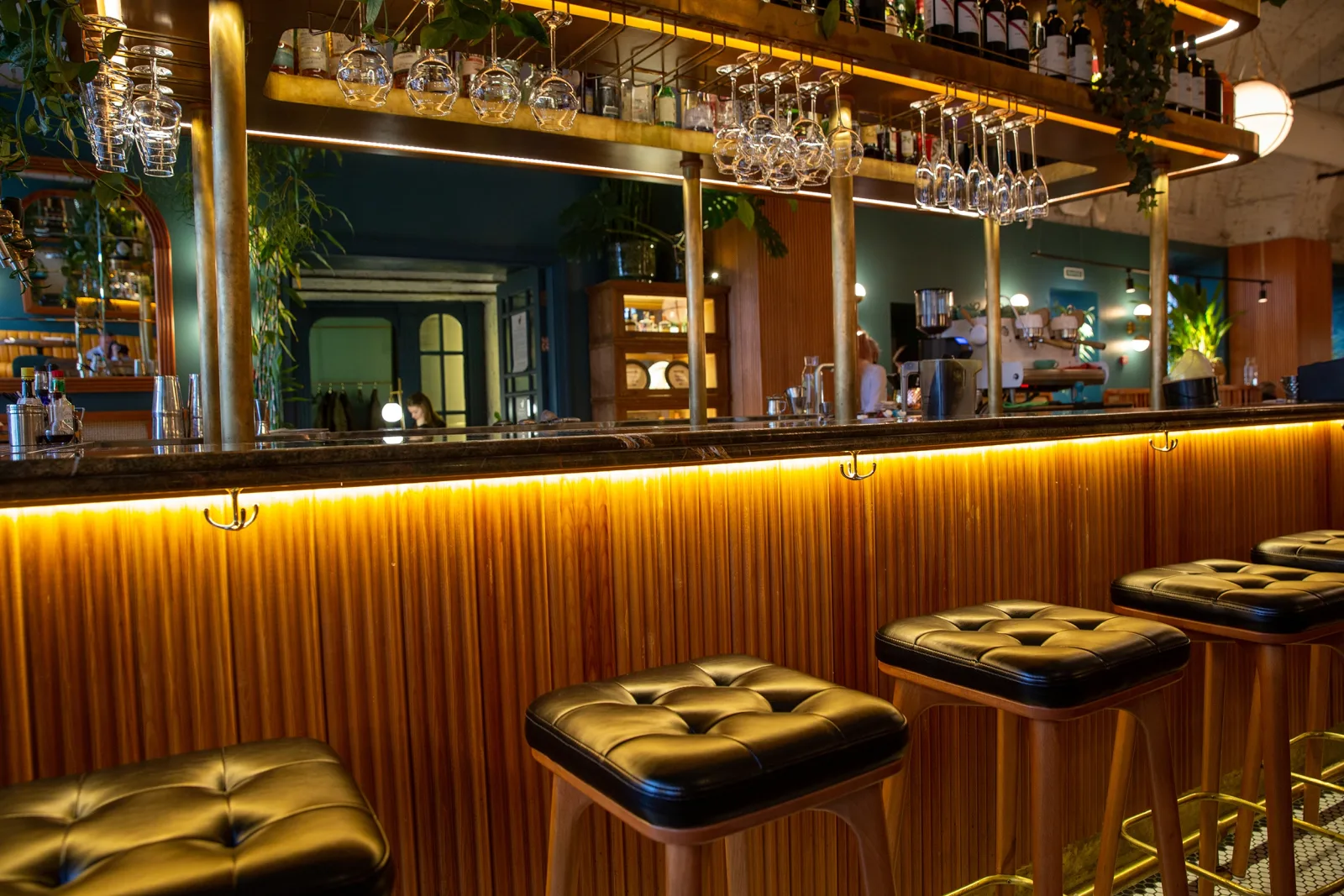

A Pennsylvania license is an asset with a price before it is a permission, and that price is set by a market rather than by the state. It changes how a bar is bought, financed and insured. This page treats the license as property, because the balance sheet consequence arrives before the regulatory one. A license with a market price belongs in the property and financing conversation before it reaches an insurance one.
How the exclusion in a general liability form works, and what the separate cover puts back, is on the liquor liability page. It is the same machinery in every state and it is not why Pennsylvania needs its own.
Two facts here are, and only one of them is about liability. On-premise licenses are county-quota limited for the restaurant and eating-place categories, and the scarcity that produces turns a Pennsylvania license into a transferable capital asset carried at real acquisition cost. That is a balance-sheet fact wearing a licensing costume, and it changes what a placement has to account for.
The other is that the operative liability section is narrower by its own terms than the summaries of it, and it turns on a single observational word. This page takes the asset first because it is the one nobody insures properly, then the section and what it does and does not say, then the observational standard, then the state’s trading geography.
The license is an asset before it is a permission
The Pennsylvania Liquor Control Board licenses retail service, and the on-premise licenses are county-quota limited for the restaurant and eating-place categories. That single structural choice is what makes this state different from almost everywhere else a bar operator might have traded before. Ohio reaches a comparable result through a quota that runs by permit class rather than by county, and our Ohio bar page sets out which of its permits the quota reaches and where it declines to say.
Quota scarcity has a commercial consequence that is entirely predictable and still catches people. A Pennsylvania license is a transferable capital asset carried at real acquisition cost, and BYOB operation is the common alternative for a room that cannot or will not buy one.
So the thing hanging on the wall is not a permission slip. It is something the business bought, something it could sell, and something that has a cost attached to it in the accounts. An operator who arrived from a state where a license renews for a fee has no instinct at all for this, and the instinct they do have is actively misleading.
This page prints no figure for what a license costs, and the omission is deliberate rather than coy. The material behind this page describes acquisition cost without quantifying it, and a made-up range would be worse than an honest gap — particularly for a value that is county-specific and moves.
What matters is that the number exists, that it is real, and that in a great many Pennsylvania bars it is the largest single item the business owns. Which raises the obvious question nobody asks early enough.
What that asset does to an insurance program
Start with what it is not. It is not a building, it is not stock, it is not equipment, and it does not behave like any of them. It is an intangible with a market value created by scarcity, and the standard property schedule an operator fills out has no natural line for it.
That is precisely why it goes missing. A submission that lists the fit-out, the plant and the stock and stops has described everything the business owns except the most valuable thing, and nobody noticed because the form did not ask.
The questions worth putting to a broker are specific rather than general. How is the license treated in the placement, if at all. What happens to the business if trading stops for a period — and what happens to the value of the license in that same period, which is not automatically the same question. And whether anything in the program responds to the credential itself rather than only to the room it permits.
None of those have a single right answer, and this page is not going to invent one. What it can say is that an operator who has asked them is in a materially better position than one who assumed the license looked after itself because it always did in the last state they traded in.
The business income conversation is where this bites hardest. Where the license is the largest asset and the trade depends on it entirely, an interruption is not only a revenue problem; it is a problem about an asset that only produces value while it is being used. Settle how that is treated at placement, in writing, rather than during a loss.
The operative section is narrower than the summaries of it
Pennsylvania has a dram shop statute, and the operative section of the Liquor Code says something more specific than "bars are liable for over-service". It provides that no licensee shall be liable to third persons for damages inflicted off the licensed premises by customers, unless the customer was sold, furnished or given liquor when visibly intoxicated.
Read the geography in that. The section by its own terms addresses damage inflicted off the licensed premises, and it sets a condition on when a licensee may be liable for it. That is a narrower thing than a general statement about bar liability, and it is worth knowing exactly what your own statute book says before relying on a summary of it. The distance between a section and the summaries of it is a recurring hazard rather than a Pennsylvania one, and our South Dakota bar page declines to characterize an immunity at all because the readily available secondary material there is the least dependable in this build.
Now the part where we decline to be helpful. We are not telling you that Pennsylvania has no on-premises dram shop liability, because that was not verified. The section speaks to off-premises damage; the on-premises theory was not established in case law for this page; and announcing a negative nobody checked would be the same failure as asserting a rule nobody checked, only harder to spot.
The practical position for an operator is therefore straightforward and slightly unsatisfying. You know the condition the statute attaches to one class of claim. You do not have, from this page, a clean answer about the other class, and anyone offering you one confidently is offering you a summary. That is a question for counsel and for the code itself, which is linked below.
What follows for cover is unchanged by the uncertainty and arguably sharpened by it. The exclusion in a general liability form is written against the trade rather than against a state’s liability landscape, and a room in an unsettled corner of that landscape has more reason to close the gap, not less.
One observational word, applied at the moment of service
Visible intoxication is the statutory pivot in both sections, and the word carries the weight of the whole scheme. It is an observational standard: it asks what was apparent, at the point of sale, to whoever made it. Which word a state picks is not a detail: our Washington bar page turns on two phrases that are not synonyms, and on the fact that the lower of the two is the one applied there.
That has an unglamorous but genuinely useful consequence. The controls that matter here are the ones that improve observation and preserve a record of it — not the ones that improve a document nobody consults. Who served, what they were trained to notice, what they did when they noticed it, and whether any of that exists in writing by the end of the shift.
It also means service architecture matters more in Pennsylvania than an operator might assume. Where drinks are served away from a bar counter — at tables, at an event, to a group ordering in bulk — the number of observation points goes up and the proportion of them under direct supervision goes down. A room that has thought about that has thought about the actual statutory pivot, whether or not it would put it in those terms.
Training records earn their place for the same reason. Not because a certificate is a defense, but because a documented program with dated records of who completed what is evidence that service decisions were managed rather than left to whoever happened to be pouring. It is one of the few things a bar can hand an underwriter that is not a claims history.
And it argues for writing the difficult nights down while they are still recoverable. An observational standard is answered with observations, and an observation that was never recorded is, some months later, indistinguishable from one that never happened.
Two anchor cities, a long tail, and a license map that shapes both
Two anchor cities pull this state’s hospitality economy in different directions, and behind them sits a long tail of mid-sized markets that look like neither. The quota structure runs underneath the lot of it.
In Philadelphia an independent restaurant culture of national standing sits alongside a BYOB tradition dense enough to be a defining feature of the city, and that tradition exists precisely because licenses are quota-limited. For a licensed bar there, the practical meaning is that it is trading among a substantial cohort of rooms operating without a license at all — a competitive and operating environment that has no equivalent in a state where anyone who wants a license can apply for one.
Pittsburgh’s scene is neighborhood-organized and has rebuilt around independent operators, which tends to mean rooms with a settled local crowd, older building stock and a trade that runs on residents rather than on visitors. Between the two lie several markets again: the family-restaurant and market-hall tradition of Dutch country, suburban casual trade through the Lehigh Valley and around the capital, and seasonal resort service in the Poconos and along the northern lakeshore, with the staffing swing that last one implies.
There is also a layer of fire halls, social clubs and fraternal clubs serving food and drink statewide, with few parallels elsewhere. It is a genuine part of this state’s licensed landscape and it is treated properly on the Pennsylvania restaurant page rather than sketched here.
The point for a submission is that these are not variations on one business. A Philadelphia room, a Pittsburgh neighborhood house and a Poconos seasonal bar differ in crowd, calendar, staffing and building, and the license each one holds cost something different to obtain.
The biggest thing you own has no line on the form
A property schedule is a good instrument for inventorying things a person can point at. Fit-out, plant, stock, the contents of a cellar. It asks about every one of them, which is why every one of them gets mentioned. It does not ask about an intangible whose value was manufactured by a county quota — which is why, in a great many Pennsylvania bars, the most valuable item the business owns is the one thing missing from the business’s own description of itself.
Nobody decides to leave it out, and that is the difficulty. An omission produced by the shape of a form is invisible from the inside: the form gives no signal that a question went unasked, and the operator filling it in has answered everything in front of them honestly.
Philadelphia sharpens it, because a licensed room there trades alongside a substantial cohort of rooms operating without a license at all. Similar street, similar takings, similar fit-out — and balance sheets that differ by the price of the thing hanging on one of the walls.
The omission then propagates, because a thing nobody named is a thing nobody asks further questions about. A license produces value only while it is being used, so an idle stretch is not simply an interruption of revenue. What a closure does to the fit-out gets discussed as routine; what it does to the item that cost more than the fit-out does not, unless somebody raises it in writing.
Payroll is the other thing worth splitting honestly, since the workers compensation line reaches a bar through its staff, and a seasonal resort room and a year-round neighborhood house are not the same payroll shape. The building belongs to the Pennsylvania restaurant page, including the state’s flood picture. The basins do the work here — the Susquehanna, the Delaware, the Lehigh and the Allegheny — and riverine and steep-valley flash flooding is the peril that follows them. It is placed away from the property form, and it is the state’s most significant separate placement; earthquake is a comparatively minor consideration. The license on the door changes none of it.
Major Pennsylvania bar markets
- Philadelphia. A nationally visible independent scene where a licensed room trades alongside a dense cohort of unlicensed ones, which is a direct product of quota-limited licensing rather than a matter of taste. Older building stock, mixed-use blocks and a walkable core mean crowds that move between venues in a single evening and a door managing people who have already been somewhere else.
- Pittsburgh. A neighborhood-organized scene rebuilt around independent operators, which produces rooms with settled local crowds and repeat custom rather than transient trade. Bars here are frequently in older commercial and mixed-use structures on constrained sites, so construction, services and the premises boundary do real work in the property side of a placement.
- Allentown. Lehigh Valley trade running on residents and suburban casual demand rather than on a visitor season, with a steadier weekly shape than either anchor city. Steadiness is an underwriting advantage and it is also the setting in which a written refusal and service-training record quietly lapses because nothing has gone wrong in a while.
- Harrisburg. A capital-city rhythm weighted to the working week and to a session and government calendar, which concentrates bar trade earlier in the evening and into particular stretches of the year. Where the peaks are dictated by a session diary rather than by the weekend, the staffing plan has to follow the diary.
- Lancaster. The Dutch country market-hall and family-restaurant tradition sits alongside a licensed bar trade drawing both residents and visitors, which produces a mixed crowd rather than a uniform one. Purpose-built and converted premises both feature, and the license a room holds here was obtained inside its own county quota like everywhere else in the state.
- Scranton. A northeastern regional center trading on residents, with seasonal Poconos demand nearby that lifts particular weekends without changing the underlying weekly shape. Older commercial buildings are the norm, and winter operating conditions reach the building as directly as they reach the trade.
Learn more
Related coverage
Who we insure
Primary sources
- Pennsylvania Liquor Control Board — the licensing authority, and the only place to settle what your own credential is and what a transfer between counties actually involves
- PA Liquor Code (Act of Apr. 12, 1951, P.L. 90) — the code itself — worth opening for the operative liability section, because its own terms are narrower than the summaries of it and the narrowness is the point
Pennsylvania bar insurance FAQs
Why is a Pennsylvania liquor license treated as an asset?
Because it is one. On-premise licenses are county-quota limited for the restaurant and eating-place categories, and that scarcity makes a license a transferable capital asset carried at real acquisition cost. BYOB operation is the common alternative for a room that has not bought one. If you arrived from a state where a license simply renews, none of your instincts about it transfer.
What does that mean for our insurance program?
That the most valuable thing the business owns may be entirely absent from the schedule, because a standard property form has no obvious line for an intangible created by scarcity. Ask your broker directly how the license is treated in the placement, and what happens to it and to the trade if operation stops for a period. Those are two questions rather than one.
How much does a license cost here?
We do not publish a figure, and the reason is that no figure was verified for this page. Acquisition cost is county-specific and moves, and a made-up range would be worse than an acknowledged gap. What we can say is that the cost is real, that it is often the largest single item on a Pennsylvania bar’s balance sheet, and that your accountant already knows the number.
Does the Pennsylvania Liquor Code itself create the over-service claim, rather than case law?
Yes. The operative section of the Liquor Code provides that no licensee shall be liable to third persons for damages inflicted off the licensed premises by customers, unless the customer was sold, furnished or given liquor when visibly intoxicated. Note how specific that is — it is a narrower statement than the general summaries of Pennsylvania liability you will find.
So we are not liable for anything that happens inside the bar?
That is not what this page says and it is not a conclusion to draw. The section addresses damages inflicted off the licensed premises by its own terms. The on-premises liability theory was not verified in case law for this page, and asserting a negative nobody checked would be exactly the kind of confident error this page exists to avoid. Take that question to counsel and to the code itself.
What does “visibly intoxicated” actually ask of our staff?
Observation, at the point of sale, by whoever makes it. Visible intoxication is the statutory pivot in both sections, so the controls that count are the ones improving what is noticed and what is recorded: who served, what they were trained to look for, what they did about it, and whether any of it exists in writing before the shift ends.
We do table and event service rather than counter service. Does that matter?
It changes the shape of the exposure the statute is pointed at. Serving away from a bar counter multiplies the points at which a service decision is made and reduces the share of them under direct supervision, and the standard applies at each one. A room that has thought about how it supervises distributed service has thought about the right thing, whether or not it would describe it that way.
Is flood part of our property policy in Pennsylvania?
No, and it is the peril this state most needs a separate answer for. Riverine and steep-valley flash flooding follows the Susquehanna, the Delaware, the Lehigh and the Allegheny, and it is placed away from the property form entirely; earthquake is a comparatively minor consideration by comparison. The full property picture is on the Pennsylvania restaurant page, and a bar building carries the same exposure a restaurant building does.
Get a Pennsylvania bar insurance quote
Tell us what you run and where. Or call 317-942-0549.