
Bar Insurance · Missouri
Bar insurance in Missouri
Most states answer the alcohol-service question by saying who may be sued and when. Missouri answered a different question, and it answered it by statute: whether pouring the drink is the cause of what happens afterwards. Once you see that the argument here is about causation, the rest of the position stops being surprising.
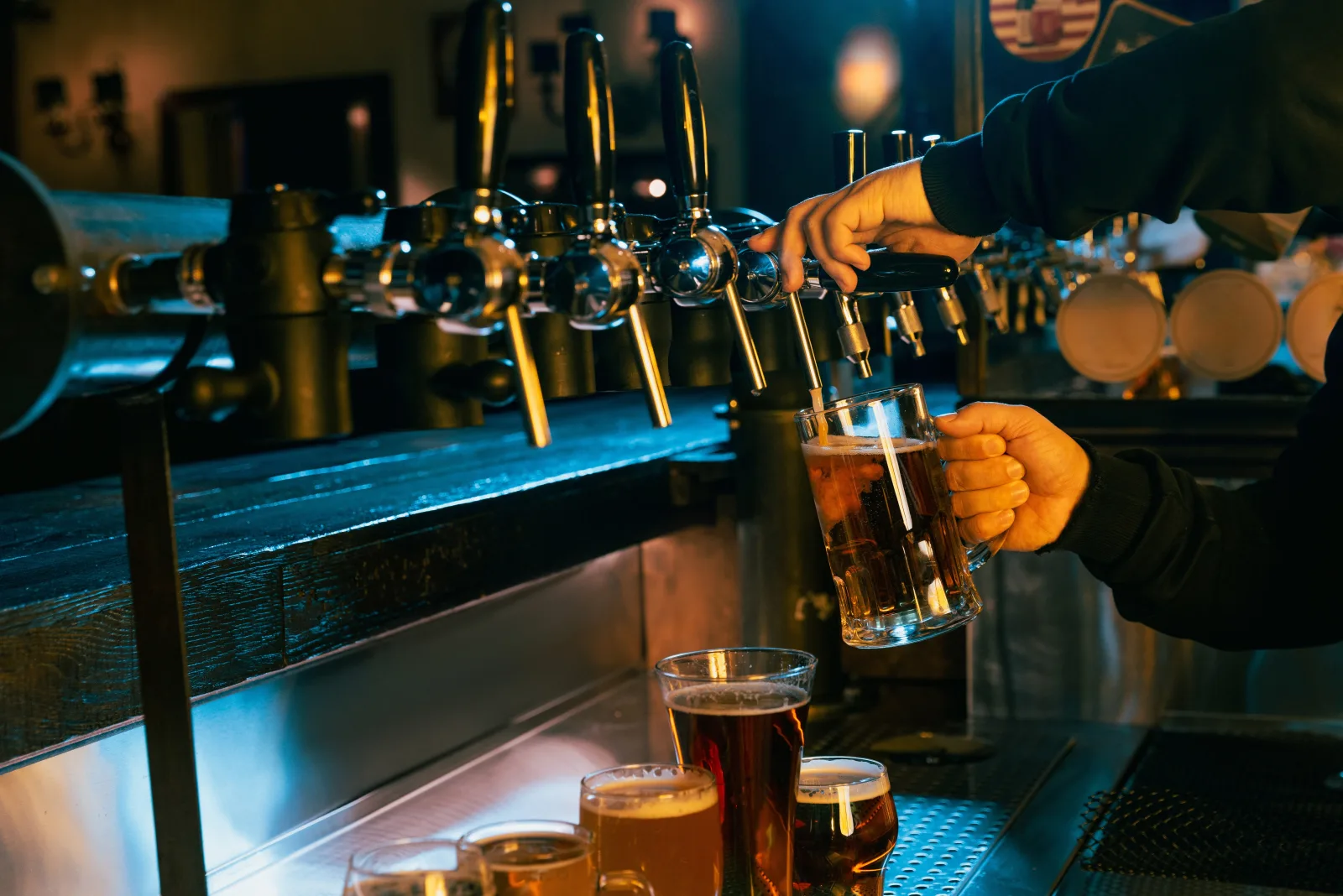

Missouri settled a causation question in the statute book rather than leaving it to be argued case by case, which narrows what a plaintiff has to establish and what a licensee has to rebut. This page works from the legislated rule and marks where it leaves the ordinary negligence questions untouched. What the legislature did not touch stays where it was, so the ordinary negligence questions arrive unchanged behind the statutory one.
Missouri repealed its dram shop act, and then did something further that gets left out of most accounts. Rather than simply going quiet, the legislature wrote down what the state’s position now was, and it wrote it as a rule about cause.
The statute declares that since the repeal it has been and continues to be the policy of the state to prohibit dram shop liability, and to follow the common-law rule that furnishing alcohol is not the proximate cause. That is a sentence about causation before it is a sentence about liability, and the distinction is not academic — a causation rule reaches every theory somebody might dress a claim in, which is precisely why a legislature writes one.
There is an exception. It is narrow, it carries a high burden, and this page does not set out what that burden consists of, for reasons given in full below. The policy itself — what it answers for, and why it is bought apart — is described on our liquor liability page.
The legislature settled a causation question in the statute book
Missouri’s position is written down rather than inferred, and what it is written as matters. The statute records that since the repeal of the Missouri Dram Shop Act it has been and continues to be the policy of the state to prohibit dram shop liability, and to follow the common-law rule that furnishing alcohol is not the proximate cause.
Two moves are happening in that sentence. The first is a declaration of policy, which is a legislature saying that the position is intended rather than accidental — the same problem a court would otherwise be left to guess at when a new theory turns up. The second is the adoption of a causation rule, and that is the one with reach. A rule about who may be sued can be worked around by suing under a different label. A rule about what is and is not the cause of the harm applies to the label too.
The practical shape of that for an operator is worth stating plainly. The default in Missouri is not that a claim against you is hard. The default is that the claim does not arrive at your door by that road at all, and something specific has to happen before it does.
That something is the exception, and it is where this page stops being able to help.
The exception is real, and its terms are not printed here
The material behind this page records that the abrogation comes with a narrow exception, that the exception carries a high burden, and that the burden is the point of it. It does not, in a form this build could stand behind, record what that burden actually consists of.
The elements of it — what has to be proved, to what standard, and about whose knowledge — did not survive the withdrawal pass behind this build. They are therefore not summarized here, not approximated, and not gestured at. Half a burden is worse than none: an operator who takes away a rough impression of a demanding test will train their room to the impression, and the impression is the part that was never verified.
What you can safely take from this page is the shape. Missouri’s answer is a general rule with a specific and difficult way out of it, rather than a general liability with defenses attached. Those two arrangements produce very different conversations when a claim is presented, and knowing which one you are in is most of the value.
Where to take it from here: the section itself, and a Missouri lawyer, in that order. Ask specifically what has to be established and to what standard, because in a state that has legislated a causation answer, the standard is doing most of the work. Then make sure whoever places your cover has that answer rather than a general sense of Missouri being a difficult state to sue.
The license is issued by the state on a condition set by your city
The on-premise credential in Missouri is a license to sell liquor by the drink at retail for consumption on the premises. It is issued by the supervisor of alcohol and tobacco control, within the Division of Alcohol and Tobacco Control in the Department of Public Safety.
And it is conditioned on compliance with the ordinances of the incorporated city. Both approvals are required. The state does not issue over the top of a municipality, and a municipal blessing is not a license — which means a Missouri bar is carrying two permissions with two sets of conditions, two renewal habits and two bodies capable of causing it a problem.
The consequence an operator feels most is that ordinance compliance is not a parallel obligation sitting off to one side. It is a term of the license. An hours dispute, a noise or occupancy condition, an entertainment restriction or a premises requirement imposed locally is therefore a licensing matter as well as a municipal one, and it moves faster than most operators expect it to.
For anyone opening a second room, that is the single most transferable-looking thing that does not transfer. The state half of the credential is the same across Missouri. The local half is not, and a concept built around late hours or live entertainment in one municipality can meet an entirely different set of conditions a short distance away. That belongs in the description you give an underwriter, because a multi-room operator in Missouri is running rooms under different conditions rather than one operation with several addresses. A short distance can also mean a different state: a room on the Kansas side of the metropolitan area, or on the Illinois side of the river, is licensed and answered for under arrangements this page does not describe, and the Kansas bar and Illinois bar pages are where those are set out.
A sentence written for an argument nobody had made yet
Go back to what the statute does before it states the causation rule. It records that prohibiting this liability has been, and continues to be, the policy of the state. A rule tells a court what to decide. A declaration of policy tells a court what the legislature meant, and it is written for a judge who will eventually be handed a theory that had not been invented when the section was drafted.
Legislatures do not often bother, and what it buys an operator is durability. A position resting on a line of decisions is only as settled as the next bench’s appetite for it. If an evening in the years behind you is ever argued about, it will be argued against whatever the position has become by then, and a position that was declared rather than accumulated is likelier to still be the same one.
The half of this page that cannot be made durable for you is the exception. Its terms did not survive the checking behind this build, so they are not stated here in any form. What follows is a division of labor: the general position is something you can plan against, and the exception is something to put to a Missouri lawyer with the section in front of them. Only one of those jobs can be done by reading.
None of it changes the ordinary program, which answers for the room on its own terms — general liability for the floor and the crowd it holds, property for the building and the fit-out, and an umbrella whose schedule of underlying is worth re-reading each time a layer beneath it is replaced. The property and payroll side of a Missouri account, the seismic question included, is carried by our Missouri restaurant page.
Major Missouri bar markets
- St. Louis. A dense independent bar trade spread across a large number of separate municipalities, which is the clearest place in the state to see the local half of the license doing real work. Two rooms a short drive apart can be running under materially different hours and entertainment conditions while holding the same state credential.
- Kansas City. A late-trading market on a state line whose neighbor answers the service-liability question differently, so a business trading on both banks is answering two different questions about the same evening. On this side the causation rule is the backdrop and the city ordinance is the live variable, and neither of those is what governs a room across the water.
- Springfield. A south-western regional trade steadier than the visitor economy nearby, where the beverage-led rooms run on residents and a corridor rather than on a season. Steady hours make the municipal conditions easy to comply with and easy to stop thinking about, and a lapsed local condition is a licensing problem rather than a paperwork one.
- Columbia. A trade whose weeks are set by a calendar rather than by the season, with a crowd that includes a substantial population near the age boundary. Age discipline here is worth holding at one level from the first customer to the last, and it is the operating control whose value survives whichever way the causation question is finally argued.
- Branson. A visitor-driven entertainment economy where the crowd turns over completely and almost nobody in the room is known to the staff. Where the informal recognition a neighborhood room relies on is simply absent, the written procedure has to do that work — and the municipal conditions attached to entertainment venues are worth confirming rather than inheriting from a previous operator.
- St. Charles. A corridor and river-town trade running on passing custom alongside residents, which produces steadier hours than a destination market and a more conventional file. The municipality is still the body setting the conditions your state license is granted subject to, and a historic district often sets them more tightly than a newer commercial corridor does.
Learn more
Related coverage
Who we insure
Primary sources
- Missouri Division of Alcohol and Tobacco Control — the licensing division, sitting inside the Department of Public Safety — and the office of the supervisor who issues the by-the-drink license this page is about
Missouri bar insurance FAQs
Can a Missouri bar be sued over serving someone who later causes harm?
The default position is that furnishing alcohol is not the proximate cause of what follows, and prohibiting dram shop liability is declared by statute to be the policy of the state. There is a narrow exception carrying a high burden. This page deliberately does not set out what that burden consists of, because the material behind it did not establish those terms to the standard the rest of this page is written to.
Why does it matter that the rule is about causation rather than about immunity?
Because of reach. A rule saying a particular defendant may not be sued can be tested by suing them under a different theory. A rule saying that furnishing alcohol is not the proximate cause of the resulting harm speaks to the theory as well as to the defendant. That is a legislative choice with a purpose behind it, and it is why Missouri is a structurally different proposition from a state that simply has no statute.
Why will this page not tell me what the exception requires?
Because the elements of it were withdrawn from the material this page is written from. What is retained is that the exception is narrow and that its burden is the point of it. Publishing a rough version would be worse than publishing nothing: an operator who takes away an impression of a demanding test trains their room to the impression, and the impression is precisely the part nobody verified.
Who actually issues a Missouri on-premise license?
The supervisor of alcohol and tobacco control, in the Division of Alcohol and Tobacco Control within the Department of Public Safety. The credential is a license to sell liquor by the drink at retail for consumption on the premises, and it is granted conditioned on compliance with the ordinances of the incorporated city. Both the state and the local approval are required.
If our city changes an ordinance, is that a licensing problem or a council problem?
Both, and that is the point worth internalizing. Because compliance with municipal ordinances is a condition of the state license rather than a separate obligation running alongside it, a local condition about hours, occupancy, noise or entertainment reaches the credential you trade under. Treat a local notice as something that touches your license rather than as correspondence.
We are opening a second Missouri room. What does not carry across?
The local half. The state license type is the same anywhere in Missouri; the ordinance conditions it is granted subject to are set municipality by municipality, so a model built around late hours or live entertainment in one place can meet a different set of conditions nearby. Describe the rooms separately on a submission — an operator with several addresses in Missouri is running several sets of conditions.
Does responsible-service training still earn its keep in Missouri?
Yes, and mostly for reasons that sit outside the causation rule. It reduces the incidents that produce ordinary premises claims, it is evidence that the operation is managed rather than improvised, and it supports the local half of your credential, which is the half most likely to be reviewed on a complaint. Its value does not depend on how the statutory exception would ultimately be argued.
What is deliberately absent from this page?
The Missouri catastrophe conversation — the seismic exposure, the separate earthquake placement and the residual property market. Not because it does not matter, but because it belongs to the property line, and our Missouri restaurant page sets it out in full for any hospitality building in the state.
Get a Missouri bar insurance quote
Tell us what you run and where. Or call 317-942-0549.