
Bar Insurance · Minnesota
Bar insurance in Minnesota
Minnesota did not leave alcohol liability to develop in the courts. It wrote a statute that creates the claim — and then shaped what can recover against a licensed vendor, including one route it closed off altogether.
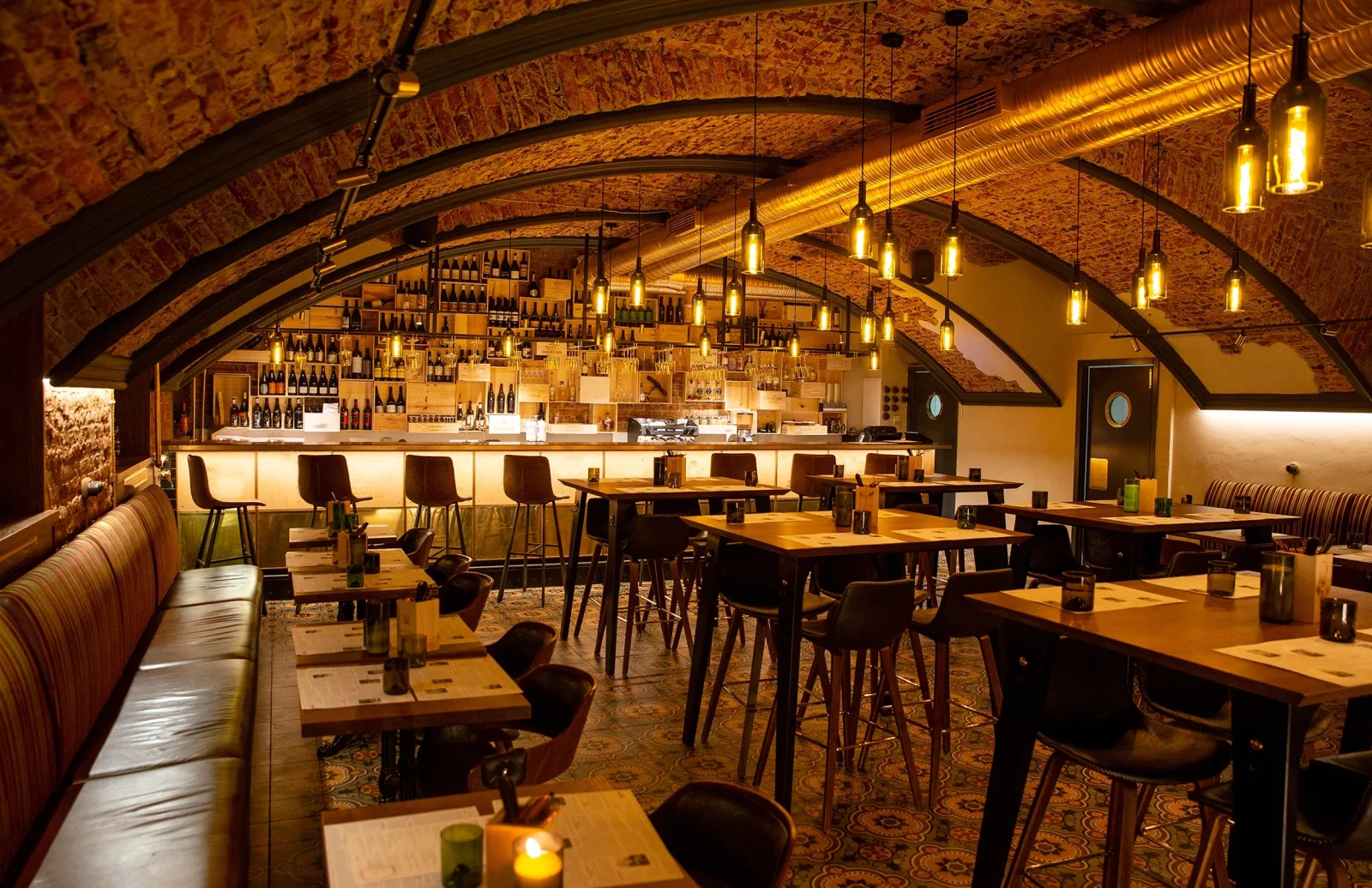

Minnesota’s legislature wrote the civil damages claim into statute rather than waiting for courts to build one, so the elements are set out on the page instead of being assembled from decisions. That makes the exposure unusually legible. This page follows the statutory elements in the order the act itself sets them. Elements written by a legislature are easier to plead and easier to defend, and both parties know exactly what they are arguing about.
A useful way to read any state’s alcohol liability position is to ask who can end up recovering money from the bar, and by what route. In Minnesota that question has an unusually well-mapped answer, because the legislature wrote the claim rather than leaving it to case law.
The Civil Damages Act is a genuine liability-creating statute. Around it sit three further facts that matter more to an insurance program than to a service manual: comparative fault applies, a statutory defense is available, and auto insurers may not subrogate against liquor vendors. Alongside all of that, common-law claims against adults who knowingly furnish to minors are expressly preserved.
Those are the things a Minnesota operator is actually trading under, and they are the shape of this page. The liquor liability page carries how the coverage itself works, which is the same in every state; what follows is what Minnesota does around it, and then what your license — issued, in most cases, by a city — adds on top.
The legislature wrote the claim rather than waiting for one
Minnesota’s position on alcohol liability is set out in the Civil Damages Act, and the important structural word is creating. This is a statute that brings a claim into existence, which puts Minnesota in a different family from the states whose statutes are written as immunities with exceptions carved out of them.
The practical difference for an operator is about where you look and what you can rely on. Where a claim is statutory, its shape is on the page — you can read the section itself rather than assembling a position out of decided cases and a hopeful summary. That is worth doing once, properly, with your own counsel if a real decision turns on it.
What we are not going to do is characterize the trigger. The Act says what it says and the sourcing behind this page does not support us restating its threshold in our own words, so we are not going to invent a paraphrase that sounds authoritative. What we can tell you with confidence is that the claim exists as a matter of statute, that the legislature also preserved common-law claims against adults who knowingly furnish alcohol to minors, and that those two things sit alongside each other rather than one replacing the other. Who a statute lets through the door is the question worth carrying across a state line, and it is not answered the same way twice — the New York bar page works through who its own sections entitle to sue.
For a licensed room, the working conclusion is that alcohol liability here is not a residual thing that might attach in an unusual case. It is a defined feature of the trading environment, and a program built for Minnesota should be built acknowledging that rather than around a hope that the general liability side will somehow absorb it.
Fault is divided, and there is a defense written into the scheme
Two features shape almost every real Minnesota outcome. Comparative fault applies, and a statutory defense is available.
Comparative fault means the question is rarely whether your room is answerable, full stop. It is how much of the responsibility for a particular set of events sits with you and how much sits elsewhere. That changes what is worth arguing about and, more usefully, changes what is worth recording at the time — because apportionment is decided on evidence about a sequence, and the sequence is only reconstructable from whatever anybody wrote down while it was happening.
That has an immediate operational consequence that costs nothing. Incident notes taken on the night, with times, who was present and what was actually done, are worth more in an apportionment argument than any account assembled months later from memory. Most rooms already have a way of doing this and most of them do it inconsistently. Doing it consistently is one of the very few things an operator can change quickly that changes how a real claim runs.
The statutory defense is the other half, and it is a defense the scheme itself provides rather than something argued from general principles. We are not setting out its elements here — that is the section’s work and, if it matters to you, your own lawyer’s. The point worth carrying is that whether it is available in a given case will turn on facts about how your room operated, which means it is not purely a legal question decided after the event. Part of it is decided by how you were running the place beforehand.
The recovery route the legislature closed
Now a provision that almost never appears in general guidance about running a bar, for the straightforward reason that it is not about serving at all. Auto insurers may not subrogate against liquor vendors.
To see why that is substantial, follow an ordinary alcohol-related loss involving a vehicle. An auto insurer pays under its own policy. In most of the country it may then look for someone to recover that payment from, and a licensed vendor somewhere upstream of the driver is an obvious candidate. Minnesota removes that route. The insurer’s payment does not come back to the bar by way of subrogation.
Do not over-read it. It is a statement about one class of recovery by one class of claimant. The Act’s own claim is still there, brought by the people it entitles to bring it, and comparative fault still governs how any award is divided. What the rule removes is a specific institutional route by which a bar can be drawn into a matter it had no earlier notice of — and that is a real thing to have removed, because subrogated recoveries tend to arrive late, from a party you have never dealt with, about an event you may not have known was an event.
The reason this belongs on an insurance page rather than a compliance one is that it changes the mix of what actually arrives. It does not change how you should be running the door, and treating it as though it did would be a misreading. Where your own vehicles are on the road — a delivery van, a courtesy run — that is a separate conversation entirely and it belongs with commercial auto.
A state class, a city license, and a line drawn by strength
The Alcohol and Gambling Enforcement Division of the Department of Public Safety administers licensing, but cities issue most on-sale licenses. County boards license unorganized areas, and the commissioner licenses a specific set: state recreation facilities, universities, tour boats and military bases.
So two documents describe your permission and they come from different places. The class is a statutory category — on-sale intoxicating liquor, on-sale wine to a stated strength, on-sale malt liquor, and combination on-sale and off-sale — while the conditions attached to your particular license are, in most cases, a municipal matter. An operator who knows the first and has never read the second is holding half the answer. Where the state stops and the city begins is drawn in a different place by every state that draws it at all, and the North Dakota bar page shows where its own line falls.
The class list itself repays attention because of the line running through it. One of these classes is defined by the strength of what you may pour rather than by the kind of premises you run, which means the boundary of your permission is a product boundary as much as a business one. A room that thinks of itself as a bar and holds a class that stops at a stated strength is running a different operation from one that does not, and the difference is visible on the license before anyone describes the business.
The list of premises the commissioner licenses directly is worth knowing for a different reason: it is a reminder that campus venues, boats and facilities on public land sit outside the ordinary municipal route. If your operation is one of those, guidance written for a city-licensed room may not describe your position, and the license provisions are the place to start rather than a general article.
For a submission, the useful move is simple and rarely made: state your class, state which authority issued your license, and attach the conditions that came with it. Municipal conditions are the part an underwriter genuinely cannot infer, and they are the part most likely to explain something about your hours or your operation that would otherwise look unexplained.
Taprooms, supper clubs and a season that closes
Minnesota’s drinking trade does not have a single form, and three of its forms behave differently enough that an underwriter reads them differently.
Brewery taprooms put production plant and a public room in the same building, which is a licensing question and a coverage question at once — the classes distinguish what may be poured, and the equipment behind the bar is a manufacturing schedule rather than a bar schedule. That combination is common enough here to be ordinary and unusual enough that it should be described rather than assumed.
Supper clubs persisting in the north are an institutional form rather than a menu, and their bar is typically integral to the evening rather than a waiting area attached to a dining room. That produces a long, steady service pattern with a customer base that is largely known to the staff, which is a genuinely different profile from a room whose customers are new every week.
And lake-country resort venues run a compressed operating season, which is a bar fact as much as a food one: the busiest nights of the year fall in a narrow window, staffed in part by people hired for that window, and the informal knowledge that makes a settled room easy to run is at its thinnest exactly when the room is at its fullest. That is worth saying in a submission in plain words, because it explains a demand curve an annual figure conceals.
The metropolitan picture sits alongside all three: a chef-driven scene with national reach, and rooms founded by Scandinavian, Hmong, Somali and Latino communities whose formats and service patterns a standard classification describes poorly. The food-side consequences of that are set out on the Minnesota restaurant page; on the drinking side, the point is that the room, its hours and its customer base are frequently not what the code would predict, and the narrative is where that gets corrected. How a licensed room is underwritten in general terms is set out under bar insurance; general liability and umbrella sit around the alcohol line exactly where they always sit.
Major Minnesota bar markets
- Minneapolis. The state’s deepest concentration of licensed rooms and the widest range of formats inside a single municipal licensing regime, from taprooms to late rooms to bars attached to chef-driven kitchens. Because conditions come with the city license rather than the statutory class, two rooms a few streets apart can trade under noticeably different terms, and the conditions are the part a file has to supply rather than leave to inference.
- Saint Paul. A capital-city trade with a steady weekday evening pattern drawn from state employment, sitting alongside dense neighborhood rooms with settled customer bases. The customer familiarity that produces is a real control in an apportionment argument, since staff who know who is in the room can describe a sequence afterwards in a way a room full of strangers cannot.
- Rochester. A southern regional center whose licensed trade serves a local catchment together with a substantial visiting population attached to the medical economy. That mix produces an unusual pattern for a city of its size — a settled resident trade and a rotating visitor trade in the same rooms — and it is worth describing rather than letting an underwriter assume one or the other.
- Duluth. A lakehead market combining year-round resident rooms with a pronounced visitor season, and a taproom trade that has become a defining part of the local licensed landscape. Where a room is a production site and a public bar at once, the class it holds and the plant behind the bar are two separate things a submission should set out separately.
- Bloomington. A suburban market where a large share of the licensed trade is attached to hotels, event space and destination retail rather than to a neighborhood high street. Those rooms serve a crowd that is largely unknown to the staff and arrives in groups formed elsewhere, which puts the weight of managing the room on written procedure instead of on familiarity.
- Saint Cloud. A central regional center midway between the Twin Cities and the lake country, where a settled resident trade and a student one pass through the same rooms at different points in the year. Because the license conditions come from the city and the trading pattern comes from the calendar, the two are worth setting out together rather than in separate sentences.
Learn more
Related coverage
Who we insure
Primary sources
- Alcohol and Gambling Enforcement Division — the division inside the Department of Public Safety that administers licensing, above the cities and county boards that actually issue
- Minn. Stat. § 340A.404 — on-sale licenses — the license provisions themselves, including who may issue and to which kinds of premises
- Minn. Stat. § 340A.801 — the Civil Damages Act — the statute that creates the claim, in the legislature’s own text rather than through anybody’s summary of it
Minnesota bar insurance FAQs
Does Minnesota create an alcohol claim by statute?
Yes. The Civil Damages Act is a liability-creating statute rather than an immunity with exceptions carved out of it, which puts Minnesota in a different family from a number of its neighbors. We are not restating its threshold in our own words — that is the section’s job and it is linked below — but the structural point is that the claim exists as a matter of statute rather than being assembled from case law.
Can an auto insurer come after our bar to recover what it paid?
Not by subrogation. Minnesota provides that auto insurers may not subrogate against liquor vendors, which removes a route that exists in much of the country. Read it narrowly: it is one class of recovery by one class of claimant, and the Act’s own claim is unaffected by it. It is genuinely useful to know, because subrogated recoveries typically arrive late and from a party you have had no earlier dealings with.
If a claim is brought, is it all or nothing?
No — comparative fault applies, so the question is how responsibility is divided rather than simply whether it attaches. That is why what your people wrote down on the night matters so much. An apportionment argument runs on evidence about a sequence of events, and the only durable record of that sequence is whatever was noted while it was still fresh.
We have heard there is a defense available. What is it?
A statutory defense is available under the scheme, and we are not going to set out its elements from a summary. What is worth carrying away is that its availability in any particular case will depend on facts about how your room was actually being run, which makes it partly an operating question and not only a legal one. If a live matter turns on it, that is a conversation for your own counsel with the section in front of them.
Who issues our on-sale license?
In most cases a city. The Alcohol and Gambling Enforcement Division administers licensing at state level, county boards license unorganized areas, and the commissioner licenses a defined set — state recreation facilities, universities, tour boats and military bases. So the statutory class is one document and the conditions attached to your license are usually another, issued locally.
What are the on-sale classes here?
The statutory classes are on-sale intoxicating liquor, on-sale wine to a stated strength, on-sale malt liquor, and combination on-sale and off-sale. The one keyed to strength is the one that most often surprises an operator, because it makes the edge of your permission a question about the product rather than about the kind of room you run.
Our taproom is also a production site. Does that complicate the file?
It makes it a longer conversation rather than a harder one, and the two halves should be described separately. The class you hold governs what may be poured in the public room; the plant behind the bar is a manufacturing schedule with its own values and its own failure modes. A submission that presents the whole thing as a bar has understated one half of it, and which half depends on which one you were thinking about when you wrote it.
Get a Minnesota bar insurance quote
Tell us what you run and where. Or call 317-942-0549.