
Bar Insurance · Maryland
Bar insurance in Maryland
Two facts decide how a Maryland bar file reads. The credential on your wall was granted by a board in your own county or city rather than by the state — and the civil claim most operators are braced for has never existed here at all.
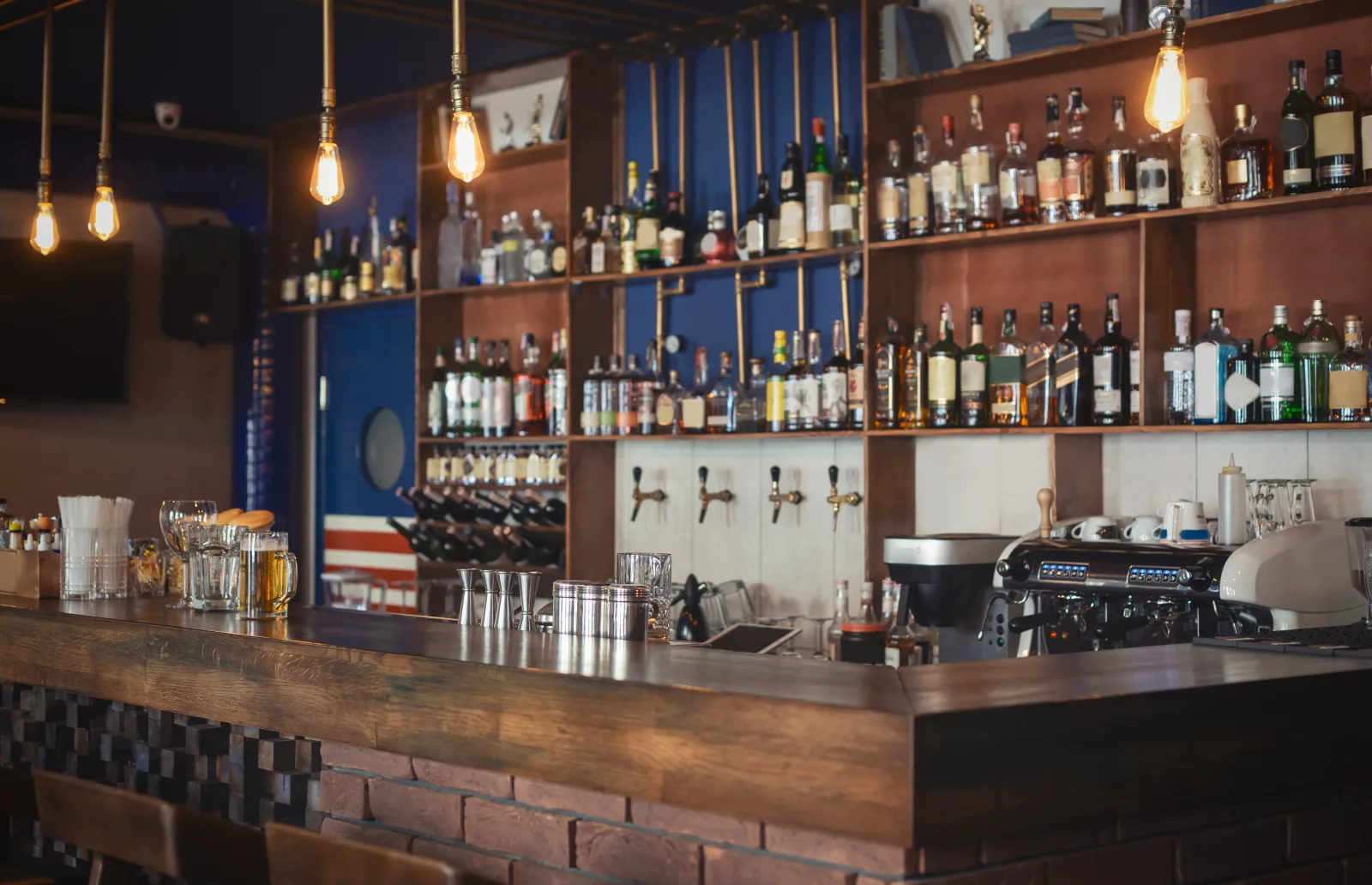

Maryland licenses alcohol through local boards, so the desk that granted your credential sits in your own county rather than in the capital. The state also has no dram shop statute, which changes the shape of the liability question entirely. This page treats both facts as the starting point rather than as exceptions. Twenty-four boards means twenty-four sets of local practice, and guidance written for one county can mislead in the next.
Where a conversation about alcohol cover usually begins — with what the general liability form takes out, and with the separate policy bought to put it back — is set out on the liquor liability page. It is machinery, it works the same way in every state, and repeating it here would be padding.
What Maryland changes is everything around that machinery. It moves the licensing desk out of the state and into your own jurisdiction, so the class letter on your credential means what your board says it means. And it removes the civil route that almost all writing about bar liability quietly assumes is there. The second of those is regularly misread as meaning a Maryland bar has less to insure, which is the wrong conclusion drawn from a correct fact.
So this page takes the licensing geography first, because it decides who you deal with and what your credential even describes; then the liability position and the reasoning behind it; then what survives that position, which is more than people expect. Property belongs to the Maryland restaurant page, which sets it out properly.
The desk that granted your credential is in your own county
The Alcohol, Tobacco, and Cannabis Commission regulates alcohol in Maryland, and it is easy to read that sentence and stop. What sits with the commission at state level is manufacturing and distribution. Retail licensing and permitting are handled locally — by each of the twenty-three counties plus Baltimore City and the City of Annapolis.
Those local authorities do not even share a title. Depending on where a room sits, the body is styled a Board of License Commissioners, a Liquor Board or an Alcoholic Beverage Control Board. Variation in the name is a fair warning about the variation underneath it, and it is the first thing an operator arriving from a single-desk state has to unlearn. Maryland is not alone in pushing that desk down to the county and the city, and no two states that do it build it the same way — the Nevada bar page describes how the same job is arranged there.
The practical effect on a submission is immediate. A license class quoted on its own has not yet told an underwriter anything usable in this state, because the letter is a local fact and the reader has no way to resolve it without knowing which authority granted it. Naming the jurisdiction alongside the class is not bureaucratic tidiness here; it is what makes the class legible.
It changes multi-site operation too. Two rooms in two counties answer to two authorities, each with its own calendar and its own accumulated way of doing things, and there is no single desk that can speak for both. Anyone treating a second location as an administrative repeat of the first is planning against a structure that does not exist in Maryland.
And it changes whose advice is worth anything. An operator two jurisdictions away describing what their credential lets them do is describing their board, not yours. That is a cheap mistake to make and an expensive one to build an opening timetable on.
Why there is no Maryland class list on this page
Class letters do exist in the state alcoholic beverages article. We are deliberately not setting out a statewide list of them, and the reason is not caution for its own sake: their availability and their definition vary by jurisdiction. A neat table of Maryland on-premise classes would look authoritative and would be an invention.
That is worth stating plainly rather than quietly omitting, because the omission is itself the useful information. If you have read a confident list somewhere describing what each Maryland class permits, the thing to check is whether whoever wrote it knew which boards they were describing.
What follows for a reader is a short instruction with no clever version. Your own licensing authority is the source for what your class actually permits, what hours attach to it and what a change to your premises or your trading pattern requires. Nothing on this page, and nothing written for a neighboring jurisdiction, substitutes for that.
For the placement, the same discipline reads as strength rather than as vagueness. An operator who can say which board granted the credential, what it permits there and what conditions ride on it is describing a business with a real grip on its own licensing position — and that is a more useful sentence on a submission than any class letter standing alone.
The claim most operators brace for has never existed here
Maryland has never enacted a dram shop statute, and its high court has repeatedly declined to create one. That is not an open question waiting for better facts. It is a position the court has been invited to change and has not.
The controlling decision from 2013 opens by framing the question as whether the court should recognize dram shop liability once again, and the phrase is doing real work. It tells a reader the ground has been covered before, and that the answer arrived at is a considered one rather than an accident of which cases happened to reach the court.
The reasoning is about duty, which is the part worth carrying away. The court declined on the absence of one: a tavern exercises no control over the patron, and it has no special relationship with the injured third party. Those two hinges are not sentiment about who deserves what — they are the structural elements a negligence claim needs and could not find.
Both halves of that are precise, and reading them loosely is where the trouble starts. This is a statement about a particular route being unavailable against a particular defendant on particular reasoning. It is not a statement that a Maryland bar has been placed outside the reach of civil claims generally, and treating it as one is the single most expensive misreading available in this state. Nor is Maryland the only state where the space a dram shop statute would occupy is filled by something else, and those somethings are not interchangeable — the Massachusetts bar page works out its own position from its own authorities.
What the absent route does not take away with it
Begin with the policy language, because it does not track state law. The exclusion in a general liability form is drafted against a class of business rather than against the civil law of any particular jurisdiction. It does not soften in a state where a plaintiff has one fewer route, and a room serving alcohol in Maryland meets that wording on exactly the same terms as a room anywhere else.
Then the ordinary arithmetic of being sued. A claim that would ultimately fail is still a claim that has to be answered, and the cost of answering it lands somewhere. Where a defense has good ground under it, the question shifts from whether you will lose to who is paying for the argument — which is a coverage question, not a legal one.
Now the inversion that makes this state genuinely distinctive. The court declined a duty on the footing that a tavern exercises no control over the patron. The claims a Maryland bar is most likely to actually meet are the ones about the things it plainly does control: who is admitted, who is asked to leave, how that is done, what the room does when a night turns, and what condition the floor and the stairs are in while it happens.
So the controls that matter here are the physical and procedural ones rather than the ones aimed at a statutory defense. Written removal and refusal practice, a record of what happened on a difficult night made on that night, camera coverage that survives long enough to be useful, and an honest account of how the room is staffed when it is full. None of that is aimed at a dram shop case, because there is not one to aim at. It is aimed at the claims that are actually made.
If the people working your door are supplied by a firm rather than employed by you, the agreement with that firm is the document deciding whose insurer answers for their conduct, and it is worth reading before an incident rather than after one. The general liability and umbrella layers are where all of this lands.
Several trading calendars, and no shared licensing map
Maryland runs bar trade on rhythms that have very little to do with one another. Blue crab and Chesapeake seafood houses move with a strong seasonal beat. Baltimore carries a rowhouse-scale independent culture across its neighborhoods. The Washington-suburban corridor is internationally diverse dining on metropolitan economics. Marina and waterfront rooms serve boating traffic. The Atlantic coast runs boardwalk and beach-resort service. And Annapolis trades on the sailing season and the legislative session at once.
For a drinks-led room those differences are not color. They set when the room is busy, how much of the year the takings arrive in, who is behind the bar during the peak and how experienced that person is on the night when judgment is worth most.
Layer the licensing structure over that and the picture sharpens. A boardwalk room and a rowhouse tavern are answering to different licensing authorities as well as to different calendars, so two Maryland bars with similar takings can face genuinely different local conditions, timetables and expectations. There is no statewide map that resolves this for you.
The submission that reads best is the one that says which of these businesses it is, in a sentence, before an underwriter has to guess. A room that fills for a season and a room that trades evenly on residents are different risks in staffing, in supervision and in what happens to the building during the quiet months.
The sentence people repeat about Maryland, and what it leaves out
Maryland has no dram shop law. That sentence is true, unusually clean as statements about state liability go, and the most expensive true sentence available here — not because anything in it is wrong, but because of what an operator hears immediately after it.
It does not mean the policy language relaxes: a general liability exclusion is drafted against a class of business rather than the civil law of any jurisdiction. Nor does it mean nobody sues you — a claim that would fail still has to be answered, and where the defense has good ground under it the live question stops being whether you lose and becomes who pays for the argument.
And it does not mean the pressure has come off. The court declined a duty on the footing that a tavern exercises no control over the patron, and that reasoning is also an instruction: what it leaves exposed are the things a room plainly does control. So the door and the floor carry more of a Maryland file than they would elsewhere — who admits, who removes, how a removal is recorded, and how quickly a difficult Saturday becomes a written account rather than a memory.
A second sentence travels just as badly, usually offered in good faith by an operator two counties away describing what their own class permits. Retail licensing is local, class letters vary in availability and definition between jurisdictions, and a class quoted without its board has said nothing usable.
What a reader needs next is not a class at all: when the room stops being quiet, when it stops trading, where the takings come from as between kitchen and bar, and what a performance or an event does to both. Those move together, which is why an inferred normal week gets all of them wrong at once. Then payroll, honestly split, because a bar meets the workers compensation line through its staff rather than its license.
The last thing the sentence never reached is the building. Chesapeake tidal flooding, the state’s joint insurance association and how a hard-to-place building is handled are set out on the Maryland restaurant page. Flood and earthquake are separate placements either way.
Major Maryland bar markets
- Baltimore. Neighborhood rooms at rowhouse scale, frequently in joined nineteenth-century stock with residents living above, which puts party-wall construction and building services into a placement before anybody discusses the bar itself. The city licenses its own retail alcohol rather than sitting under a county board, so an operator here is dealing with a city authority directly.
- Annapolis. The other jurisdiction in the state that licenses in its own name, and a bar trade answering to the water and to the statehouse at the same time — two calendars whose peaks do not coincide, so neither one on its own explains a week here. A small city where the licensing authority and the trade are within reach of each other, which cuts both ways.
- Silver Spring. Washington-suburban trade on metropolitan economics, with internationally diverse dining and a bar layer built around commuting patterns and institutional employment rather than around a weekend. Rooms here often occupy fitted-out ground-floor space in mixed-use buildings, which shapes both the property schedule and the question of where your premises stops.
- Bethesda. A dense suburban dining and drinking district in the same corridor, where adjacent venues can draw from one moving evening crowd rather than from separate ones. That is worth describing accurately on a submission, because a room whose customers arrive having already been somewhere else is managing a different door from one whose customers start their night with you.
- Frederick. A mid-sized market whose custom is residential rather than seasonal, so staffing turns over slowly and the same faces recur across a week. That is the profile in which written refusal and removal practice attracts the least attention and would cost the least to keep up. Older commercial buildings are common, so construction and services do real work in the property side.
- Ocean City. The sharpest seasonal profile in the state: a resort bar economy that concentrates the year into part of the calendar, staffs up with temporary people at exactly the busiest moment, and then leaves a building standing quiet for months. Both halves of that are underwriting facts — supervision during the peak, and an unoccupied premises out of season.
Learn more
Related coverage
Who we insure
Primary sources
- Maryland Alcohol, Tobacco, and Cannabis Commission — the state body — worth reading for what it holds (manufacturing and distribution) and, just as usefully, for what it does not, since your own retail credential is granted somewhere else entirely
Maryland bar insurance FAQs
Who actually grants a bar license in Maryland — the state or the county?
Your local authority does. The Alcohol, Tobacco, and Cannabis Commission holds manufacturing and distribution at state level, but retail licensing and permitting are handled locally, by each of the twenty-three counties plus Baltimore City and the City of Annapolis. Those bodies are variously styled a Board of License Commissioners, a Liquor Board or an Alcoholic Beverage Control Board, and the body that granted yours is the one to ask about anything specific to your credential.
Why will this page not tell me what my license class permits?
Because the honest answer is that it depends on who granted it. Class letters exist in the state alcoholic beverages article, but their availability and their definition vary by jurisdiction, so any statewide table of Maryland on-premise classes would be a tidy fabrication. Ask your own board. If you find a confident list elsewhere, the question to put to it is which jurisdictions it was actually describing.
Maryland has no dram shop statute — have its courts recognized the claim anyway?
No. Maryland has never enacted a dram shop statute, and its high court has repeatedly declined to recognize the cause of action. The controlling decision from 2013 opens by framing the question as whether to recognize dram shop liability once again — which tells you the court had been asked before — and declines on the absence of a duty.
What was the court’s actual reasoning?
Duty, rather than fairness or policy preference. The court found that a tavern exercises no control over the patron and has no special relationship with the injured third party, and without one of those a negligence claim has nothing to attach to. That is worth knowing precisely, because it explains what the ruling covers and, more usefully, what it says nothing about.
If there is no cause of action, do we still need liquor liability cover?
The exclusion in a general liability form is written against a class of business, not against the civil law of a particular state, and it applies to a Maryland room on the same terms it applies anywhere. Separately, a claim that would fail still has to be answered, and someone pays for answering it. The absence of a statutory route is a strong defensive position; it is not a reason to leave a gap where the exclusion sits.
What claims should a Maryland bar actually be worried about?
The ones inside its own control, which is precisely the inversion the court’s reasoning creates. Admission and removal, how a difficult night is handled and by whom, the condition of the floor, the stairs and the outside area, and injuries to your own staff. The reasoning that removed one route rests on a lack of control over the patron — and every one of these is about something a bar genuinely does control.
Our door staff come from an agency. Does that change anything here?
It changes who answers for their conduct, which matters more in a state where premises-side claims carry the file. The agreement with the firm is the document that settles it, and what the arrangement looks like in daily practice matters as much as what the paperwork calls it. Read it before an incident rather than during one, and make sure your broker has seen it.
We are on the water. Is tidal flooding part of our property policy?
No — flood is a separate placement in Maryland, and Chesapeake tidal flooding is real and documented. That story, along with the state’s joint insurance association and what it does and does not represent, is set out properly on the Maryland restaurant page, because it belongs to the building rather than to the bar. A tavern on the water carries exactly the same exposure a restaurant on the water does.
Get a Maryland bar insurance quote
Tell us what you run and where. Or call 317-942-0549.