
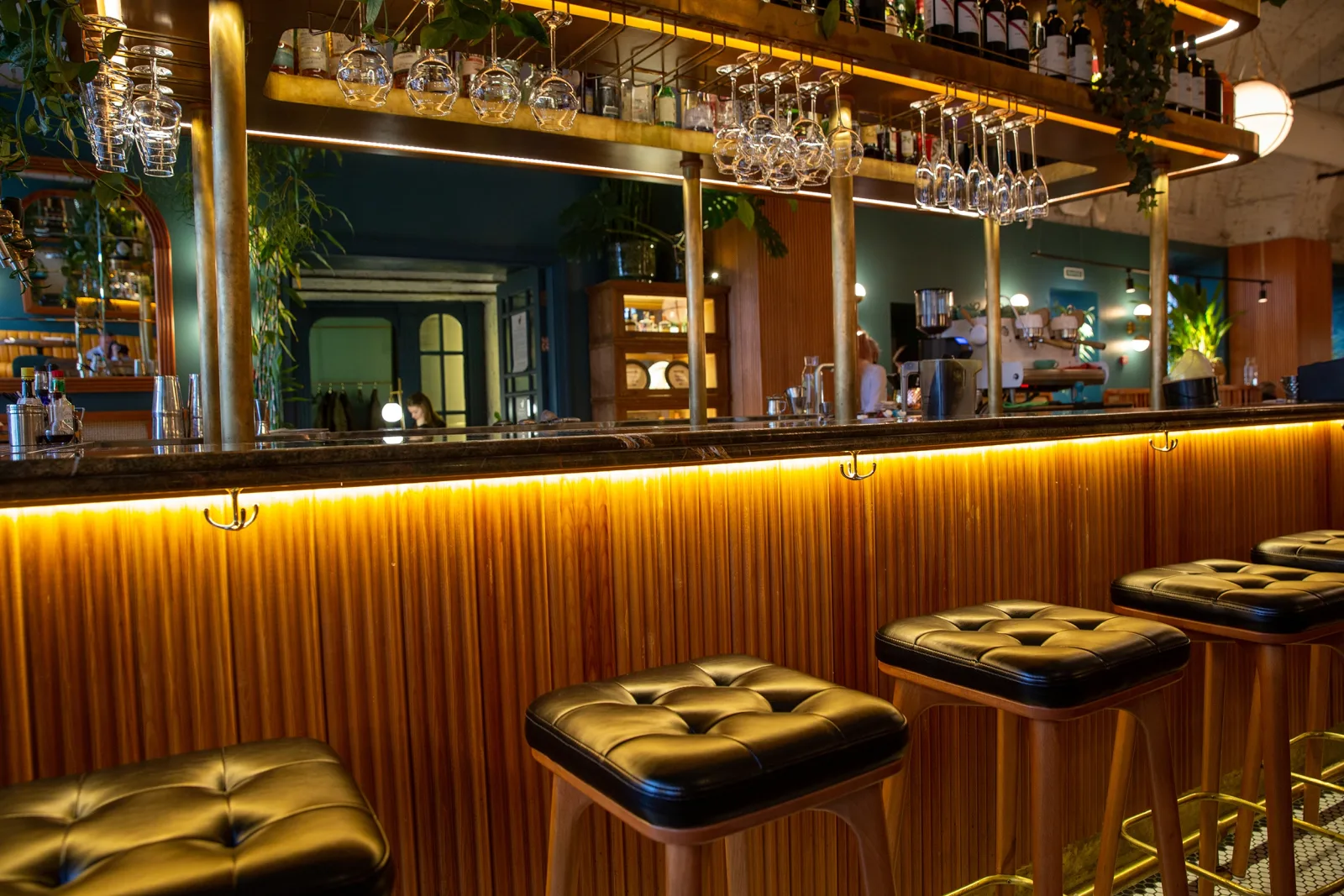

Opening a bar typically costs $110,000 to $850,000, with most independent bars landing between $300,000 and $500,000. Build-out runs roughly $200 to $700 per square foot. But the number that decides whether your budget survives contact with reality is the liquor license — and it is the one that varies most wildly, from a few thousand dollars in most states to $300,000 or more on the secondary market in a quota state.
The short answer
Plan on $300,000 to $500,000 for a typical independent bar, with a realistic outer range of $110,000 to $850,000. Smaller concepts — a dive bar, a pop-up, a bar taking over a space that is already licensed — can open for well under $200,000.
That budget should include the license, build-out, equipment, opening inventory, permits, insurance and three to six months of working capital.
The liquor license is the whole game
An often-quoted average for a liquor license is around $1,500, and that average is close to useless. It hides two completely different systems.
In most states the license is an administrative permission with a fee attached. Texas licenses commonly run $3,000 to $12,000. You apply, you qualify, you pay, you get one.
In quota states the number of licenses in circulation is capped, so there is nothing to apply for — you buy one from somebody who already holds it, at whatever the market bears. In California a full on-sale license can run $300,000 to $400,000 on the secondary market. In a quota state the license alone can be 30 to 60 percent of your entire startup budget.
Build-out: $200 to $700 per square foot
The range is driven by finish level and by generation. A second-generation bar space comes with the bar structure, the under-bar coolers, the drainage and the ventilation already in. A raw shell does not, and a bar is a plumbing-heavy build.
High-end build-outs run well past $850,000 on their own. That is a different business plan, not a bigger version of this one.
Equipment and opening inventory
Draft systems, glass washers, ice machines, under-bar refrigeration and point of sale are the core. Opening inventory for a full back bar is a real number and is usually underestimated, because a bar with thin shelves reads as a bar in trouble.
Buy the ice machine new. Everything downstream of a failing ice machine is a service problem.
Working capital and the 18 to 30 month runway
Most bar concepts break even somewhere between 18 and 30 months after opening. Hold three to six months of operating expenses at minimum, and understand that the first slow January is the test.
A bar that is busy on Friday and empty Tuesday through Thursday is a normal bar. A bar with no cash buffer that is empty Tuesday through Thursday is a closing bar.
What this does to insurance
Liquor liability is a separate purchase from general liability, and it is priced on hours, entertainment, license type and how service is supervised. Some concepts — late close, live music, a young crowd — are harder to place than others, and it is worth knowing that before the lease is signed rather than after.
Our bar insurance page covers what a bar program contains and why the liquor line sits apart from the rest of it.
The practical order to build the budget
Find out what your state does with licenses first. Everything else in the budget is downstream of that answer, and in a quota state it is downstream by a factor of three.
Then price the build-out with someone who has built a bar in your jurisdiction, then add the runway. Do not let the runway be the line that gets trimmed to make the total look better.
Draft systems, glassware and the back bar
A draft system is a plumbing and refrigeration installation, not an appliance. Line runs, glycol, towers and the cooler all have to be specified together, and retrofitting more taps later is a build job rather than a purchase.
Decide your tap count before the build, not after. It is one of the few decisions that is genuinely expensive to change.
Point of sale, security and the cameras
Bars run on speed and on accountability. Point of sale, camera coverage over the register and the bar, and a documented cash process are the operational core, and they are also the things an underwriter asks about.
Camera coverage over the pour and the register pays for itself the first time you have a dispute about either.
Staffing and the training period
You are paying bartenders and barbacks through training and at least one trial service. In a bar the training is also where service standards on alcohol get set, and those standards are the difference between a clean file and a dram shop claim.
Whatever your state requires on server training, do it before you open rather than in the first month.
Signage, sound and the things the city regulates
Signage, occupancy, noise and — if you want music — the performance licensing all sit with different authorities and run on different calendars. Live entertainment in particular can change both your permitting and your insurance.
If live music is part of the concept, raise it early with everybody. It is not a detail you add later.
The inventory nobody budgets twice
The opening back bar is a large single purchase, and the restock is a recurring one at a pace nobody predicts in month one. Pour cost discipline starts on day one or it does not start at all.
Bars generally target a pour cost between 18 and 24 percent. That target is set by how you buy and how you pour, and both habits form in the first month.